


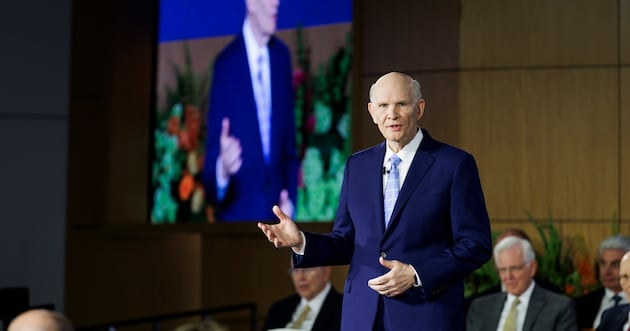
PROVO, Utah — Elder Dale G. Renlund of the Quorum of the Twelve Apostles said it is difficult to plant a church by missionaries without member involvement. After all, the church is made up of members. Members must “join the church” in order to be “baptized unto repentance” (Helaman 3:24).
“Sharing the gospel can happen in the absence of full-time missionaries, but it is rarely fruitful without member involvement,” Elder Renlund said. “But usually when we teach this, many members hang their heads, feel guilty, and little changes occur.”
Elder Renlund spoke about members’ involvement in mission work on Saturday, June 20, at the 2026 New Missionary Leadership Seminar held at the Provo Missionary Training Center in Provo, Utah.
Newly called mission leaders met remotely and in-person from June 18 to 21 to hear counsel and direction from each member of the First Presidency, the Quorum of the Twelve Apostles, and other members of the Mission Executive Council before reporting to missions in July.
Problem and solution
In his remarks, Elder Renlund outlined three issues that hinder members and missionaries from working together effectively to accomplish missionary goals.
Some members and ward councils feel that sharing the gospel is the sole responsibility of full-time missionaries. Some members do not know how to help in missionary work. Yet church leaders continue to set higher goals to become more focused and work harder. Some members and missionaries feel that all they can do is introduce education to missionaries.
Elder Renlund said it is simple, normal and natural for Church members to participate in missionary work.
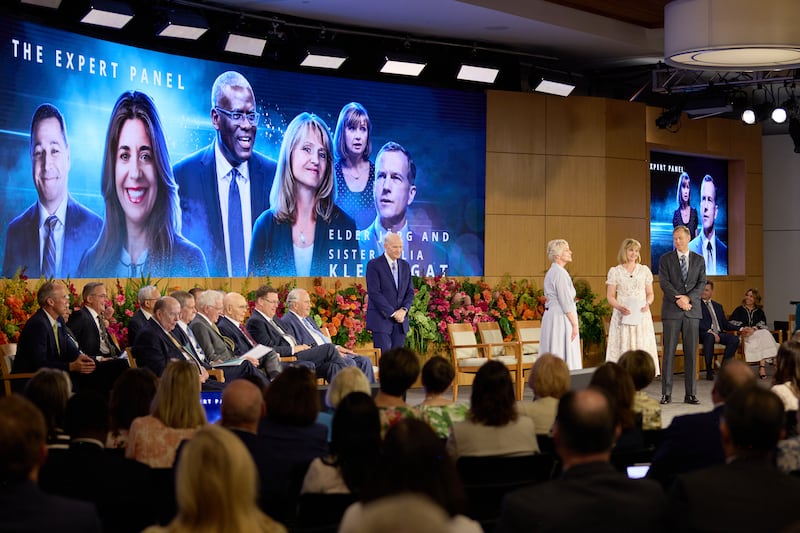
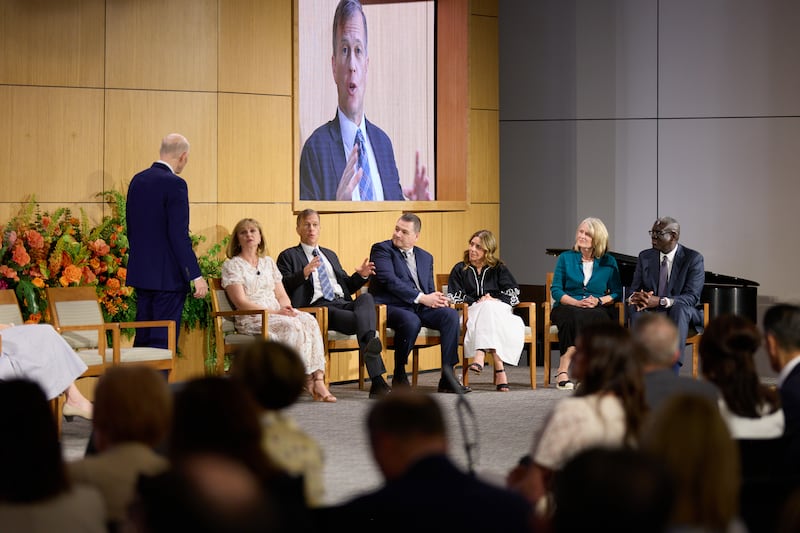
He invited his wife, Sister Ruth Renlund, and General Authority Seventy Elder Jorg Klebingat and his wife, Elder Julia Klevingat, to participate in a role play demonstrating how members and missionaries can work together in missionary work. After the role play, the group was joined by Elder Peter M. Johnson, a General Authority Seventy, and his wife, Sister Stephanie Lynne Johnson, and Elder Ricardo P. Jimenez, a General Authority Seventy, and his wife, Sister Catherine Jimenez, to discuss how their scenarios could help wards, branches, and missionaries work together.
For example, a missionary might begin by highlighting to members all the good missionary work they are already doing, from raising children to serve on missions to teaching Sunday classes to paying tithes that contribute to the progress of the church around the world.

Missionaries sometimes take a “menu” approach when inviting members to participate in missionary work, rather than applying one mission plan to the entire ward. This may look like simply letting members choose what they want to do, offering options of varying difficulty, such as praying for missionaries, carrying a pass award card, or inviting someone to a church activity.
“Every member who is willing can do something,” Elder Renlund said. “Then the miracle prophesied in Jeremiah 16 will come true: ‘The LORD brought up the children of Israel out of the land of Egypt, but as the LORD lives,’ the great miracle of gathering the scattered Israel of the latter days will disappear (Jeremiah 16:14-15). In fact, all who are willing will become “fishers” and “hunters” of others who seek to win God in their way. (Jeremiah 16:16)”
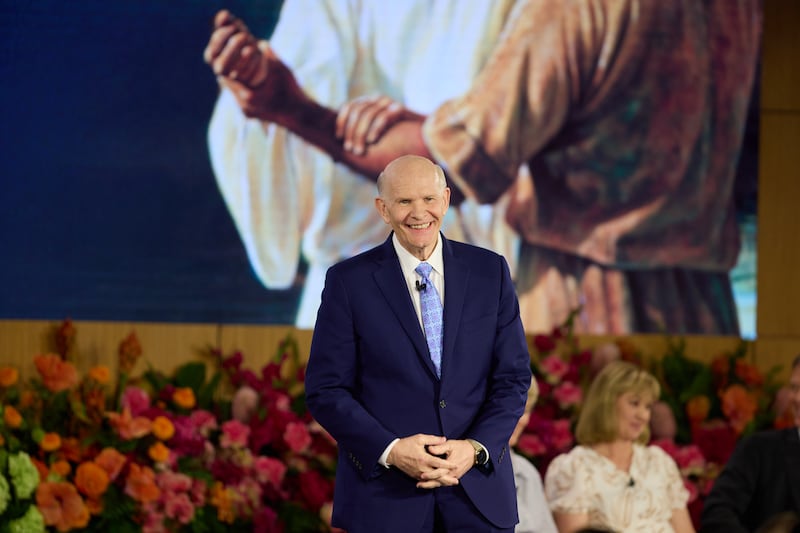
“How can I help?”
Elder Renlund also encouraged mission leaders to help missionaries understand the importance of never speaking negatively about local Church members. He described what it was like in 1983 when he was called as bishop of a newly formed ward in Baltimore, Maryland. Only 10 men were willing to accept tutoring assignments. Elder Renlund was overwhelmed by the ward’s “terrible” statistics and ongoing medical training, and described himself as a negative and pessimistic church leader.
However, his attitude changed when two missionaries arrived, asking earnestly: “How can we help?” Even though Elder Renlund told them there was not much they could do, the missionaries began fellowshipping with the inactive members. Two weeks later, a woman Elder Renlund did not recognize approached him and, with tears in his eyes, thanked him for sending missionaries to bring her back to the church.
Elder Renlund said the two missionaries encouraged and inspired those around them. By the time he transferred six months later, “they had changed the character of the ward, baptized people whose families were already members, and activated members who were less active. And they gave me optimism and faith.”
Quoting from the Preach My Gospel manual, Elder Renlund assured mission leaders that God would magnify their efforts to the extent that they worked in unity with local leaders and members. “Make working with them an important part of your goals and plans.”

