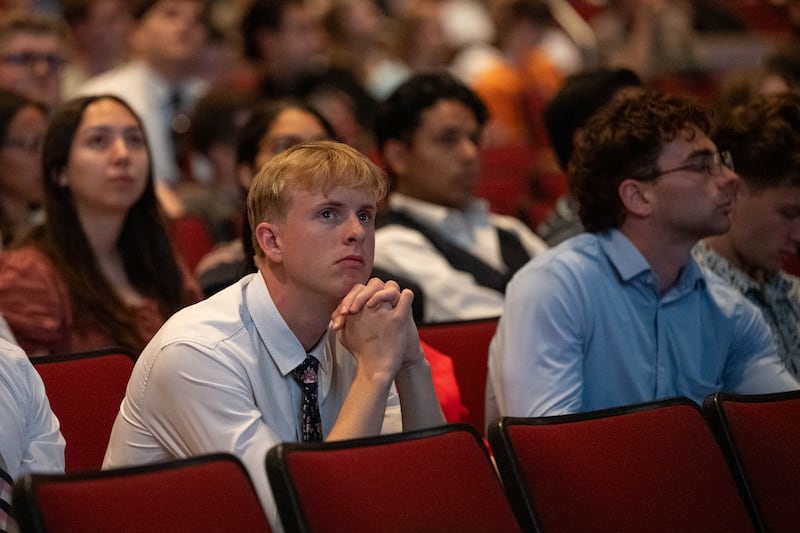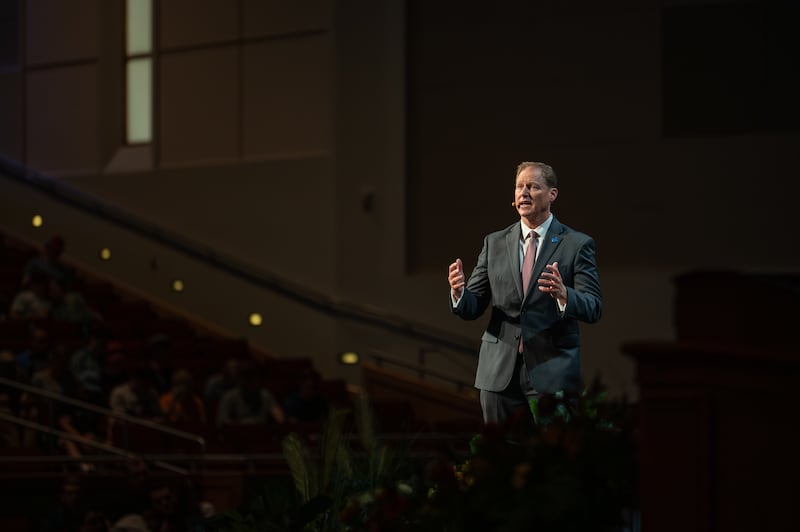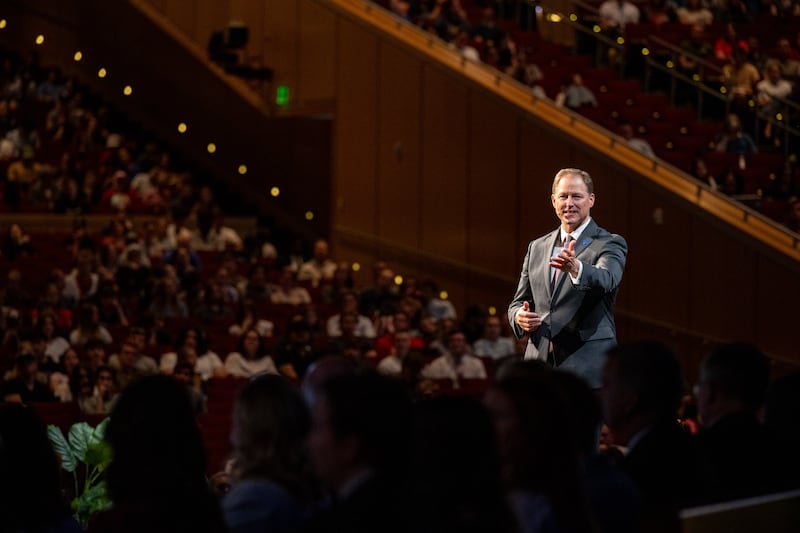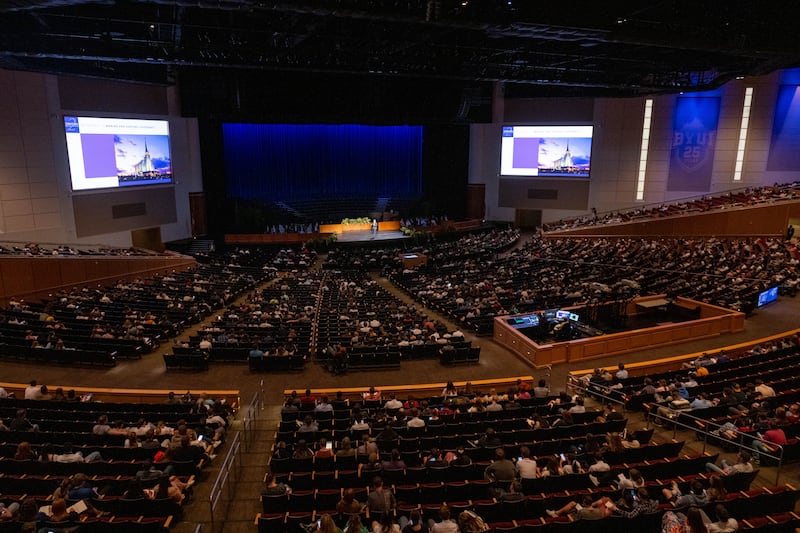
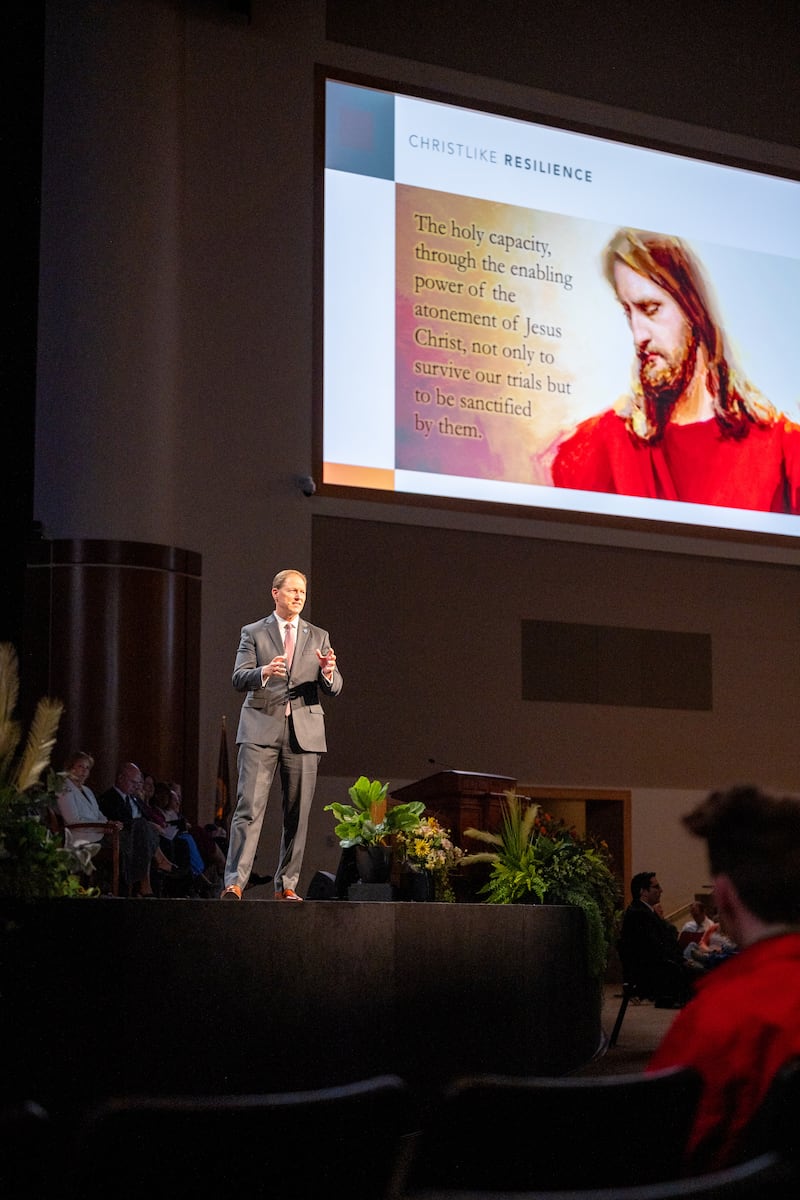
When Elder Mark A. Bragg, a General Authority Seventy, was assigned a few months ago to speak at a BYU-Idaho devotion on Tuesday, June 2, one topic immediately came to mind. But it was only recently that he learned the reason.
When Elder Bragg began his talk on the campus in Rexburg, Idaho, he told his students that he was speaking to people who were tired, troubled, discouraged, discouraged, and heartbroken. He told them how they could overcome trials and be sanctified by trials through what he called “Christlike resilience.”
When the Savior Jesus Christ was in Gethsemane, he “fell down and prayed, saying, ‘Father, if it be possible, let this cup pass away from me; yet not as I will, but as you will'” (Matthew 26:39). The word “yet” may be the most restorative word in the scriptures, Elder Bragg said.
He quoted President Dallin H. Oaks, now President of the Church of Jesus Christ of Latter-day Saints, speaking at BYU in 1995, saying, “Adversity is a constant or occasional companion for each of us throughout our lives. We cannot avoid it. The only question is how we respond to it.”
Through five principles that lead to Christlike resilience, Elder Bragg explained how to respond to adversity and maintain faith when the cup does not pass, or at least does not pass as quickly as expected.
1. Put your hope in Christ. In the Book of Mormon, when Alma’s people were in bondage, the Lord did not change their situation, but changed their strength so that they could bear the burden. (See Mosiah 24:14). Christ made them resilient, Elder Bragg said. “Christlike resilience begins with hope in Christ.”
2. Be faithful in making and keeping covenants. Baptism, priesthood, and temple covenants provide a sacred connection with the Father and the Son and provide resilience and confidence. “Do not turn away from the Lord. Draw near to Him. Keeping your covenants in times of hurt is one of the deepest manifestations of Christlike resilience.”
3. Pray with care. The word means “keep asking, keep knocking, keep pleading,” Elder Bragg said. It means to pray “until the calm and restorative power of heaven settles upon you.”
4. Find the power of your ancestors. Elder Bragg, executive director of the Church’s Temple and Family History Department, pointed to research showing that people who know about their ancestors are more resilient. This is also a spiritual truth, he said. “When we turn our hearts to our ancestors, we will feel that their hearts are already turned toward us, and we will feel their strength and encouragement.”
5. In times of adversity, look outward instead of inward. Elder Bragg said the Savior blessed, forgave, cared for and comforted them even on the cross. What he didn’t talk about much was that his mother was killed when he was a new bishop. That same week, he was given the opportunity to serve a family in his ward who had also experienced tragedy. “Christlike resilience is not just about getting through it, it’s about reaching out and blessing others while they get through it,” Elder Bragg said.
Elder Bragg recently had to test these five principles in another situation he could never have imagined. Elder W. Mark Bassett, Elder Bragg’s dearest and closest friend, a General Authority Seventy who sat next to Elder Bragg in every meeting and spoke to him weekly, even when they were serving in different countries, died on May 11.
Elder Bragg said when he received the commission in November, the Lord knew what Elder Bassett would need when he passed away. In the days following his friend’s death, Elder Bragg placed his hope in Christ, sought solace in his heavenly covenants, prayed for Elder Bassett’s family, reflected on their family’s story, and sought to reach out to others who were also grieving.
“I testify that Heaven has not been silent,” Elder Bragg said. “Peace came. Comfort came, not the erasure of loss, but a richness of hope, a quiet assurance that death is not destruction, separation is not abandonment, and loss is never permanent. It was a comfort that did not negate the grief, but guided us through it.”