


This coming Sunday, July 5th, is an opportunity for all members of The Church of Jesus Christ of Latter-day Saints in the United States to participate in a unified fast.
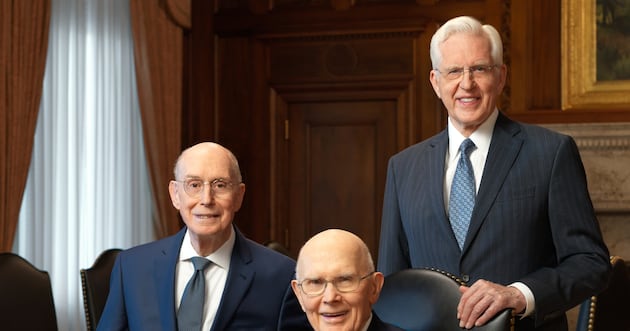
President Dallin H. Oaks and his counselors in the First Presidency, Presidents Henry B. Eyring and President D. Todd Christofferson, said in a March 12 letter to local leaders in the United States that “all are invited to join the United Fast in expressing our gratitude for religious freedom and praying for its strengthening throughout the world.”
The fast is scheduled for the day after U.S. Independence Day on July 4, the 250th anniversary of the signing of the Declaration of Independence.
Church historian Spencer McBride said the fast is historic for the country. During the American Revolutionary War, the Continental Congress proclaimed a Continental Day of Fasting and Prayer in 1775 and every year thereafter throughout the war.
McBride explained that Americans were asked to fast and pray throughout the day, go to places of worship, and listen to sermons from pastors about freedom and the importance of liberty and the stakes of the American Revolution.
“Our founders were really interested in making sure that we were appealing to God and pursuing freedom, and they did that at the time. And they wanted to make sure that the leaders of our church appreciated the rights that we had. “I think it’s appropriate to ask us to fast and pray for these things, but also to know how best to protect them in the future. This is a very fitting way to celebrate America’s 250th anniversary,” McBride said.
Upon receiving the invitation from the First Presidency, Kurt Fertig, Ensign College’s American Institutions Program Chair, was immediately reminded of Isaiah 58:6. “Is this not the fast that I have chosen, to loosen the bonds of evil, and to loosen burdens, and to set the oppressed free, and to break every yoke upon you?”
Fertig told the Church News podcast that many people around the world do not enjoy religious freedom, and in fact, it is difficult or even dangerous for them to freely express their religious feelings and worship.
“I think the purpose of this fast is to ask the Lord to work miracles around the world, to soften hearts, to open the way for change within governments that are needed, so that people can begin to feel the same ability to truly practice their religion freely, to remove its bonds, to be unshackled, no matter what their religion is,” he said.
Joseph Kelly, dean of Ensign College’s School of Communication, said two aspects of the upcoming fast are important. One is to express our gratitude for religious freedom. Because it reminds us that this right is God-given.
“It makes sense that God wants all of his children to enjoy religious freedom, and I think when we express our gratitude for that, it strengthens our commitment to that and our recognition that it is a gift from our Heavenly Father and how we can enhance it,” Kelly said.
It’s also a great responsibility to fast with so many others, he said, and “there’s tremendous power in that.”
worldwide fasting
In the New Testament, Paul admonishes Corinth to “dedicate yourself to fasting and prayer” (1 Corinthians 7:5). And the Savior Himself taught that certain things “do not come to you except by prayer and fasting” (Matthew 17:21).
This is a national fast for Latter-day Saints in the United States, but the Church is calling for a much larger fast, a worldwide fast.
In 1985, President Spencer W. Kimball encouraged Church members to fast for the victims of famine in Ethiopia.
Fast raised $6 million. Latter-day Saints participated in a second fast in November 1985, raising an additional $5 million for hunger relief.
Thirty years later, in January 2005, President Gordon B. Hinckley called on members of the Church around the world to fast for the victims of the tsunami that struck Southeast Asia on December 26, 2004. The disaster, caused by a magnitude 9.0 earthquake, killed more than 220,000 people in 12 countries, including Sri Lanka, Indonesia, Thailand and India.
Rapid emergency response and long-term support in affected areas were facilitated.
In 2020, then-Church President Russell M. Nelson invited Church members and others to join a worldwide fast on Sunday, March 29, to plead with the Lord for “physical and spiritual healing” in response to the COVID-19 pandemic. During general conference in April 2020, he called for a second worldwide fast on Good Friday, April 10.
People of other faiths also accepted the invitation. Many people also shared that they felt a sense of safety and security through their participation.
