


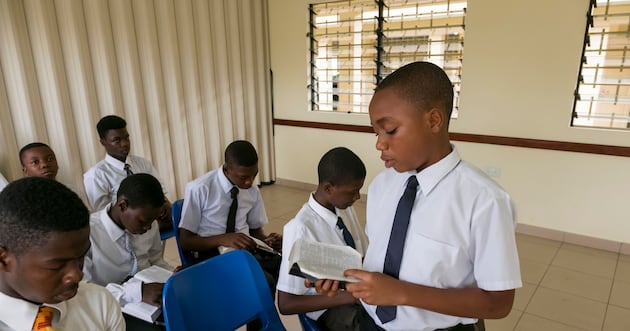
In 2020, the ward-level Young Men presidency was abolished, giving bishoprics greater responsibility to lead and serve the emerging generation.
In a recent Instagram Live shared on the Young Men of the World page of The Church of Jesus Christ of Latter-day Saints, the Young Men General Presidency addressed a common question many members have had since the change: “When will Young Men presidents be returned to the ward level?”
Timothy L. Ferns, Young Men general president, led the discussion and delegated specific topics to advisors.
Brother Sean Dixon, second counselor in the Young Men general presidency, said in a livestream video that this question often reflects concerns about bishops and their many responsibilities.
“They have such a heavy workload, so many things on their plate, and yet they give their time in such a wonderful way,” he said. “I just want to express my gratitude to the bishops and dioceses around the world. We know this is a very busy time.”
Adjustment of Priesthood Keys
Brother Dixon explained that understanding priesthood keys helps answer questions about organizational change.
He noted that Doctrine and Covenants 107:15 states, “The bishopric is the presidency of this priesthood, and holds the keys or authority thereof.”
The presidency stated that priesthood authority currently follows a direct line from Jesus Christ to the deacons quorum president, with no ward Young Men presidency in between.
“We are seeing great momentum in the church right now in all areas,” said Timothy L. Ferns, Young Men general president. “Perhaps it has to do with the simple alignment of the keys. There is power in alignment.”
Strengthening relationships
The Presidency also cited concerns that bishops are already under a heavy burden.
Referring to the General Handbook, Brother Dixon states that “the bishop’s greatest responsibility is to the emerging generation in his ward” (7.1). He explained that the purpose of eliminating ward Young Men presidencies was to bring bishops and their counselors closer to the young men they serve.
“The ultimate goal is to help these young people become lifelong disciples of Jesus Christ,” Brother Dixon said.
To strengthen these relationships, Brother David J. Wonderli, first counselor in the Young Men general presidency, emphasized the importance of delegation. He explained that the bishop could call on additional advisors to assist with the program.

“More delegations may be sent under the direction of the bishop,” Brother Wonderli said. “Bishop has the right to be inspired about these young men and the program, and he can bring in more advisors as he thinks about what they need.”
Brother Wonderli added that many ward members can serve in callings that support and strengthen young men.
Brother Dixon said the delegation allowed the bishops to focus less on logistics and more on ministry. Bishops can serve as one-on-one ministers and minister to young men throughout the program.
“If the bishop can relinquish these specific responsibilities, he is free to participate in activities without having to worry about making detailed plans,” Brother Dixon said. “He can spend his time serving the boys.”
The Office of the President emphasized that bishops are meant to serve young people one-on-one through their experiences in the church.
“It will be a shocking moment that will affect young men, young women and emerging generations more than anything else,” President Ferns said. “It will be a time when bishops can take the worry out of their work and just focus on who needs God’s help.”
Revelation from Bishop Interview
The presidency discussed the sacred role of bishop interviews in helping leaders truly know and guide youth.
Reflecting on his experience serving as a bishop, President Ferns described a moment when a routine interview became more spiritual.

During one interview, he said he had come to see the young man sitting across from him as his own child. At that moment, the interview changed and he felt that he was seeing the young man through God’s eyes.
“As a bishop, if you see the sons and daughters of the Lord through the eyes of the Lord, the interview will be different and you will have heavenly help in knowing exactly what to say,” President Ferns said.
As bishops help youth point toward the Savior, revelations come one after the other, President Ferns said. But it all starts with relationships.
The Office of the President said these personal, one-on-one relationships are often best strengthened through meetings with bishops and brief moments of service outside of regular church meetings.
“This is a time to build one-on-one relationships with each of these young people, and that’s where the change will happen,” Brother Wonderli said. “That’s where love is felt. That’s where our Savior can make a difference in a young person’s life. It’s one-on-one.”
Throughout the discussion, members of the Young Men general presidency emphasized that organizational alignment is never simply about changing leadership. Instead, they said, the aim is for bishops to serve the born-again generation more directly, strengthening personal relationships and helping young people come to Christ through personal mentoring and inspired leadership.

