


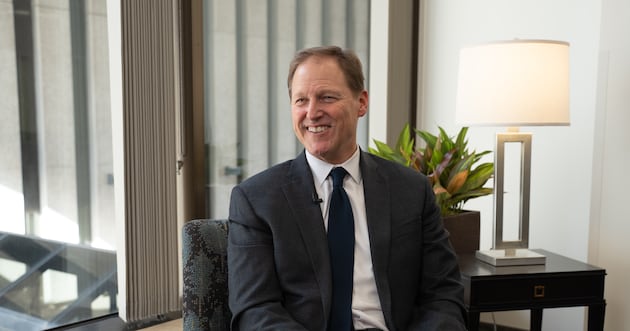
For anyone who has ever wondered what their role is in family history, Elder Mark A. Bragg says, “Add what you know.”
Elder Bragg is a General Authority Seventy of The Church of Jesus Christ of Latter-day Saints and executive director of the Family History Department and FamilySearch International. He recently spoke to Church News about how tools, resources and increased awareness are helping bring families on both sides of the veil together.
We also discussed the role each person can play in completing family history research and temple ordinances.
“Start with the Savior,” Elder Bragg said. “This is the work of God; He guides you and inspires you; this is the work of God, and the glory of God, as God says” (see Moses 1:39).
“Add what you know”
Elder Bragg encouraged Church members to start by adding photos, documents, and other information they have to their family trees.
As individuals do this, information builds on information added by others, ultimately creating a clearer picture. For example, Elder Bragg shared his experience of adding what he knew about a particular ancestor to a family tree, only to have another person submit birth and death records to correct that information.
“So add what you know and others will be inspired to help you on your journey,” he said.
Church members can also use the Ordinance Ready Tool, a tool in the FamilySearch Family Tree app. This tool searches a member’s family tree to find ancestors who can perform ritual activities. Members then select an ordinance and submit their names to the temple. If a relative cannot be found, the Manuals Lady can provide a name from the member’s ward or stake.
Elder Bragg said he marvels at how the Lord has allowed the development of technologies such as artificial intelligence and DNA testing, as well as how prophets have accelerated temple construction in recent decades. All of these technologies contribute significantly to the construction of family trees.
However, Elder Bragg emphasized that simply finding one’s ancestors does not mean honoring one’s ancestors.
“It is the ordinances that are performed in the house of the Lord that will enable them to progress and be united forever and be with us in the celestial kingdom,” he said. “The main thing is to help our ancestors receive the necessary ordinances to make the necessary covenants… to learn what they need to do and understand in order to live in the presence of our Heavenly Father.”
fun doctrine
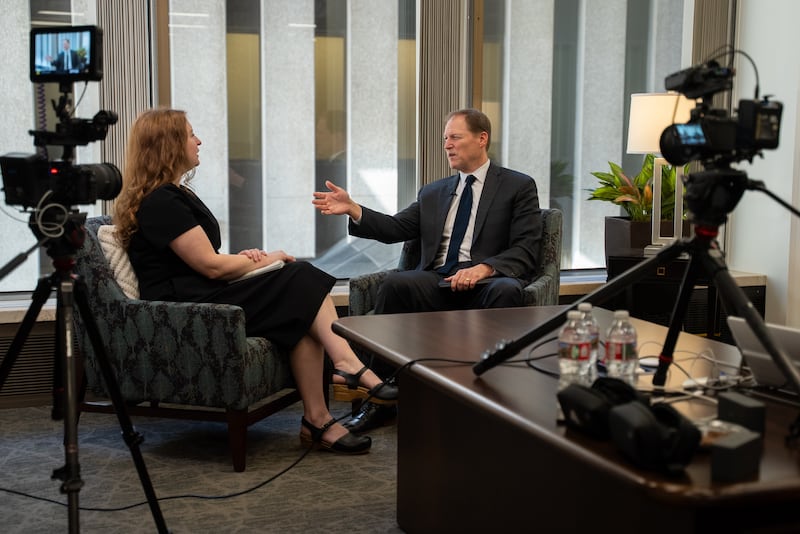
Elder Bragg said what he wants Church members to understand about family history is that they have accomplished great things and the Lord is pleased with them. “We wouldn’t be here today if it weren’t for these wonderful members.”
Elder Bragg continued that Church members can feel guilty for not doing enough, which can make family history feel like a burden. But he hopes parishioners feel excited in return.
He referred to Doctrine and Covenants 124 and 128, which describe baptism for the dead, and noted how early Latter-day Saints gladly accepted this doctrine.
“I hope we can be there, because that’s where we need to be,” Elder Bragg said. “That makes me happy.”
After all, he said, the gospel of Jesus Christ is about serving “the one.” The reason family history work resonates so deeply with people is because it helps people individually, he said. And rather than “taking names to the temple,” we prefer to think of them as “accompanying” our ancestors to the temple so that they can receive the ordinances of salvation.
“This is the work and glory of our loving Heavenly Father and His Son, Jesus Christ,” Elder Bragg continued, “and the greatest thing that we will never lose is our Heavenly Father and His Son, Jesus Christ. And our family history, our temples, are an expression of our Father’s love for us and that they will never forget ‘that one.’ … Because God never forgets His children. ”
