


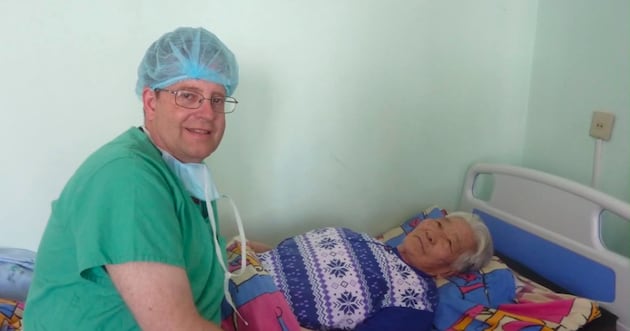
Before graduating from Harvard Medical School, before becoming a board-certified surgeon, and before working with medical professionals in Mongolia for 20 years, Dr. Raymond Price served as a missionary in Thailand.
In this hot, muddy and humid part of the country, the young Elder Price saw, perhaps for the first time, severe poverty and barriers to health care.
According to one recollection, he and a fellow missionary helped transport an injured woman to the hospital as others refused help. The hospital staff then asked the young missionaries, “Why do you help strangers?”
“That moment changed the direction of my life,” Price told the East Asian Church Newsroom. From that moment on, he felt motivated to pursue medicine and public health.
From open wounds to minimally invasive care
Dr. Raymond Price, currently Professor of International Surgery at the University of Utah and Visiting Professor at the National University of Medical Sciences of Mongolia, first visited Mongolia in 2005.
At the time, 98% of surgeries in the country were open surgeries, requiring large incisions, long hospitalizations, and lengthy recovery.
Walking through a Soviet-era concrete building, Price saw a white operating table lined with tools for open surgery: scalpels, retractors, clamps, and gauze. Nationwide, serious injuries from accidents and trauma are the leading cause of death among adults, but open surgery is not the most effective method. Surgeons lacked the equipment and training to enable the alternative, minimally invasive surgery.
While in Mongolia, Price’s goal was to educate medical professionals on how to perform laparoscopic surgery, which can cut hospital stays in half, significantly improve recovery rates, and reduce the risk of infection. We price training opportunities across the country, including public education campaigns, television appearances, door-to-door programs, and more.
“The message was clear,” Dr. Price recalled of his 2005 visit. “Mongolian surgeons wanted change and wanted to build their own capacity.”
The program adopted a ‘train the trainer’ model, with the aim of empowering local surgeons to become educators themselves, creating sustainable change that lasts long after international visitors return home.
Mr. Price was also instrumental in implementing a training course, the Advanced Trauma Life Support Program. The program, supported in part by The Church of Jesus Christ of Latter-day Saints, teaches health care workers step-by-step how to manage seriously injured patients.
October 2025 marked a milestone for the program as Mongolian educators received full certification to teach courses locally. Currently, more than half of all surgeries in Mongolia use minimally invasive techniques.
From surgeon to diplomat
Since leaving Mongolia, Price has become vice-chair of the World Health Organization’s Global Initiative for Emergency and Essential Surgical Care. He leads a global network of more than 2,000 medical professionals.
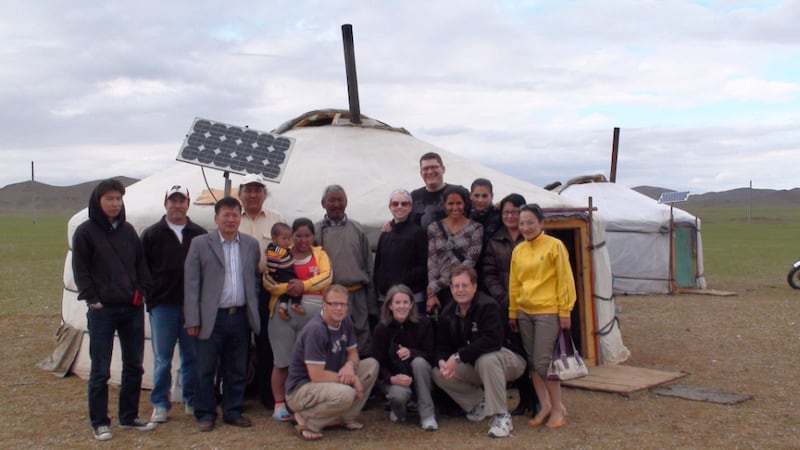
At a scientific conference last year, Price said: “The biggest accomplishment for me has been building friendships and partnerships that create sustainable change.
“When people work together with a common purpose, opportunities continue to grow.”
Most recently, on May 18, 2026, Mr. Price was appointed Honorary Consul of Mongolia to Utah, where he resides.
As honorary consul, Mr. Price will continue to support the cultural, educational, medical and economic ties between Mongolia and Utah, further strengthening the relationship that has taken nearly two decades to build.
The real success “is thanks to Mongolian doctors and educators who continue to do this work every day,” Price said.
