


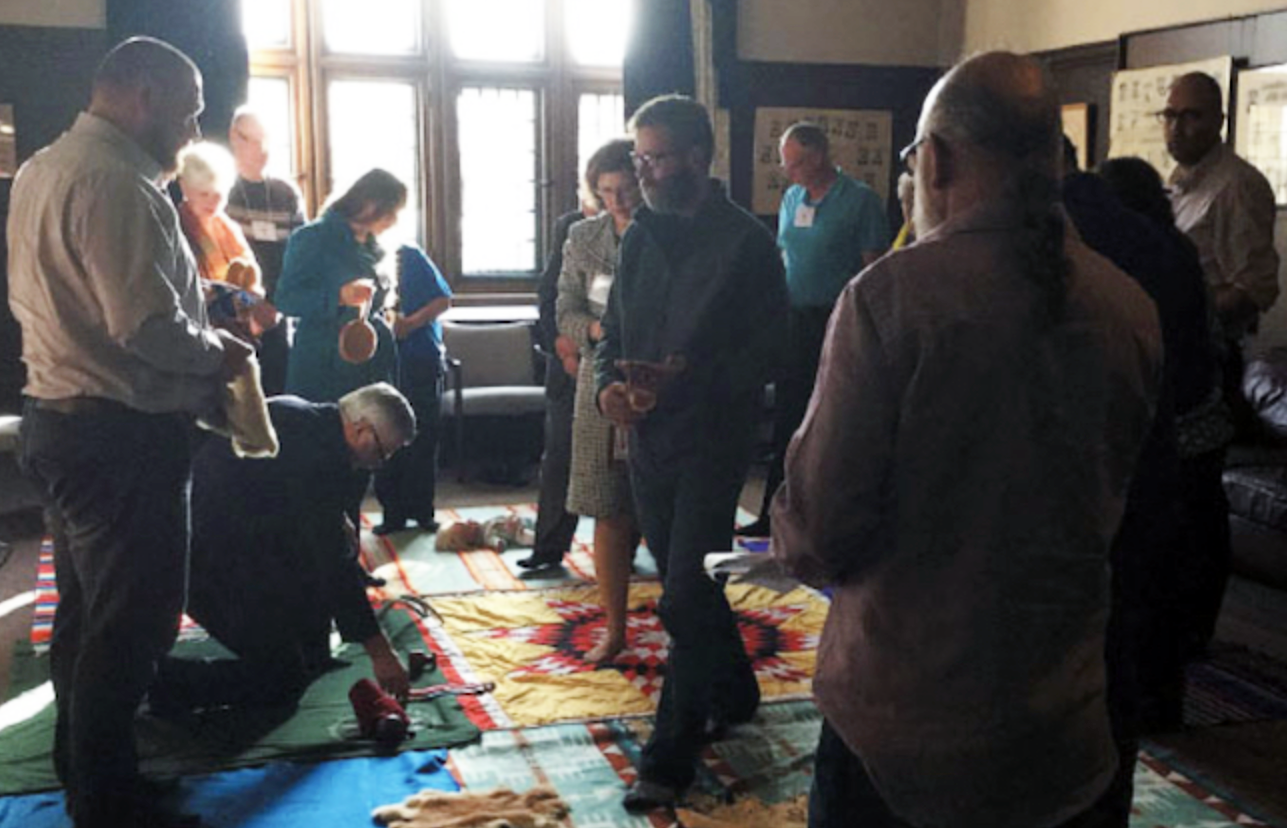
The Canadian Evangelical Fellowship (EFC) commemorated National Day for Truth and Reconciliation in a video message from President David Grecki on Tuesday, urging evangelicals to embrace their long-term commitment to reconciliation with Indigenous peoples.
The federal statutory public holiday, observed each year on September 30th, honors survivors of Canada’s residential school system and remembers the thousands of children who did not return home. It was created by Congress in response to the 80th case of the Truth and Reconciliation Commission, which concluded the work in 2015. This is also led by Indigenous communities and marked September 30th Orange Shirt Day, which is also raising awareness of the intergenerational trauma caused by schools. The orange shirt represents the loss of culture, freedom and self-esteem experienced by many Indigenous children.
“Today, we pray for our own journey of learning and action towards reconciliation and right relationships with Indigenous people, as individuals and as fellows of believers,” Grecki said in a video message. He reminded him of the evangelicals, quoting Galatians 5:13-14.
For more than 100 years, more than 150,000 First Nations, Inuit and Metis children have been separated from the families and communities of residential schools run by churches, often in collaboration with the government. In 2008, then Prime Minister Stephen Harper issued a formal apology, admitting that schools were designed to assimilate Indigenous children, banned their language and cultural practices, and often exposed them to neglect and abuse. “The policy of assimilation is wrong, causing great harm and we have no place in our country,” Harper said at the time.
Guretzki said the EFC’s involvement in the settlement dates back 30 years. In 1995, former Presidents Brian Stiller and Bruce Clemenger joined the sacred rally convened by Oji Cree leader and lawmaker Elijah Harper, to create a declaration of reconciliation. Later that year, the EFC invited Indigenous Christian leaders to later rename it to the Aboriginal Ministries Council, renamed it to the Aboriginal Ministries Council to strengthen relations, encourage learning and create educational resources for the church. The council continued until 2012.
Since the final report of The Truth and Reconciliation Commission, the EFC has responded to several calls to action, including #48, including #48. To do this, the fellowship established seven commitment working groups consisting of Indigenous and non-Indigenous leaders and led the ongoing journey.
“The EFC board has made a long-term commitment to ensure that the right relationship with Indigenous people is prioritized over the work and spirit of the EFC,” Guretzki said. He added that reconciliation “must be rooted in the relationship,” comparing the process to climbing the mountain, but it is difficult but necessary.
The EFC repeated this stance in a July letter to Prime Minister Mark Kearney. The letter urged the government to honor its constitutional obligation to consult Indigenous peoples about projects affecting their rights and land, in line with the UN Declaration. Indigenous people emphasize that they must be “complete partners and must do” in the projects that build the country and energy development, calling such consultations crucial to settlement and common interests.
Nation’s Day for Truth and Reconciliation continues to be the time for Canadians to look back at the history and heritage of residential schools. The defense of survivors led to the creation of the Indian Housing School Settlement Agreement, the Truth and Reconciliation Committee, and the National Truth and Reconciliation Centre, which houses the archival records and student memorial registers.
When he closed his message, Grecki urged evangelicals to pray and participate in the ongoing work. “Reconciliation is a journey, a process, and we know it requires intentionality,” he said. “There are storms, there are obstacles, but we cannot allow you to da on the task because the goal is fair and necessary.
The EFC represents approximately 2.5 million evangelicals in Canada through a network of congregations, denominations, educational institutions and ministries. The leader said it relies on ensuring that the reconciliation is not an occasional observance but a lasting part of their values and history.
