


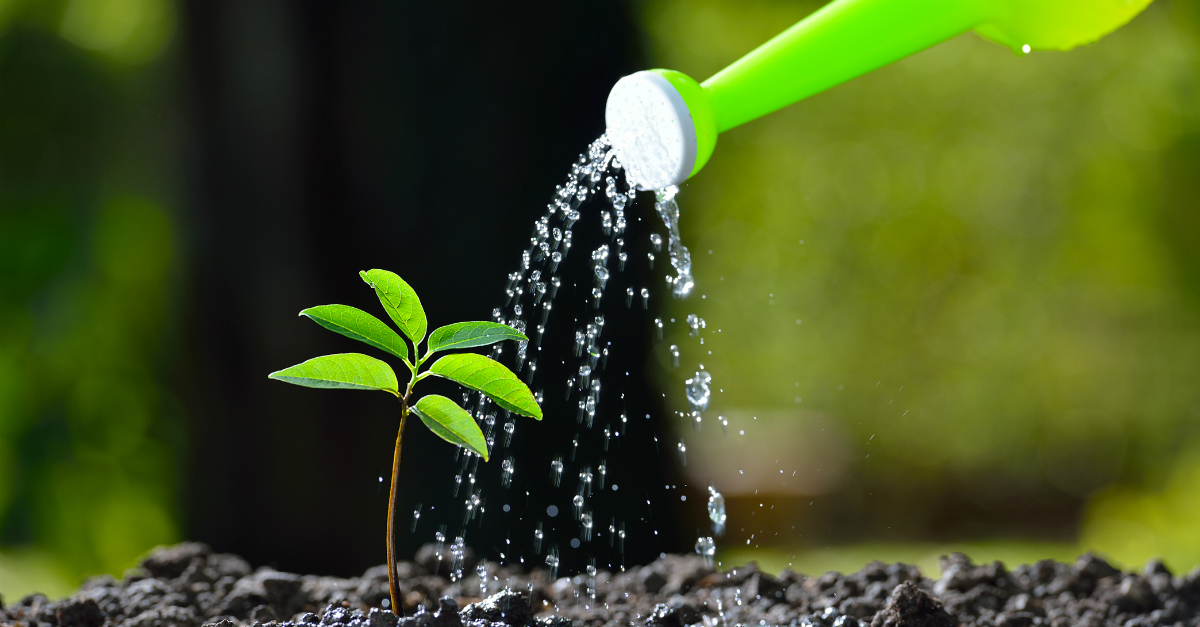
Recently, my husband and I took care of our garden. I say “spruced up” because a few years ago we made our first attempt at planting fruits and vegetables, but let’s just say it didn’t go as planned. We tried growing those seeds, but very little grew and the harvest was pretty disappointing.
We all have good intentions when it comes to planting seeds. It’s about whether the actual seeds we pray for will bear much fruit and produce a bountiful harvest, or about the nature of sowing seeds of faith.
The truth is, while I’m hoping and praying that this time my garden will produce enough to feed my family (or at least vegetables larger than a skinny toothpick), I’m also a realist and have a little (or a lot) of doubts.
Sadly, I have a similar mindset when it comes to planting seeds of faith. Perhaps you feel discouraged because you don’t always have the confidence to sow those seeds, or because the investment and time you put in just doesn’t show any real harvest and doesn’t always pay off right away.
All of this reached a tipping point last night when a casual conversation with my husband sparked a full-blown discussion about this very issue. It got me thinking… What if our view of gardening, especially “gardens of faith”, is all wrong?
Yes, planting requires a little planning, a little patience, and a lot of love. But it also requires a great deal of trust and a kind heart that clings to the hope of a precious promise. A promise that guarantees life.
Now, with that said, are you ready to plant the seeds?
If you quietly answered “yes”, we’re glad you’re here! Start by reawakening your own faith, then learn how to sow with a little patience, water with love, and trust God for the whole process, especially the growth and harvest.
awaken our own faith
Dear friend, if I could give you any encouragement today, it would be to first tend your own garden of faith. There’s a good reason airline stewardesses tell you to put on your own oxygen mask first before helping others. Because if our own faith is depleted, slowly dying, or undernourished, we cannot truly give and share our faith with others (at least to the best of our ability).
Now, let me be clear: do not take this to mean that we should not share our faith when our own faith is waning. In fact, there is a good reason why God commands you to do so, and we must always obey Him. All I’m saying here is that we must know and trust our gardener as we plant seeds and share God’s love with others. It means being in harmony with the Lord and allowing Him to prune, enrich, and grow us as His beloved children (John 15:1-2). If we do so, we can become witnesses to the rich and overflowing love of the Lord. We do this through the discipline of godly prayer, digging deep into God’s Word for truth, and seeking God’s guidance and wisdom so that we can learn to love others well (John 15:4).
plant with patience
When I returned home from the garden center with a truckload of plants, my first reaction was to dread all the work that actually goes into getting them into the ground. It was an overwhelming feeling to say the least.
At times, I felt growing irritation, especially when carrying these plants up several flights of stairs (as our garden is on a second-floor balcony). Still, when I gently remember its soft stems and fragile leaves, the feeling quietly fades away. Now that I’m finally ready to plant, I want to do it carefully. Digging the hole was easy. Gently removing them from their current pots and placing them in a new environment was not. Sadly, some of the leaves snapped off and the pretty stem snapped in the process.
But when we plant new life, isn’t that what it looks like? I think the same thing can be said about sowing “seeds of faith.”
We may be able to easily share our testimony, but it is simply impossible to make it personal with an unbeliever or someone we love deeply. Here we need to express patience and remember that we are dealing with a fragile part of someone else’s life. You don’t need perfection to plant seeds patiently. We need a soft heart that is willing to respond to the promptings of the Holy Spirit.
What does patient sowing look like in our daily encounters?
It could be as simple as keeping a few Bibles on hand and sharing them with people who come over to your home and need a little guidance. It might mean grabbing coffee with a friend and sharing how God is moving in your life. You might just humbly listen to your child’s struggle to find their faith, simply listen, and offer gentle support. When we wrap each of these encounters in prayer, we allow God to use us to dig into the dirt in our lives and those of others and make a little mess, but we can be patient and rely on God’s timing.
water with love
Every day this week I filled up a huge bucket of water and gave all the little plants a healthy dose of liquid drip (H2O). But today the water came from above and it was really nice. Gentle rain always has a calming and reassuring effect. When I suddenly looked outside, I saw my precious plants smiling.
Knowing that Jesus describes Himself as “living water” (John 4 and John 7), it is no surprise that we should not only be patient in sowing, but also be bold in reminding ourselves that Jesus is the true source of life transformation. New believers are often in a vulnerable state and need to be poured out with love. It is to show them the source of the nourishment, care, and tenderness they need to grow, and that is found only in our Lord Jesus Christ.
How does watering with love reflect in our daily encounters?
First, continue to be patient and kind, relying on prayer and Jesus to guide your acts of love. Encourage them with scriptures, promises, and truths to build trust. We share opportunities to explore our faith through service and missionary opportunities that prepare us to embrace our faith. Invite them to church, Bible study, or lunch and listen to their hearts. As they take steps on their faith journey, affirm their actions and provide support and encouragement to continue walking in the light (1 John 1:7).
Trust God to Grow
The hardest part about planting seeds is the amount of faith it takes to trust God throughout the process, both figuratively and literally. Planting seeds is not easy. Watering with love requires a selfless act, but perhaps the toughest part (and truth) is to take yourself out of the equation and rely heavily on God, the gardener.
Dear believers, I understand the heart and emotion behind sowing seeds of faith. In fact, we are called to be unashamed of the gospel and to be willing to share God’s love with others (Romans 1:16). We are also commanded not to grow weary in doing good (Galatians 6:9), to show compassion and kindness (Ephesians 4:32), and to be a light in a dark world (John 1:5). But we often take these truths at face value and overlook the promise that God is with us every step of the way. Yes, even if your planting fails or seems to be slowly falling apart due to overwatering. The truth is, God can capture and capture every moment, even the moments we would ignore, like a casual conversation with a stranger at the grocery store or a simple discussion with a child about daily choices. God is with you. We are but broken vessels for the Lord’s mighty work (2 Corinthians 4:7).
Trusting God allows us to step back and allow Him to intervene. You can invite God into the conversation and share your faith. We seek God’s wisdom on how to raise new followers of Christ and how to spread encouragement in ways that promote spiritual growth. Trusting God means letting go of our intentions for ourselves and others and holding on to hope even when the seeds of faith we sow seem to be starting to wither or become less receptive to the Light.
There is a great purpose in sowing seeds of faith in our daily encounters. Because it makes us contemplate the simplicity of sowing seeds while relying on God for a perfect harvest. This spring, as you sow, whether in your garden or in your daily life, stop and invite God in through prayer. Then act humbly and obediently, plant with patience, water with love, and trust that God will grow abundantly new life in due time.
Photo credit: ©GettyImages/amenic181
