


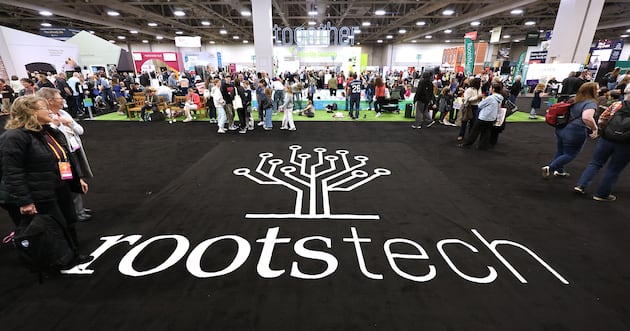
Hundreds of classes offered at RootsTech 2026 taught family history researchers how to use records from specific regions and countries such as Africa, Australia, and Europe.
Although many of the presentations focused on far-flung places, at least two were rooted in the history of Salt Lake City, where the conference was held, and focused on Utah’s pioneers.
RootsTech is a three-day online and in-person global family celebration conference hosted by FamilySearch International and sponsored by The Church of Jesus Christ of Latter-day Saints and other leading genealogy organizations.
It is the world’s largest genealogy event, featuring classes, new technology, and notable speakers such as Elder Ronald A. Rasband and Elder Patrick Kearon of the Quorum of the Twelve Apostles. The 2026 event was held March 5-7, with an in-person event in Salt Lake City and online at RootsTech.org.
See below for summaries of the two presentations given at RootsTech about Utah’s pioneers.
Find records of early settlers
Julie Merrill is a certified genealogist and research manager at AncestryProGenealogists. She previously served a five-year service assignment with FamilySearch.
Mr. Merrill taught a class on Saturday, March 7, entitled “Pioneer Temple Records and the Untapped Information and Relationships They Contain.” This course explored some of the reasons why family history research involving Utah’s pioneers is difficult and tips for overcoming those challenges.
For example, Merrill said, early pioneers were not encouraged to organize family history records until 1894, when then-Church President Wilford Woodruff asked church members to connect the deceased to their families whenever possible.
Merrill said the resulting “temple records” are now housed in the FamilySearch library’s special collections room. Although these microfilms are rich in information, they are not organized alphabetically. Merrill recommended using a resource available on FamilySearch called Annotated Records of Baptisms for the Dead, 1840-1845. This is a set of indexes that help researchers locate specific people within microfilm records.
Merrill recommended using the “Annotated Records” resource to first find the ancestor in question and then use that information to search for the original record in special collections. She also provided examples of how these and other records can help researchers eliminate duplication, correct erroneously duplicated unions, and reveal which vicarious temple ordinances were and were not performed for particular people.
“I hope today opens some eyes to what is missing from the history of our pioneer ancestors and what happened to their forgotten names,” Merrill said. “Go and check it out, explore and have fun.”
In memory of female pioneers

Ellen Jepson, 26th president of the International Society of the Daughters of Utah Pioneers, gave a presentation on Thursday, March 5, titled “Daughters of Utah Pioneers: Preserving the History of Utah Pioneers who came to Utah from 1847 to 1869.”

Jepson shared the life stories of several brave and faithful women who crossed the plains into Utah. For example, Ruth May Fox was born in Wiltshire, England, in 1853, and her parents joined the Church when she was about a year old. As a teenager, she left for Utah, where she later married and had 12 children.
Mr Jepson said Ruth Mae Fox was also involved in the women’s suffrage movement, served as the church’s Young Women general president and composed the hymn “Carry On.” She died in 1958 at the age of 104.
“She lived through the era of wagons, cars, airplanes and the beginning of the space age,” Jepson said. “(She) was a great woman and a great representative of the many pioneers who left home and came to Utah and were successful and lived great lives. I love Ruth Mae Fox. I’m ready to meet her someday.”

Mr. Jepson also told how the Daughters of Utah Pioneers organization was founded in 1901 by Annie Taylor Hyde, daughter of pioneers John Taylor and Jane Ballantine. The organization, which celebrated its 125th anniversary on April 11, currently has 101,000 members and 120 museums across North America, Jepson said.
“Annie Taylor Hyde had no idea what these pioneers would mean to her descendants and to people around the world, but she knew that remembering them would give her courage, strength and faith. I think she would be happy that her children, and her children’s children, would always remember them,” Jepson said.

