


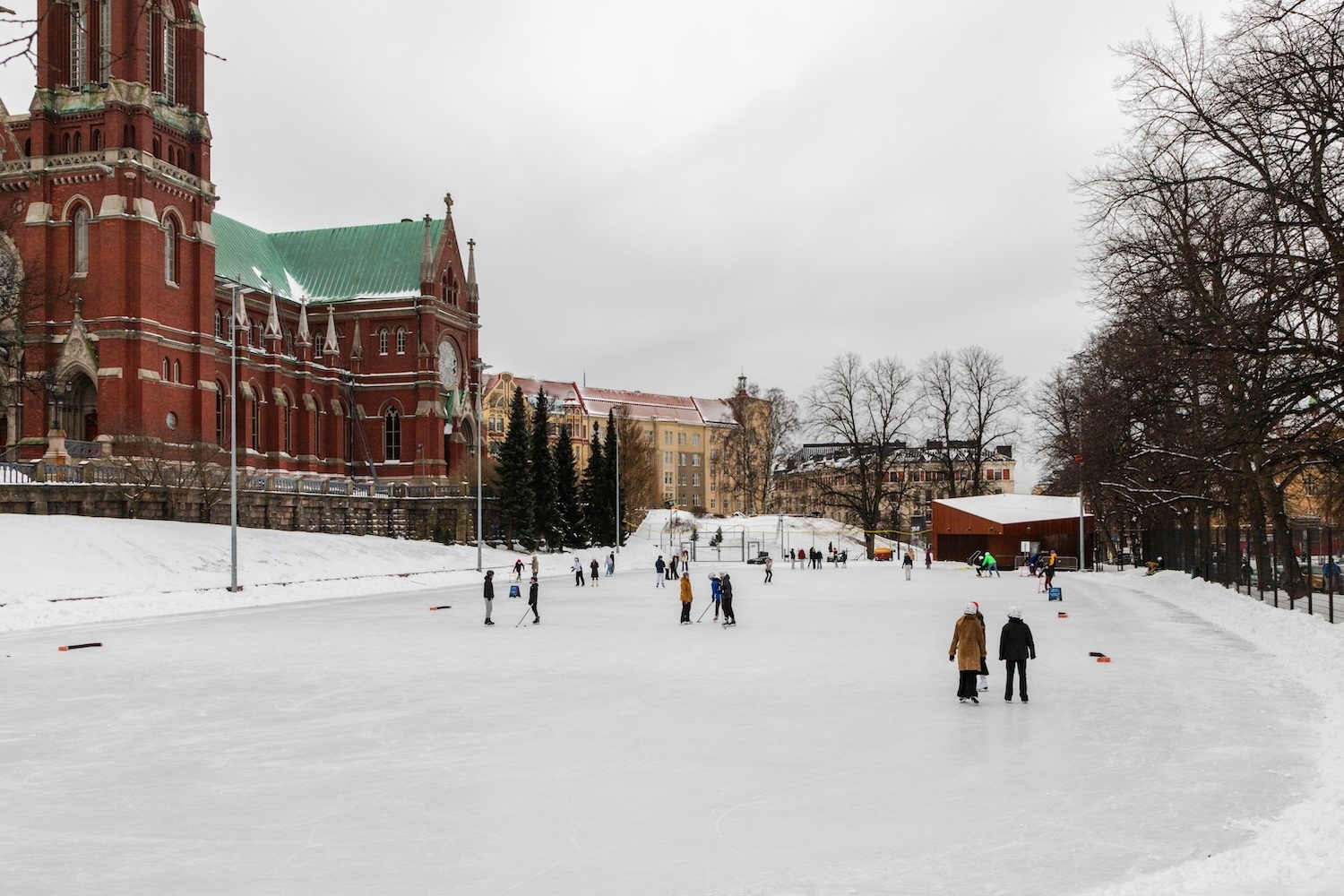
HELSINKI, Finland — Finland’s capital city is often overlooked in the winter. Many travelers believe that the darkness and cold outweigh the reward.
That assumption doesn’t hold true.
During the colder months, the crowds disappear, revealing a surprisingly efficient city of about 695,000 people. Finns do not hibernate in winter. Roads are clean, trams run, and daily life continues uninterrupted. For travelers who want to travel in the off-season, Helsinki is easier to read and in some ways easier to read than in the summer when the daylight hours are longer.
Helsinki’s history reflects a multilayered past, first under Swedish rule and then as a grand duchy under the Russian tsars. Their influence continues to shape the city’s landscape.
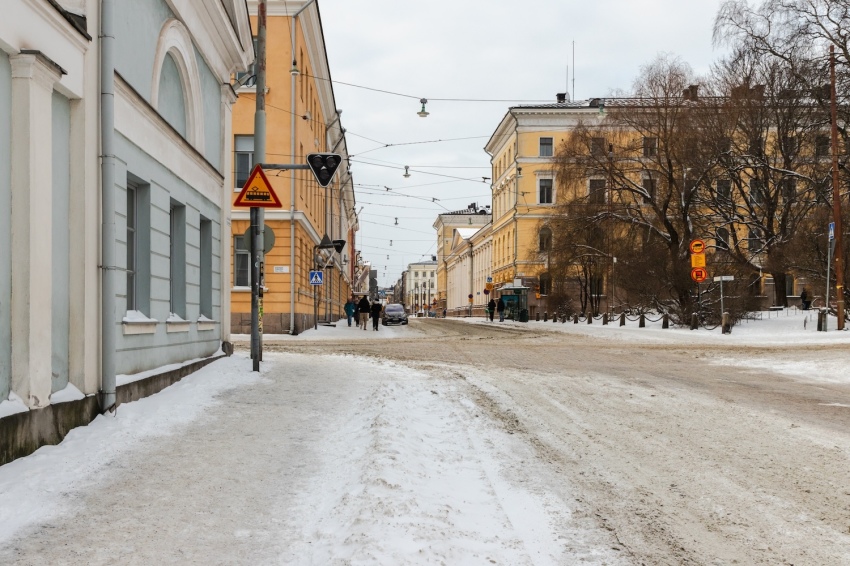
Relatively young by European standards, Helsinki was founded in 1550 by King Gustav Vasa of Sweden as a modest trading city intended to compete with the Hanseatic port of Tallinn across the Gulf of Finland. For more than two centuries, it remained a secondary presence, overshadowed by Finland’s administrative and ecclesiastical center, Turku.
Things changed when Sweden lost Finland to Russia in 1809. Alexander I made Helsinki the capital of the Grand Duchy in 1812. This emerging capital was modeled after neoclassical St. Petersburg.
Senate Square, designed by German architect Karl Ludwig Engel, is the focal point of Helsinki’s historic city center. Government buildings, universities, and cathedrals face each other in deliberate proportion.
The cathedral is Helsinki Cathedral.
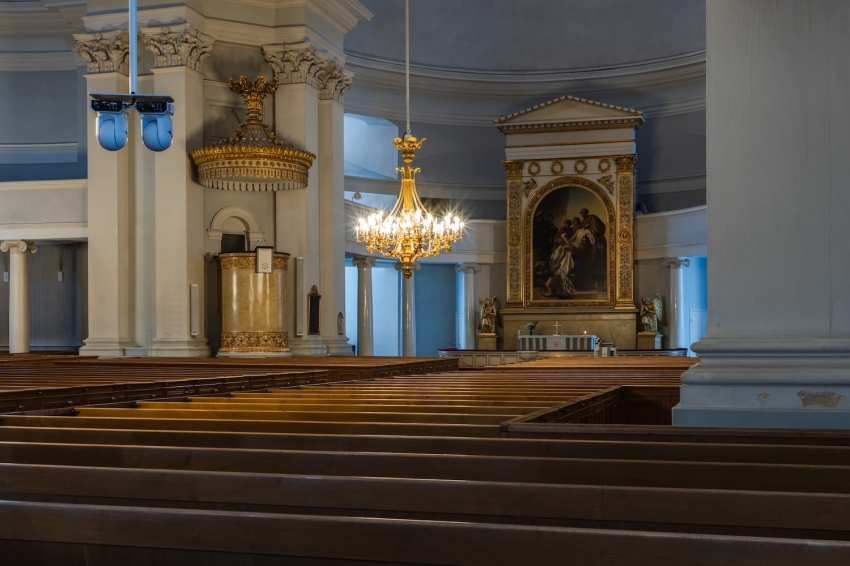
Completed in 1852, its dome, neoclassical columns, and statues of the 12 apostles are among its most prominent landmarks. The church serves as the Helsinki diocese of the Evangelical Lutheran Church of Finland, one of the two national churches in the country.
Lutheranism came under Swedish rule and remains an important cultural element of Finnish identity even today, when religious observance has declined.
The interior of the cathedral is restrained. In keeping with Reformation tradition, decoration is kept to a minimum except for a gilded pulpit and the main altar with an altarpiece depicting Jesus being taken down from the cross. The overall impression is one of order and clarity.
This restraint emphasizes the contrast throughout the harbour.
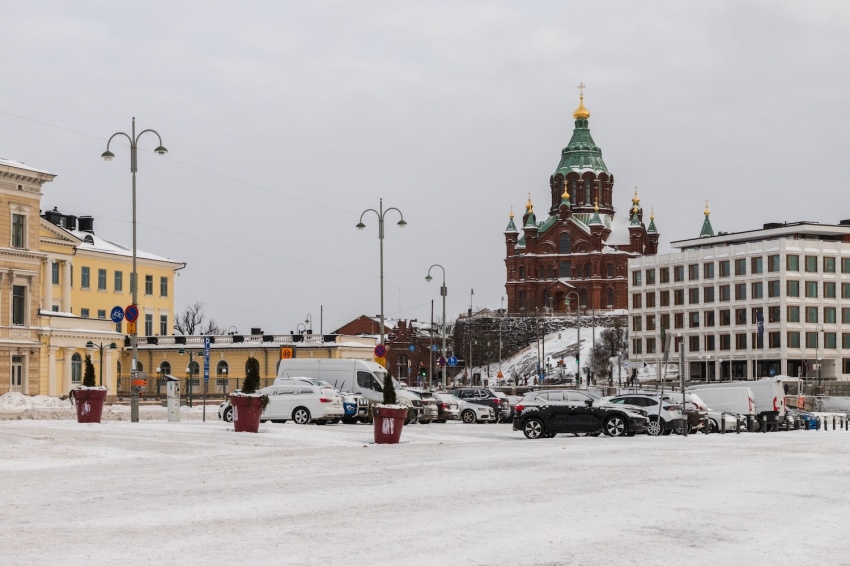
Uspensky Cathedral stands on a hill overlooking the water. The red brick walls and onion domes represent different traditions. Built during the Russian period, the church belongs to the Finnish Orthodox Church and has been under the authority of the Ecumenical Patriarch of Constantinople since independence. Inside, candles, icons and incense define the space. The gold iconostasis separates the clergy and the laity, reinforcing the sense of ritual and hierarchy.
While Helsinki Cathedral reflects Protestant discipline, Uspensky represents Eastern Christianity. The two churches are visible from each other and embody Finland’s long-standing position between East and West.
Russian rule ended in 1917, but Helsinki did not dismantle its past when it became a republic. The neoclassical building continues to house modern facilities. Lutheran and Orthodox churches coexist. Imperial monuments from the time of the Grand Duchy still remain, such as the bronze statue of the Russian Emperor as Grand Duke of Finland in Senate Square.
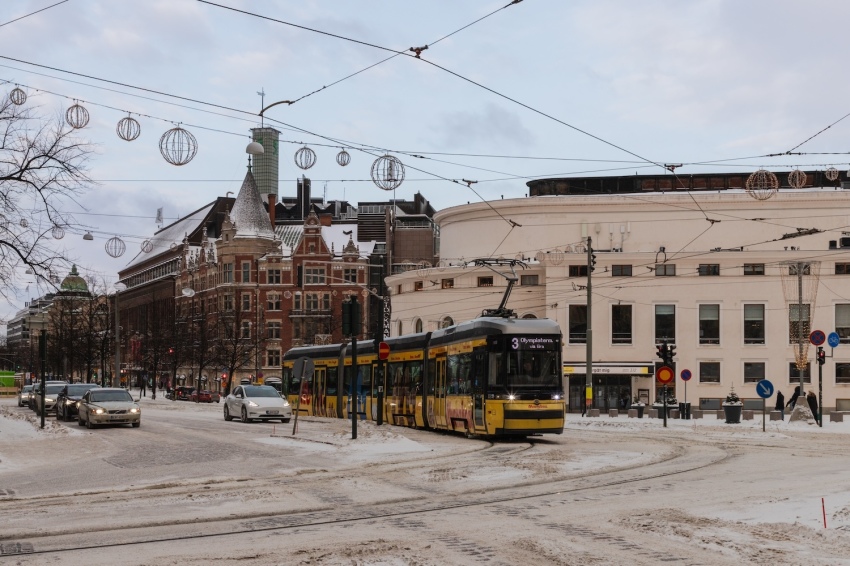
After walking around the city for a few days, I was struck by how surprisingly normal Helsinki is in winter.
Ferries continue to operate despite ice forming along the harbor. Market stalls remain open. Children skate on a seasonal rink. Seasonally dressed Finns stroll through Esplanade Park, a typical Parisian city park from the City Beautiful era.
Travelers who want to travel beyond the calendar will discover European capitals that reveal their true character.
If you go
Having arrived from Michigan, the state with the largest Finnish-American population, they found the winter climate manageable and sometimes milder than back home. Of course, it’s important to bring appropriate clothing and wear practical layers.
I stayed at the NH Collection Grand Hansa, a five-star hotel that opened in 2024 after redeveloping two historic buildings. Rooms are modern and equipped with high-tech bidet toilets rarely found outside of Asia. The breakfast buffet is extensive and features an emphasis on local and regional produce, including home-smoked salmon, Finnish baked cheese and jam platters. You can also drink lingonberry juice. Most of Helsinki’s main attractions are within walking distance.
The food far exceeded hotel expectations. Helsinki’s restaurant scene is strong, with several establishments offering seasonal menus or committed to serving only what can be grown, harvested, or otherwise produced in Finland.
Skörd’s tasting menu is particularly memorable. Wine connoisseurs won’t want to miss the gooseberry sparkling wine, which is made using the same method as champagne. A detailed and impressive brut sparkling wine. Meanwhile, Cappelli, located in the heart of Esplanade Park, is an elegant, old-fashioned cafe, bar and restaurant that evokes the atmosphere of Vienna or Paris at the beginning of the last century.
If you want to know more, especially if you want to visit some of Helsinki’s churches, consider booking a guided walking tour. I toured with Emil Anton, a polyglot theologian. His knowledge went far beyond architecture. He offers several itineraries and can be booked directly through his website.
One of the unusual ways to experience winter in Helsinki is by hovercraft. REDRIB offers tours to the icy islands of the Gulf of Finland. My tour started in Gambosstrand, a small village about 29 miles from Helsinki, and headed to the place where solid ice meets open water. We stopped on a deserted island and enjoyed a simple lunch of salmon soup, rye bread, warm blueberry juice, and so-called cowboy coffee.
Unfortunately, the National Museum of Finland is closed until 2027 due to construction. There are no special exhibits. Possible choices include the Ateneum Art Museum, Helsinki City Museum, and the Museum of Architecture and Design.
Anyone interested in architecture should definitely visit Helsinki Central Station. Designed by Eliel Saarinen, whose son later achieved considerable fame in the United States, the building is a notable example of Art Nouveau. Sari Saarinen, who is related to both Saarinen’s senior and junior architects, offers guided tours that include climbing the station’s 159-foot clock tower. Nearby, the 8-year-old Helsinki Central Library Odi offers much more than just books on loan.
Complete travel planning resources are available through our Helsinki partners.
Dennis Lennox writes a travel column for The Christian Post.
Dennis Lennox writes about travel, politics, and religious issues. He has been published in publications such as the Financial Times, Independent, Detroit News, and Toronto Sun. Follow @dennislennox on Twitter.
