


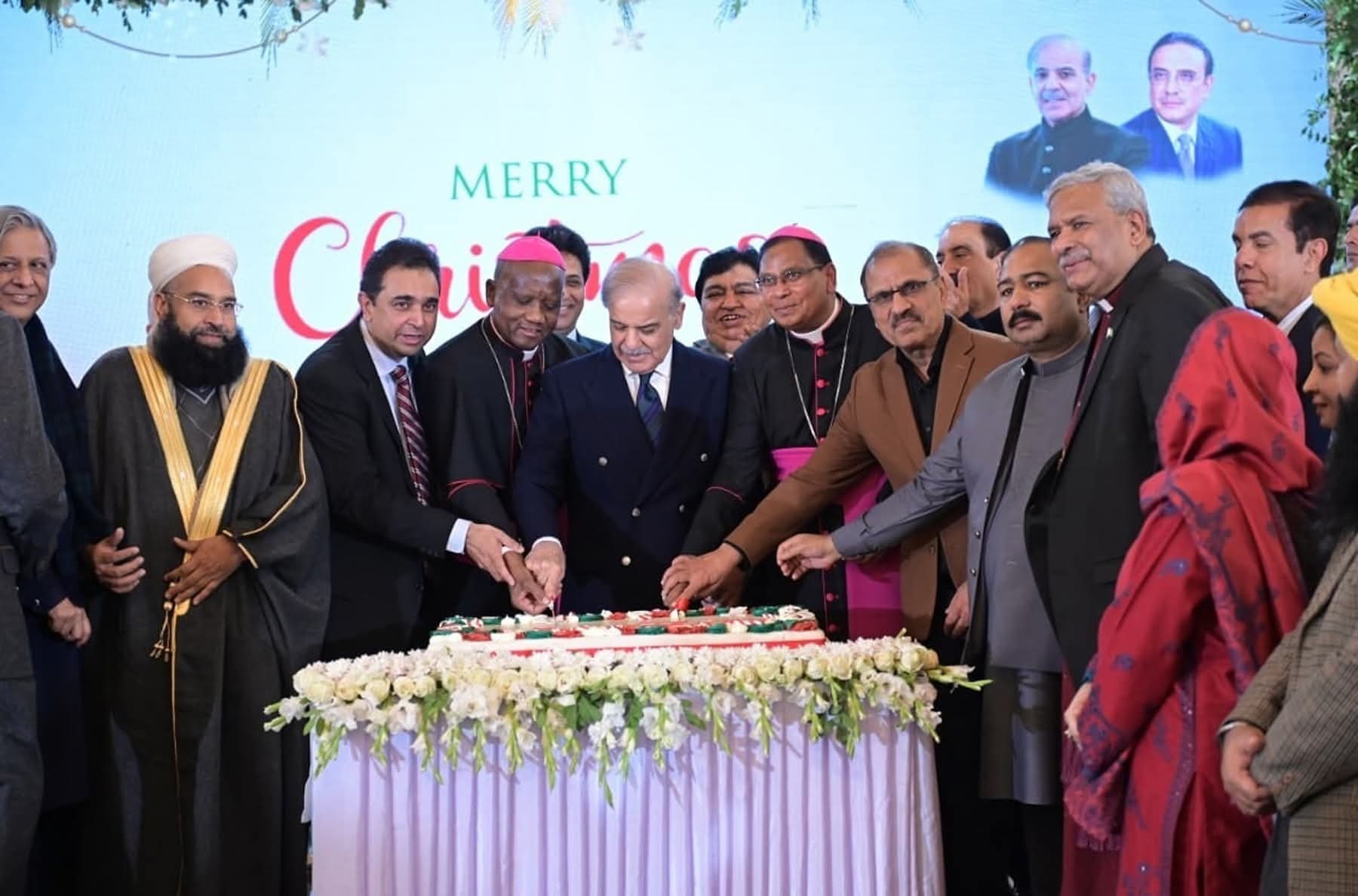
Pakistan’s government-sponsored Christmas celebrations this year marked a historic departure from the country’s decades-long struggle with religious extremism, in which religious minorities, including Christians, have been targeted by bombings, mob attacks and discriminatory acts.
For the first time since Pakistan’s independence, the federal and provincial governments officially sponsored a large-scale nationwide Christmas event, demonstrating an official commitment to religious freedom.
From Islamabad to Lahore, Rawalpindi to Karachi, Christmas was not confined to church premises. Instead, it was observed through state sponsorship, official messaging, public visibility, and high levels of participation, particularly in Punjab, where government authorities organized large-scale ceremonies, welfare distribution, and interfaith events for Christians.
The gesture drew rare bipartisan praise from Pakistan’s Christian community and progressive Muslim voices, many of whom said it was a long-standing recognition of civil rights rather than charity.
national moment
On Thursday, December 25, Christians across Pakistan celebrated Christmas with special prayer services, midnight masses, and community gatherings held under tight security. Churches were decorated with lights and Christmas trees, and Christian quarters were hung with banners and festive symbols, but the assertion of public identity was often suppressed by fear. In major cities, processions and peace rallies brought unusual visibility to Christian communities.
Pakistan Prime Minister Shehbaz Sharif, in an official message on social media platform
“Christmas is a message to humanity that unites us with feelings of love and goodwill,” Sharif wrote, praising Jesus Christ for his message of peace and brotherhood and describing Christians as “an active, positive and peaceful layer of society.”
Sharif explicitly acknowledged the contribution of the Christian community to education, healthcare, social welfare and the fight against terrorism, and urged Pakistanis to renew their commitment to unity and social harmony.
Prime Minister Sharif, speaking at a Christmas ceremony at the Prime Minister’s Office, particularly recognized the exemplary role of former Chief Justice of Pakistan, Justice AR Cornelius, in strengthening the country’s judicial system. Air Chief Marshal Cecil Chaudhry praised for his courage in defending Pakistan. And Dr. Ruth Pfau was honored for her extraordinary humanitarian work in medicine, especially for her lifelong fight against leprosy in the country.
In a separate message, President Asif Ali Zardari said his comments were based on the ideology of the creation of Pakistan. Zardari quoted Quaid-e-Azam Muhammad Ali Jinnah’s speech in the Constituent Assembly on August 11, 1947, reaffirming that Pakistan was envisioned as a nation where its people could worship freely without fear.
“Christmas brings hope, peace and compassion and reminds us of the ties that unite all humanity,” he said, adding that the constitution guarantees equal rights and religious freedom.
Mr. Zardari also recognized the community’s long-standing contributions to national defence, politics and public affairs, and paid tribute to prominent Christians.
symbolic participation of the military
The most shocking moment came when Chief of Defense Forces and Commander-in-chief Field Marshal Syed Asim Munir attended a Christmas celebration at Pakistan Anglican Christ Church in Rawalpindi. This was a highly symbolic act in a country where the military wields great political influence.
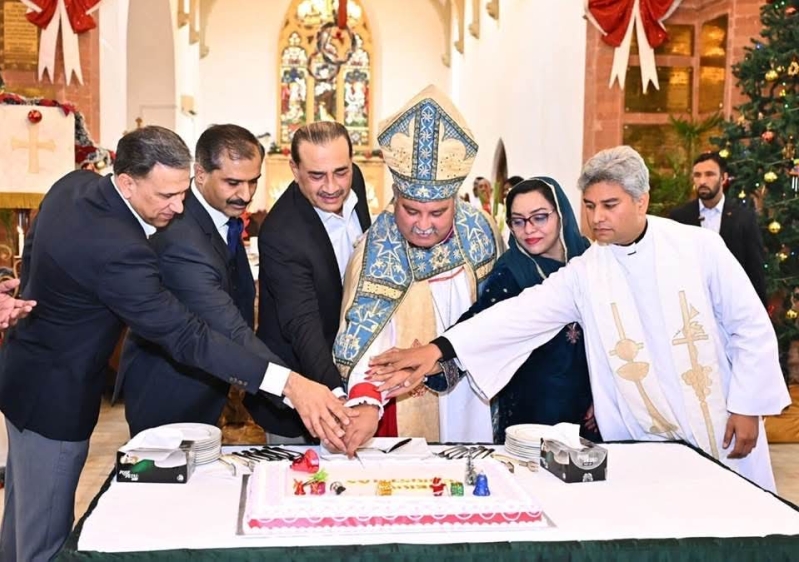
According to Inter-Services Public Relations (ISPR), the military’s media wing, Munir described Christmas as an occasion that reflects shared values of compassion and unity, and reiterated that Pakistan’s military is committed to protecting dignity, security and equal rights of all its citizens.
Citing Jinnah’s vision, the army chief emphasized that minority rights are the cornerstone of Pakistan’s ideology, praised the service of the Christian community in the military, and stressed that Pakistan’s strength lies not in its religious unity but in its diversity and constitutional equality.
Christian leaders present at the church described the visit as a powerful gesture of solidarity and noted that such visible engagement by military leadership is unprecedented.
Punjab takes the lead
The largest government-sponsored celebration was held in Punjab province, home to Pakistan’s largest Christian population.
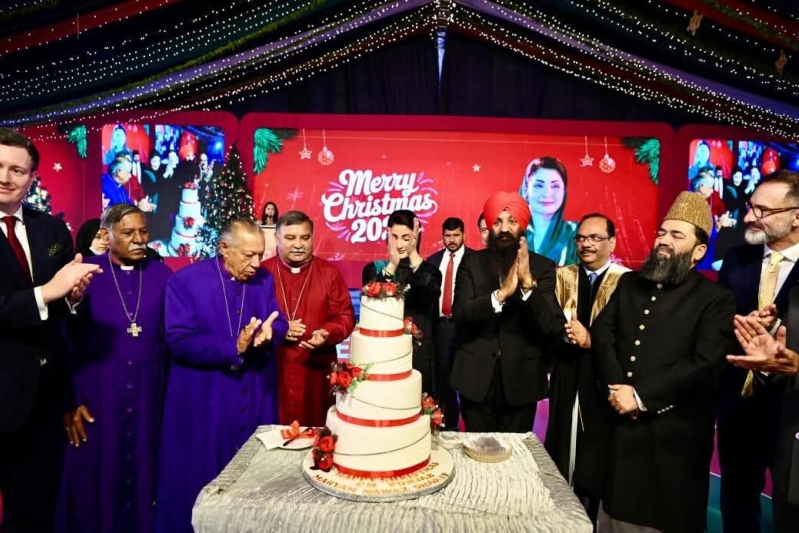
Prime Minister Maryam Nawaz personally attended a government-sponsored Christmas ceremony at the Lahore Anglican Cathedral and vowed to stand up against injustices faced by minorities “like a wall.”
“First of all, we are not Muslims, Sikhs, Christians or Hindus. We are Pakistanis,” she declared.
The prime minister announced immediate measures to resolve issues related to minority cemeteries, directed authorities to increase budget allocation for minority welfare, and unveiled plans to increase the amount of minority cards from 75,000 rupees ($268) to 100,000 rupees ($357).
She also highlighted symbolic actions such as government sanitary workers cleaning churches before Christmas and warned that “a government that does not protect the rights of minorities has no legitimacy to remain in power.”
Diplomats from the United States, Britain and other countries attended the ceremony, where minority cards and Christmas grant checks were distributed, along with leaders of several faiths. The event began with readings from the Quran and the Bible, followed by a choir performance, a carefully considered expression of interfaith harmony.
The clergy and community leaders, along with the Rt Bishop Emeritus of the Lahore Diocese of the Church of Pakistan, expressed their gratitude to the federal and provincial authorities. Reverend Alexander John Malik bestows the title of ‘Daughter of Punjab’ on Maryam Nawaz.
Some described the 2025 celebrations as a moment when the country seemed to recognize Christians as equal citizens rather than a tolerant minority.
Progressive Muslim commentators echoed similar sentiments on social media, arguing that state-backed celebrations strengthen Pakistan’s constitutional identity and counter a narrative of exclusion promoted by extremist groups.
Renowned journalist and commentator Raza Rumi praised the Punjab government for installing a large Christmas tree in the center of Lahore.
“A 42-foot Christmas tree symbolizing love, pluralism and inclusivity has been installed at Liberty Chowk in Lahore,” Rumi wrote on Facebook. “This initiative reflects the Punjab government’s attempt to recognize the Christian minority. Let’s hope that beyond such a symbolic (but important) gesture, further steps will be taken.”
Leading minority rights activists acknowledged that the scale and alignment of Christmas 2025 represented a meaningful change in national attitudes, but warned that symbolism must be transformed into structural protections, legal reform and accountability for past violence.
“While we welcome the federal and state governments’ commitment to celebrating Christmas at the official level, more needs to be done to actually protect minority rights and promote religious tolerance in the country,” Samson Salamat of the Rwadari Tehreek (Equality Movement) wrote on Facebook.
In a country where religious minorities are often forced to mourn in silence, this year’s Christmas was loud, visible and officially sanctioned. Whether it signifies lasting change or a singular moment remains to be seen, but for Pakistan’s Christians it was a rare affirmation that the nation was not just protecting them, but standing by them.
