


A 49-year-old blind Christian living in Pakistan has been arrested on blasphemy charges and faces the death penalty after being accused by Muslims of insulting Islam’s Prophet, his mother has revealed.
Nadeem Masih’s nearly 80-year-old mother, Martha Yousaf, said Waqas Mazar and other Muslims frequently harassed her son, sometimes extorting money from him, sometimes dousing him with water and calling him names.
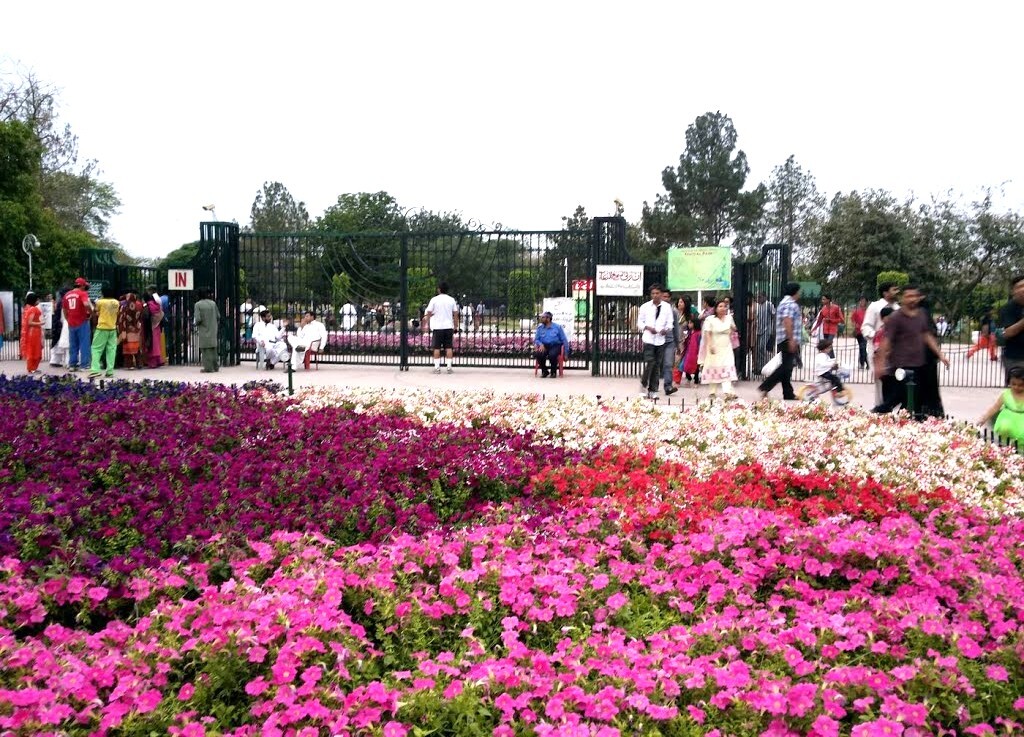
Mazar worked as a parking lot contractor in Lahore’s Model Town Park, where he also earned a meager income supplying scales to petty traders.
“Sometimes kind visitors would give him more money because of his disability, but the park’s Muslim workers were stealing money from his pockets,” said Yousaf, a Catholic from Chak No. 9/4L village in Punjab’s Okara district. “Several people, including Mr. Mazar, received loans of various amounts from him but refused to repay them despite his repeated requests.”
Yousaf said that when Masi went to work on August 21, Mazar and others refused to allow him to set up his makeshift stall.
“When Masi protested against their harassment, Mazar and another man manhandled him, made him sit on a motorcycle and took him to Model Town police station,” she said.
There they charged him with blasphemy and handed him over to the police, who arrested him under Article 295-C, a harsh law that carries the death penalty for insulting Muhammad.
“When I first met my son in prison after his arrest, he cried bitterly as he told me how the police beat him mercilessly and forced him to plead guilty,” Yousaf told Christian Daily International Morning Star News.
She said police treatment of her son was cruel from the beginning.
“Every time I see him and every time he talks about how badly he has been treated, especially when he appears in court, my heart bleeds and I cry,” she said. “Even though they knew he was blind and had an iron rod stuck in his right leg, they pushed him down.”
Yousaf begged for his son to be freed from the false charges, saying he had already lost a son several years ago, leaving only Masi and his three daughters to support the family.
“We are very poor people, barely making ends meet. Masi’s father passed away, and now one of my daughters, who is divorced and lives with me, works in people’s homes to help us both make ends meet,” she said, crying. “I pray every day to God to rescue my son from this false accusation and bring him home to me.”
Despite her disability and financial constraints, Masih graduated, but she said she was unable to find work as there were few employment opportunities for people with disabilities in Pakistan.
Masih’s lawyer Javed Sahotra said there were major discrepancies in the first information report (FIR) that allowed the Christian to be released on bail. The complainant in the case, police sub-inspector Muhammad Ayub, claimed that he and his team were informed of the blasphemy charges when they were patrolling the park at 11pm.
“But the fact is that the park gates close at 9 p.m. and no one is allowed inside after that,” Sahotra told Christian Daily International Morning Star News. “Furthermore, Masi called the police helpline at 6am to report abuse by parking contractors and others, but received no help.”
Sahotra said she had applied to the Model Town police station for the sub-inspector’s call data records showing Ayub’s location at the time of the alleged crime.
“If the trial court does not grant Mr. Masih bail, we will move the case to the Lahore High Court, which will certainly take these facts into account,” he added.
Mr. Sahotra accepted Mr. Masih’s claim that he was tortured by police while in custody.
“It is extremely unfortunate that a visually impaired person was subjected to such inhumane treatment by the police,” he said. “We hope that the government and police leadership will take note of this high-handed behavior by their officers and take disciplinary action.”
Naeem Yousaf, executive director of the National Commission for Justice and Peace (NCJP), the Catholic Church’s legal advocacy group, condemned the false arrest of a blind man on charges as serious as blasphemy.
“Masi continued her work for many years despite being the target of harsh societal attitudes that did not recognize people with disabilities as human beings,” he said. “He already suffers from poverty, blindness and social brutality, and now he suffers even more in solitary confinement, a victim of injustice and human indifference.”
Pakistan’s blasphemy laws have been systematically abused to target religious minorities, displace the poor, and settle personal and economic disputes, Human Rights Watch said in a June 9 report.
The 29-page report, “Land-grab conspiracy: Exploiting Pakistan’s blasphemy laws for intimidation and profit,” states that “blasphemy charges are increasingly being weaponized to incite mob violence, displace vulnerable communities, and confiscate property with impunity.”
The report said in some cases blasphemy accusations were used to target business rivals or force them to transfer property. It added that the law’s broad and vague provisions allow it to be exploited with minimal or no evidence, creating a climate of fear among vulnerable people.
HRW criticized Pakistan’s criminal justice system for enabling these abuses. The report said authorities rarely held perpetrators of mob violence accountable, but police often failed to protect suspects or investigate charges.
In some cases, the intervening officers themselves may face threats. Political and religious activists accused of inciting violence often evade arrest or are acquitted due to lack of political will or intimidation.
Pakistan was ranked eighth on Open Doors’ 2025 World Watch List of the 50 most difficult countries to be a Christian.
