



brought to you by
When life feels uncertain, we need confidence and clarity in our faith. But things often seem cloudy at such times. During difficult times, we become spiritually, mentally, and physically exhausted. As we sit and spend some quiet time with our Father, the energizing feeling that comes our way can leave us in a cluttered mental space, struggling to focus on prayer and God’s Word. Seeing with the eyes of faith in difficult times requires us to continue in action and repeat the truths we know and the work God has already done in our lives. Because God promises that if we seek Him with all our heart, we will find Him. Even when you’re tired. Even when times are tough. Even if it doesn’t feel the same as the easier times in your life.
In Out of the Silent Planet, the first book in C.S. Lewis’s space trilogy, Dr. Ransom is surprised to learn that there is an invisible presence in Malacandra. Or rather, I don’t have the ability to see it yet. Ransom finds himself on a new planet and quickly learns that his assumptions were wrong. These beings are not scary, bloodthirsty monsters, but creatures with values and unique skills. After hearing about a spirit-like being called Eldira, he asks his friend Hyoi why he can’t see Eldira. As Hyoi tells him, “But Eldira are hard to see. They are different from us. Light passes through them. You have to be looking in the right place and at the right time. And unless Eldira wants to be seen, that’s not likely to happen” (Scribner, 1938, p. 77). Only if Ransom believes in these beings and knows what to look for can he distinguish their presence from the movement of light on earth.
We can suffer from spiritual myopia as well. When we close our eyes through fear and unbelief, we fail to recognize the work of the Lord around us. All we focus on is the situation that is causing the difficulty. But the Bible can help cure myopia by strengthening your faith. We read stories about Elisha and the blind man. We are encouraged to trust God, even if circumstances around us seem that way. hopeless or defiant. As we study these events in the Bible, we become more aware of God’s presence and work in our lives.
Seeing with eyes of faith means trusting that God is present, active, and fighting for you, even when circumstances make it difficult to see. In this article, we explore how the Bible trains believers to move beyond fear and spiritual myopia to a more solid trust in God, who works at times in ways we cannot see.
What does it mean to see with eyes of faith?
Seeing with eyes of faith means trusting in God’s presence and promises, even when you cannot physically see what God is doing. It’s not denial or wishful thinking. It is a kind of spiritual vision that believes God is working beyond fear, anxiety, and what outward appearances suggest.
How does the Bible’s account of the prophet Elisha show that God fights for us?
Like Elijah and many prophets before and after him, Elisha faced threats from people who did not value his role. The king of Aram (i.e. Syria) became suspicious of his men, suspecting that one of them was a spy for Israel. But they said the only reason he kept failing in his attacks was because Elisha knew of his plans. As they said, “Elisha the prophet who is in Israel will proclaim to the king of Israel the very words that you speak in your bedchamber” (2 Kings 6:12, NIV). So King Aram decided to capture Elisha.
The soldiers surrounded the Prophet of Dothan. His followers were frightened when they saw the huge number of soldiers and their tanks. He asked Elisha what he was going to do. Indeed, two people cannot stand against the entire army. But the man of God was calm and asserted that his friends outnumbered his enemies (2 Kings 6:16-17). What he was essentially saying was, “Have faith, God is on our side.” And Elisha prayed, not for himself, but for his servant. “Lord, open his eyes, that he may see” (2 Kings 6:17, NIV). Then the servant saw with eyes of faith the fiery chariots of the angels of God surrounding them. There was no need to be afraid. Unlike the servants, the soldiers suffered from blindness, but Elisha’s prayers restored their sight. The Lord led His army through Elisha into Samaria and peacefully ended the Aramean raids (2 Kings 6:18-23). The great Lord is the One who protects His people and provides for their needs. All they had to do was trust in the Lord.
This passage captures the theme of Hebrews 11:1, which describes faith as “confidence of what we hope for and confidence of what we do not see” (NIV). Throughout the Bible we see the Lord encouraging people to trust in Him even though the outcome is unknown. Abraham trusted God by following God’s command and going into an unknown land (Hebrews 11:8). Before Joshua went into battle to take possession of the Promised Land, he was told to find courage in the Lord who went before them (Joshua 1:9). Jehoshaphat and the people of Judah believed that God would fight for them. And God did fight (2 Chronicles 20:15). It took faith, the confidence to trust even in the unseen, for them to believe that God would fight for them and surround them with an army of angels (Psalm 34:7).
What does Jesus teach about spiritual blindness and sight?
When the disciples realized that the man had been blind from birth, they were filled with questions. Was the man or his parents guilty? Surely someone must have done something evil and caused the debilitation of blindness. But Jesus quickly corrected their mistaken assumptions. When Jesus said to them, “It was not because of his sins or the sins of his parents,” he answered, “This was so that the power of God might be seen in him” (John 9:3, NIV). God planned to use this man’s weakness for His glory. As in 2 Kings 6, vision played an important role in John’s account of the healing of a man born blind. We need not only physical vision but also spiritual ability to recognize the work of the Lord. When the man was healed by Christ, he testified to the truth that he was once blind, but now he can see. Yet the Pharisees continued to question him. They had evidence from the man and his parents that he was born blind and was now miraculously cured, but they refused to believe it.
In contrast to the Pharisees, who continued to disbelieve despite the obvious facts, this man believed and worshiped Jesus (John 9:35-38). He was blessed not only because he could see, but also because he was spiritually aware of the work of Christ and was able to believe in it. The Lord contrasted this man’s faith-filled vision with the imagined vision of the Pharisees. “For I came into the world to pass judgment, to give sight to the blind, and to show those who think they see that they are blind” (John 9:39, NIV). Religious leaders suffered from spiritual blindness because they claimed to have knowledge but failed to recognize the wisdom of God right in front of them. They fulfilled what Christ had previously said about those who hear but do not understand, and see but do not see (Matthew 13:13-15).
May we all develop an eye for the Lord’s work and a willingness to offer our lives as conduits for the Lord’s kindness. No matter what hardship or suffering we are experiencing, our God can use it to bring glory to Himself. On the contrary, even when we are weak, we are made strong because of Christ’s work in us (2 Corinthians 12:9-10).
How can we develop eyes of faith?
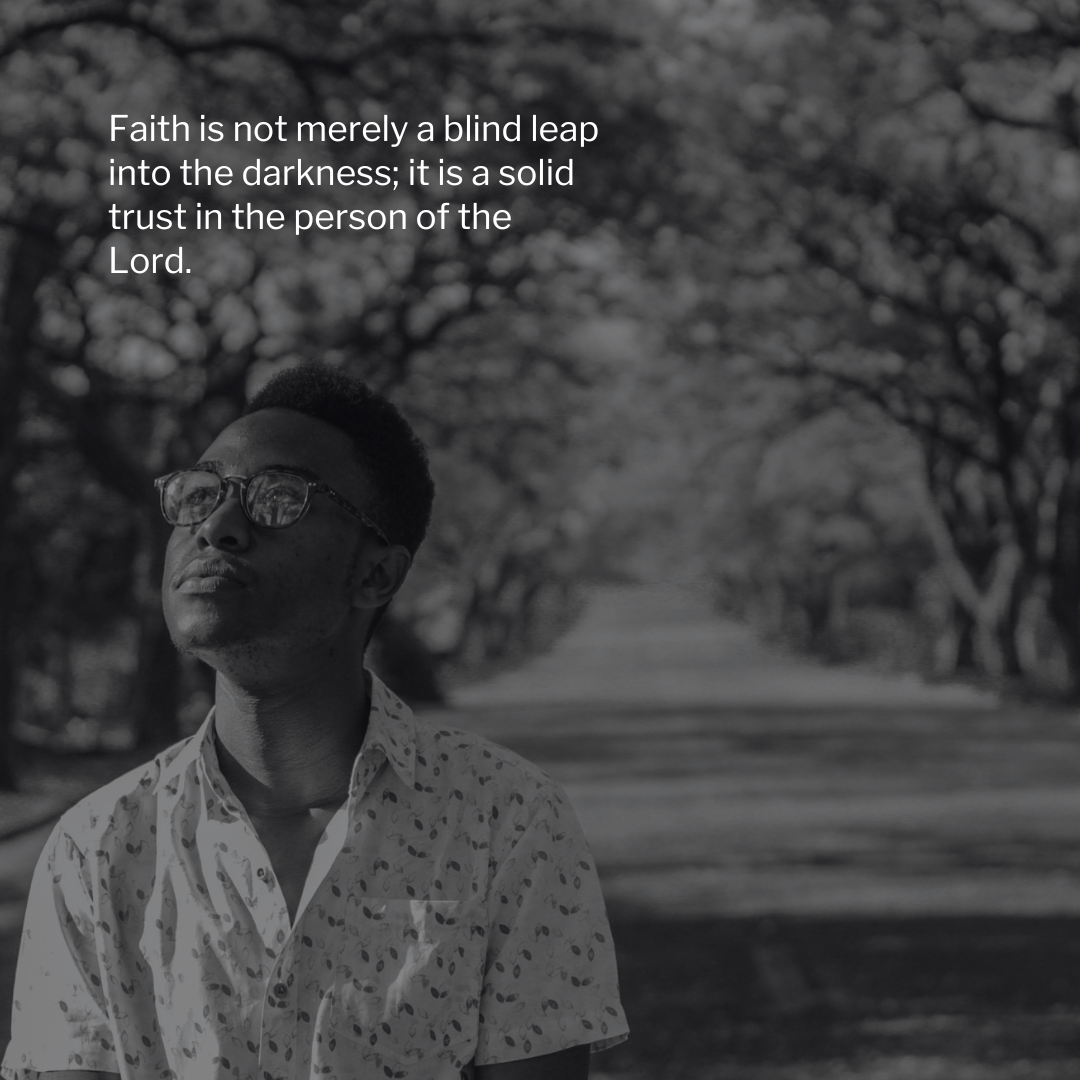
Faith is not just jumping blindly into the darkness. It is a firm trust in the person of the Lord. Elisha knew that an army of angels was surrounding him because he trusted God to protect him. Similarly, the man who was born blind and was given sight trusted Jesus and believed that He was the Son of Man who healed people’s infirmities. When we believe, we truly “see.” Charles Spurgeon eloquently articulated this reality in his 1908 sermon, “Eyes Opened.” As he said, “There’s a saying, ‘Seeing is believing,’ but that’s not true, because there’s a lot of what we see that we wouldn’t believe if we were wise.” Because our eyes are actually very gullible, and optical illusions are very common. If you reverse this saying, or say it another way, ‘To believe is to see,’ it will often come true.”
We often assume the opposite and believe that we have to see something with our own eyes before accepting it as reality. God provides us with physical evidence of His loving presence in many ways. We have the earth and everything in it that shows God’s kindness. Our Lord also showed that He had indeed been physically resurrected by willingly holding out His nail-scarred hand and showing His side to Thomas (John 20:27). But faith is believing and therefore truly seeing. As St. Anselm famously wrote, “I do not seek to understand in order to believe, but because I believe in order to understand.”
Becoming spiritually visible involves developing a strong trust in the Lord. We hold fast to the belief that God is fighting for us even when we cannot see it. Because God’s Word affirms this to be true. To see with eyes of faith, we need to have a firm grasp on the promises of the Bible. The promises of the Bible can sustain us when we feel stuck in life. The more we study the Bible, the more we will trust in the character of the Lord. God’s power and glory can be revealed from unexpected sources. However, there are times when the Lord’s work is invisible. Whether our God’s works are obvious or not, we can pray to see with spiritual sight, eyes of faith, just as Elisha did with his servant. Then when we encounter seeming silence from the Savior, we can be confident that He is at work and fighting for us, even if we cannot physically perceive it. As Moses said, “The Lord will fight for you; all you have to do is be still” (Exodus 14:14, NIV).
How can you practice the Eye of Faith this week?
Practicing the eye of faith often begins with slowing down long enough to remember what God has already said. Choose one Bible promise to return to when fear rises. Pray honestly about the situations in which you feel most threatened and ask the Lord to help you see His presence, not just your own. Spiritual vision grows as we continue to pay attention to God’s character as well as our own circumstances.
Frequently Asked Questions about Spiritual Blindness and Spiritual Sight
What does it mean to see with eyes of faith?
Seeing with eyes of faith means trusting in God’s presence, promises, and work even when we cannot physically see what He is doing. How do you trust that God is fighting for you?
You trust that God will fight for you even when circumstances feel uncertain and threatening, holding firm to what the Bible says about His character and care. What does the story of Elisha teach us about spiritual vision?
The story of Elisha shows that God’s protection and power can exist even when human eyes cannot yet perceive it. His servants needed faith-filled sight to know they were not alone. Why is spiritual blindness dangerous?
Spiritual blindness prevents people from recognizing God’s work even when the evidence is right in front of them. This article contrasts that blindness with the faith-filled vision of the man healed by Jesus in John 9.
For further reading
Photo credit: ©AdobeStock/fizkes
 Sophia Bricker is a writer. Her mission is to help people grow in their relationship with Jesus through thoughtful articles, devotions, and stories. She earned her bachelor’s and master’s degrees in Christian Ministry, which included extensive study in the Bible and theology, as well as a master’s degree in creative writing. You can read her thoughts on literature and faith in The Cross, a Pen, and a Page Substack. You can also visit Cultivate, a disciple-based site she writes with her sister.
This article originally appeared on Christianity.com. For more faith-building resources, visit:
Christianity.com.

