


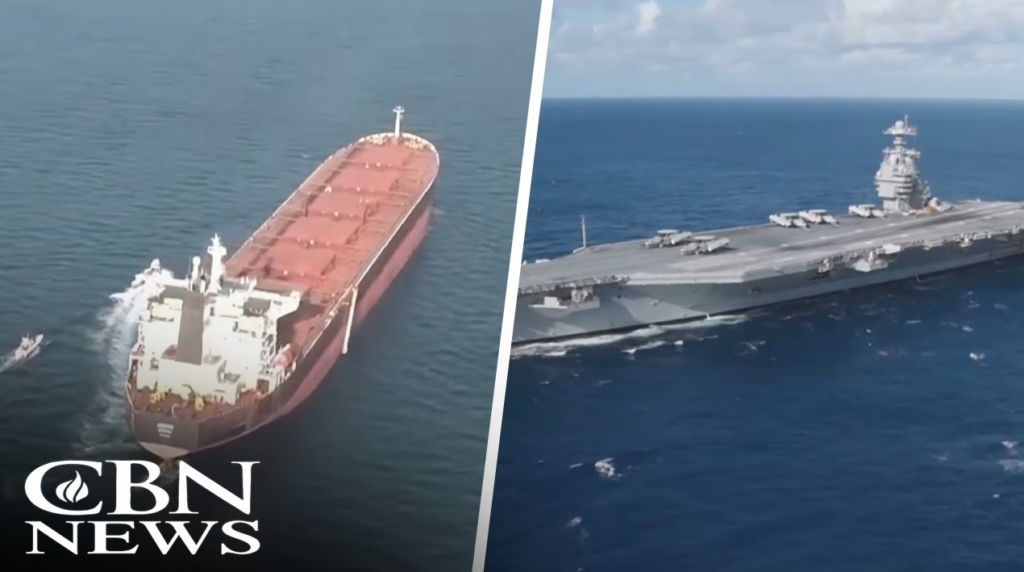
The second round of talks between the United States and Iran ended in Geneva with mixed messages and the prospect of another round of negotiations, but there is a military posture on the ground.
Vice President J.D. Vance acknowledged that the results of the talks were mixed.
Listen and subscribe to CBN’s morning podcast, quick start:
“In some ways it worked, we agreed to talk after that, but in other ways it was clear that the president had set some red lines that the Iranians were not willing to actually acknowledge and work on yet,” he said on YouTube.
Vance said he would continue to work on the talks, but it would be up to President Trump to decide when enough is enough. President Trump has called on Iran to abandon its nuclear weapons program and halt uranium enrichment.
“This is one of the most hostile regimes in the world, and it is also one of the most irrational,” the president said. “We can’t have people like that with the most dangerous weapons known to mankind. That would be terrible for our safety. It would be terrible for our children’s future.”
Iranian Foreign Minister Abbas Araghchi announced that an agreement had been reached on the “guidance” for the deal. He said a “new window of opportunity” had opened that he hoped would lead to a “sustainable negotiated solution”, but insisted Tehran had no intention of giving up on enriching uranium.
“The Treaty on the Non-Proliferation of Nuclear Weapons clearly recognizes the inalienable right of all Parties to the development, research, production and use of nuclear energy, including enrichment for peaceful purposes. This right is inherent, non-negotiable and legally binding,” Araghchi said.
Alex Treiman of the Jewish News Syndicate told CBN News that Iranians are master negotiators.
“This negotiation tactic, they’re trying to delay the president by saying that every day there’s this swarm of military equipment in the Persian Gulf and it’s costing the United States billions of dollars in damage. So they’re trying to drag out the negotiations as long as possible, hoping that the longer it goes on, the less likely Trump is to actually order a military strike,” Treiman said.
***To make sure you receive the latest news from a Christian perspective, subscribe to the CBN newsletter and download the CBN News app. ***
The world’s largest aircraft carrier, the USS Gerald Ford, was heading to the area to join up with the USS Abraham Lincoln, and more than 50 fighter jets arrived in the area over the last day or so.
Iran’s supreme leader Ayatollah Ali Khamenei threatened to send one of the ships to the bottom of the ocean. The administration later announced it was temporarily closing the Strait of Hormuz to conduct live-fire exercises this week.
Treiman believes that Iran’s tactics are not about military power, but rather what kind of influence Iran will have on the global economy.
“About 20 percent of the world’s oil passes through the Strait of Hormuz,” Treiman explained. “And Iran has also shown leverage in the negotiations, taking an aggressive stance. Meanwhile, the president has sent a large fleet to the Persian Gulf to intimidate Iran into negotiating a negotiated agreement. Iran has said it could send global oil prices soaring very quickly, which would certainly hurt President Trump.”
40 days have passed since the brutal crackdown on anti-regime protesters in Iran.
