


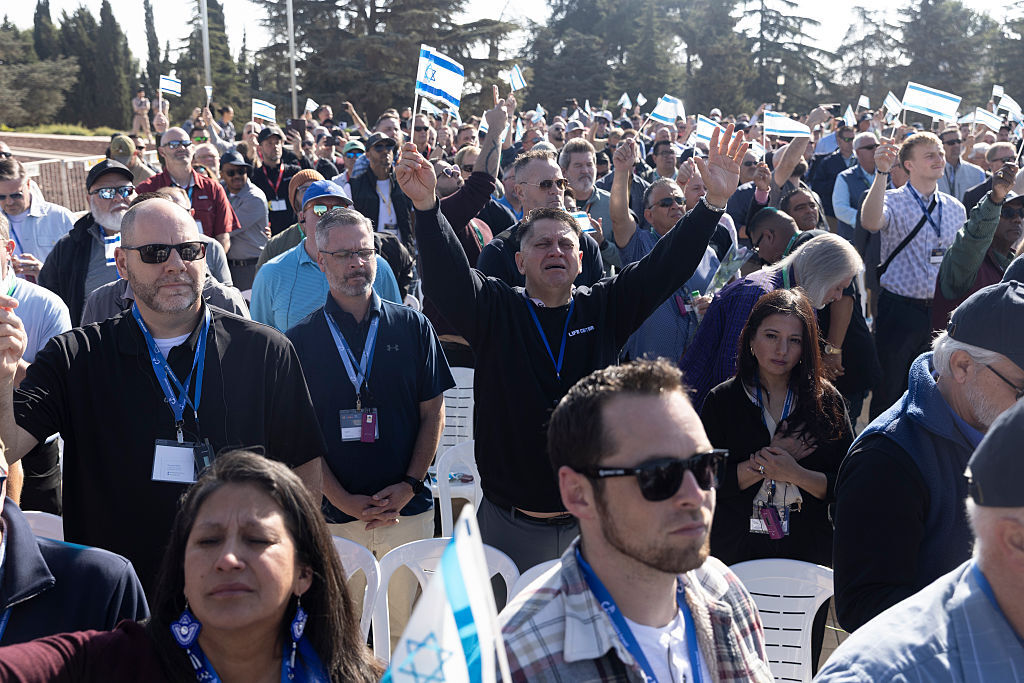
A leading Palestinian evangelical figure has expressed concern that a high-profile visit to Israel by more than 1,000 American pastors and Christian influencers did not include any meetings with Christian communities in the Palestinian territories.
The Rev. Jacques Sala, general secretary of the Evangelical Alliance for the Middle East and North Africa, said the delegation’s visit to Israel emphasized global Christian solidarity with the Jewish state, but failed to recognize or interact with Palestinian Christians who also live in the Holy Land.
Sarah’s comments follow an unprecedented visit organized in partnership between the Israeli Ministry of Foreign Affairs and the Friends of Zion Museum. The gathering brought more than 1,000 pastors to Israel, and organizers said it was the largest such delegation since the country’s founding, according to CBN News. The initiative aimed to strengthen Christian support for Israel and mobilize pastors to counter rising anti-Semitism around the world.
Mike Evans, founder of the Friends of Zion Museum, told CBN that the initiative is aimed at “delegating” pastors as ambassadors against anti-Semitism, allowing them to combat what he describes as ideological campaigns targeting Israel. Speakers, including former Arkansas governor and U.S. ambassador to Israel Mike Huckabee, called on pastors to address anti-Semitism more directly from the pulpit.
The delegation visited the site of the Nova Music Festival, where Hamas militants killed 378 people on October 7, 2023. Participants said the visit was one of the most emotional moments of the trip. The visit also served as a precursor to a global effort planned for 2026 that will involve 1 million pastors and churches around the world.
Local Christians were ignored
But in an op-ed published on the Christian website Come and See, Sarah said she was troubled that such a large Christian delegation had visited Israel without recognizing or meeting Palestine’s historic Christian community, which she said was “the place where our faith began and which still bears the name of Christ.”
Sarah writes that although the pastors “walked where Jesus walked,” they “did not walk with the followers of Jesus who are here struggling to survive. You prayed to the stones, but you ignored the living stones that bear witness to Christ today.”
In the eyes of these local Christians, the group’s failure to take time to hear from the churches that have had a continuous presence in the area for centuries was a missed opportunity.
He also warned that spiritual solidarity should include consideration for all who are suffering. Quoting 1 Corinthians 12:26, he said, “If one suffers, all suffer together,” adding that Christian leaders must be mindful not only of Israel’s pain, but also of the “wounded along the way” in the Palestinian community.
Sarah said the omission of any engagement with Palestinian Christians left many feeling ignored at a time of displacement, curtailed freedoms and humanitarian pressure. “Your visit may have brought encouragement, solidarity and healing,” he wrote. “Rather, it resembled a pilgrimage to political power rather than the kingdom of God.”
“Please come and see.”
His concerns echo those expressed in the Kairos II statement recently released by Palestinian Christians, which outlines the realities they face and laments that many Christians are unaware of the situation of Christians in the Palestinian territories.
In a statement, they reiterated their “appeal to Christians around the world”: “Please come and visit the Living Stone, to witness and respond, and to help strengthen the solidity of Christian Palestinians among Palestinians and Palestinians. This is our call: ‘Come and see.'” Then speak what you see, respond to it, and support a solid church. ”
Sarah concluded her op-ed with a call to repentance for “selective compassion” and “ignoring the suffering of our brothers and sisters in Christ.”
“The door of repentance is open. The witness of this land is still crying out. The Spirit is still condemning. And Christ is still weeping for Jerusalem,” he wrote.
