


November 30, 2025, 4:17 PM MST
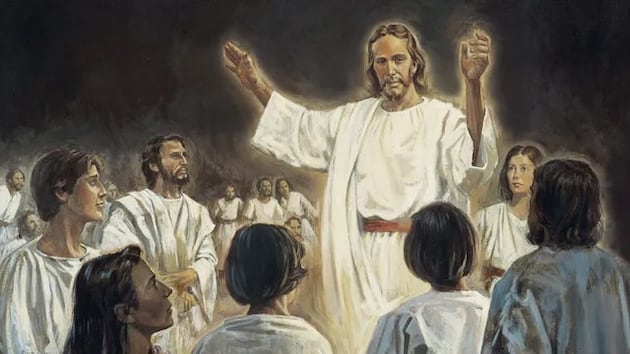
This week’s Come, Follow Me study guide covers Doctrine and Covenants 137-138 and includes President Joseph F. Smith’s vision of the spirit world.
Below are some quotes from past and present leaders of The Church of Jesus Christ of Latter-day Saints regarding these parts of the Doctrine and Covenants.
Doctrine and Covenants 137
“It matters not only what we do—words and deeds—but also why we do what Jesus Christ has asked us to do—our desires and motives. For the Lord said, “For I the Lord will judge every man according to his works, according to the desire of his heart” (D&C 137) Our Heavenly Father wants more than mechanical obedience and acts of service from His children. He wants us to do them with real intent, because we love Him with all others.
— Elder Ronald M. Barcelos, General Authority Seventy, October 2025 General Conference “The Lord Looks into the Heart”
“To all of you who feel that you are far behind in this race of life, on this journey of mortality, please keep going. Only the Savior can fully determine where you should be at this moment, and He is merciful and just. He is the great judge of the race of life. He is the only one who fully understands the level of difficulty you face as you run, walk, or hobble. He takes into account your limitations, your abilities, your life experiences, and the hidden burdens you carry.” (See Doctrine and Covenants 137:9). Please don’t lose hope. The Lord needs you. we need you too. ”
— Sister J. Annette Dennis, First Counselor in the Relief Society General Presidency, October 2025 General Conference “Encouraging One Another”
“As the Prophet Joseph Smith was concerned about his brother Alvin, who had died without receiving the essential ordinances of the gospel, he received this comforting revelation: “From now on, those who die not knowing (the gospel) and who would have received it with all their heart, ‘ (D&C 137:8). And the Lord added, ‘For I the LORD will judge them all, according to their works, according to the desires of their hearts’ (D&C 137:9).
“What matters to the Lord is not just whether we can do it, but whether we are willing to do everything in our power to follow Him as our Savior.”
— Elder Gerald Caussé of the Quorum of the Twelve Apostles, then Presiding Bishop, April 2025 General Conference, “Compensatory Blessings”
“In the Kirtland Temple, the Prophet Joseph Smith saw in a vision his brother Alvin saved in the celestial kingdom. Alvin had died before receiving the saving ordinance of baptism, so the Prophet Joseph was amazed. (See D&C 137:1-6.) The Lord comforted us and explained the reason: He will “judge us according to the desires of our hearts and according to our works” (D&C). 137:9; see also verses 7-8, 10).
— Elder Gerrit W. Gong of the Quorum of the Twelve Apostles, October 2022 general conference, “Happy Forever”
“‘Desire’ means a real longing or longing. Righteous desire is therefore much more than a passive preference or a temporary emotion. Of course, our genes, circumstances, and environment are very important and they shape us greatly. But unless we abdicate, there remains an inner zone over which we are sovereign. In this zone lies the essence of our personality and personal responsibility.”
“Therefore, what we desire over time is what we will ultimately become and what we will receive forever. ‘For I (Saith the Lord) will judge every man according to his deeds, according to the desire of his heart.’ (D&C 137:9)…To reach this just end, the canopy of God’s mercy is extended to include “all who shall die (without knowing the Gospel)” and those who will wholeheartedly receive it will be heirs of that kingdom.
“‘For I the Lord will judge every man according to his works, according to the desire of his heart’ (D&C 137:8-9).”
—The late Elder Neal A. Maxwell, then a member of the Quorum of the Twelve Apostles, October 1996 general conference, “‘Following the Desires of (Our) Hearts.’”
Doctrine and Covenants 138
“Many members of the Church have loved ones who do not accept the values and expectations of the gospel. Such members need our love and patience. In our relationships with one another, we should remember that the perfection we seek is not limited to the stressful situations of mortality. I assure you that you can continue your reformation and spiritual growth. More importantly, we must unite as a family and strengthen each other. All should remember that the sins and inevitable shortcomings that we all experience in this life can be forgiven through repentance because of the glorious saving Atonement of Jesus Christ.
— President Dallin H. Oaks (then President of the Quorum of the Twelve Apostles), October 2025 general conference, “The Gospel of Jesus Christ Centers on the Family.”
“The work of salvation in the spiritual world consists of freeing spirits from what is frequently described in scripture as “bondage.” Everyone in the spirit world is under some kind of bondage. The great revelation of President Joseph F. Smith, who was canonized in Doctrine and Covenants 138, states that the righteous dead, who were in a state of “peace” in anticipation of the Resurrection (see D&C 138:16), “considered it a bondage, that their spirits had long been absent from their bodies” (D&C 138:22). Covenants 138:50). …
“The bondage of the spirit world on righteous converted souls is that they must wait for, and perhaps even be allowed to facilitate, a vicarious ordinance performed on earth so that they can be baptized and enjoy the blessings of the Holy Spirit. (See Doctrine and Covenants 138:30-37, 57-58) These earthly proxy ordinances also empower them to advance under the authority of the priesthood and to expand the flock of the righteous to preach the gospel to the spirits in prison.
— President Dallin H. Oaks, then First Counselor in the First Presidency, October 2019 General Conference “Trust in the Lord”
“One hundred years ago, in October 1918, President Joseph F. Smith received a glorious vision. Just weeks before his death on November 19, 1918, after nearly 65 years of dedicated service to the Lord in The Church of Jesus Christ of Latter-day Saints, he sat in his room pondering the atoning sacrifice of Christ and reading the Apostle Peter’s account of the Savior’s ministry in the spirit world after his crucifixion.
“He recorded, “As I was reading, I was very impressed. . . . As I reflected on these things, . . . the eyes of my understanding were opened, and the Spirit of the Lord rested upon me, and I saw the host of the dead.” (D&C 138:6, 11) The full text of the vision is recorded in Doctrine and Covenants 138.
“During his lifetime, President Smith lost his father, mother, one brother, two sisters, two wives, and 13 children. He was no stranger to grief and the loss of a loved one.
“The revelation he received on October 3 comforted his heart and provided answers to many of his questions. By studying this revelation and pondering its importance in our daily lives, we too can be comforted and learn more about our future when we and our loved ones die and enter the spirit world.
“I testify that the vision that President Joseph F. Smith received is true. I testify that all people can read it and know that it is true. Even those who did not accept this knowledge in this life, when they arrive in the spirit world, You will surely come to know its truth, where all will love and praise God and the Lord Jesus Christ because of the promised blessing of the resurrection and the great plan of salvation, where body and spirit will be reunited and never be separated.”
— Late President M. Russell Ballard, then Acting President of the Quorum of the Twelve Apostles, October 2018 general conference, “Vision of Salvation for the Dead.”

“After the Resurrection, the spirit never leaves the body again, because the Savior’s Resurrection brought complete victory over death. Our eternal destiny requires this eternal union of our immortal soul, or spirit, with our bodies. The inseparable union of our spirits and our immortal bodies allows us to “have the fullness of joy.” In fact, without the resurrection we will never have the fullness of joy.” Even the faithful and righteous consider the separation of their bodies from the spirit to be captivity, which is salvation from the bonds and chains of death (see D&C 138:14-19).
— Sunday School General President Paul V. Johnson, former General Authority Seventy, April 2016 General Conference “And There Will Be No More Death”
“The leaders of the early Church and the pioneers of the past stepped forward with heroic courage and unflinching faithfulness to establish the restored gospel and build the temple where the ordinances of exaltation would be celebrated. The pioneers of today, you and I, also step forward in faith. , who “worked in (the Lord’s) vineyard for the salvation of souls” (D&C 138:56)…We join hands with the faithful sisters of the past. As we share together in the work of salvation, we know the future of the present and emerging generations.”
— Sister Carol F. McConkie, then first counselor in the Young Women general presidency, October 2015 general conference, “Here for a Cause of Justice.”
“A third aid in learning about the priesthood is a shared belief in why the Lord blesses and trusts us to hold and exercise the priesthood, which is to strive for the salvation of others. This shared belief brings unity to the quorum. We can begin to learn about this from the scriptures’ account of how we, spirit children, were prepared before we were born for this rare honor of holding the priesthood.
“Of those who have been given great priesthood confidence in this life, the Lord has revealed that “before they were born, they, along with many others, received their first instruction in the spiritual world, and were prepared to go forth in the appointed time of the Lord and work in the vineyard for the salvation of souls” (D&C 138:56).
“In the priesthood, we share a sacred duty to work for the souls of men. We must not only learn that this is our duty, but do more than that. It must be so deeply imprinted in our hearts that we cannot be diverted from that purpose by the many demands on our efforts at the height of life or by the challenges that come with age.”
— President Henry B. Eyring, First Counselor in the First Presidency, April 2011 general conference, “Learning in the Priesthood”
“For me, President Joseph F. Smith set an example of how contemplation can invite light from God, recorded in chapter 138 of the Doctrine and Covenants. He explains how the revelation came: “As I pondered these things that were written, the eyes of my understanding were opened, and the Spirit came upon me.” The Spirit of the Lord rested upon me, and I saw the host of the dead, both small and great. ” (D&C 138:11)
“Repentance, prayer, and contemplation of the scriptures are essential parts of qualifying to receive the gifts of the Spirit in priesthood service. As we respond in faith and move forward to the call of the Holy Spirit to help, our power to serve will increase.”
— President Henry B. Eyring, First Counselor in the First Presidency, October 2010 General Conference “Serving in the Spirit”

