


companion /kəmˈpæn.jən/ noun
Some continue to associate with others; Some are closely related to others; Some are employed to live with and serve others.
This is a fairly standard definition of “companion” in the Merriam-Webster dictionary. It speaks to the ideas my school employs and gets to the theme of connection. All definitions reflect human bonds. It is a relationship that requires effort and dedication, and is essentially a genuine relationship. And in the context of teenagers, I can’t think of a better example than loving parents.
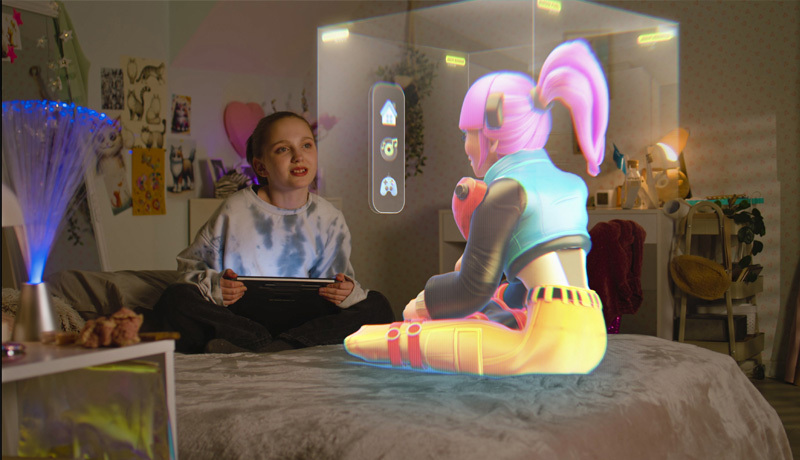
Teens interact with characters and personas that recreate their “friends.”
But if you keep searching, you’ll find a variety of modern definitions. It says “Digital Companion,” with a dry definition: “An artificial intelligence-powered chatbot app designed to simulate personal relationships through human-like conversations. Conversations can be conducted via text or spoken word.” These “public” chatbot apps differ from the likes of ChatGPT, where teens interact with characters or personas that replicate their so-called “friends.” Essentially, they are AI companions.
Character.AI enables customizable characters and avatars that teens can generate themselves. A very cursory search will reveal similar AI sites. Nomi, Replika, and Talkie.ai are all public-facing companion-style AI chatbots designed for personal interactions rather than standard information retrieval.
It’s scary to know what kind of online world over 70% of teenagers live in.
And with the slide of a few keys, you can find your companion AI. Here you can choose to either create your “dream AI girl” or talk to a bot called “ren” or “kai.” Either way, it’s scary to know what kind of online world over 70% of teenagers live in.
The leaders of these companies all make public how passionate they are about strengthening relationships, or that their mission is to support the emotional well-being of all individuals by promoting their dignity. Their promises sound almost as real as the chatbots they manage. But they don’t care, and parents and teens need to know that.
Our children live in a world where the definition of words has changed. When a teenager hears the word “companion,” I can almost guarantee that the first thing that comes to mind is a diluted online version of a synthetic “public” chatbot.
Feed the robot until it finds an algorithm that suits your teenager’s fantasies.
On the surface, it looks like fun. However, things change when they realize they are the teenager’s new best friends. Here, kids not only talk to them, but also feed them until the robot finds an algorithm that suits your teen’s fantasies. Teens are taught all sorts of things, from sex to the meaning of life. Over time, they become part of the statistics.
In my country, an AI chatbot called Self-Cav provides South African youth with information about sex, HIV and self-harm 24/7. It’s hard to find a site more poorly designed to provide such important information to impressionable teens. And because teenagers seek all forms of validation, sites like this (which are exclusively positive and often affirm dangerous behavior) have a huge emotional impact.
It’s easy to see why…so many teens struggle with anxiety and depression.
Add to this the fact that their frontal lobes are just developing, and it’s easy to see why so many teens, sadly, struggle with anxiety and depression.
Why mention the frontal lobe? Because research into this region of the teenage brain has shown that teens feel first, think second, and put off assessing truth and long-term consequences. In other words, at this age feelings become truth and what is taught by these self-generated chatbots all too easily becomes law.
Gone are the days of looking for true, lived, or tested wisdom or leaning into your parents for help. Teens now live in a world where emotions come first and when times are tough, they may simply have to come up with a cure.
If you consider the statistics, you’ll see that the modern version of dating is far more ubiquitous than we think. The recent movie is called Companion, and of course it’s a “what if” story about a human-like android going berserk. I couldn’t find a better review than the first one I read: “Empty Sci-Fi Thriller.”
The AI companions available to our teens are…empty
The AI companions available to our teens are completely empty. The current effects are alarming enough, but it’s devastating when you consider the impact this online reality has on teens’ chances of finding true love, true relationships, and ultimately marriage.
What happens when we compare imperfect humans to puppets who do whatever they want? It’s sad to think that teenagers may never be able to understand the nuances of imperfection and discover the value of patience as the foundation of true love.
A few months ago, our school went to a youth camp for teens. At the end of the camp, about 40 students wrote a letter to God explaining what they wanted from God. The letter was incredibly moving. Not least because it was written in the moment, straight from the heart.
Our young people desire peace and freedom, and a deep desire for personal and visible connection.
The mostly anonymous letters were a mix of encouragement and heartbreak. And what’s the verdict? More than we realize, our young people desire peace and freedom, and a deep desire for personal, visible connection. More than desire, there is a sense of urgency for connection, a longing to be free and live in a world of hope.
They don’t want chatbots. They want reality. They want commitment. They want truth both physically and spiritually in the here and now. But the artificial world they are allowed to live in gives them nothing of the sort.
A makeshift culture of enthusiastic chatbots brings easy peace without sacrifice. Sadly, a world where peace was once inherited through the state of nations is being engulfed by the current belief that peace is achieved through the wishes of the heart. We can no longer nod our heads at “it’s just what kids this age are exposed to” or “times have changed.”
We must not pander to these online genies.
It is true that times have changed. But that doesn’t mean there’s no need to be cautious. In fact, it only strengthens this need. I’m not suggesting you frantically search or panic. But as parents (the actual authority figures in our children’s lives), we must not pander to these online genies. Furthermore, we cannot just eliminate the danger without providing an antidote.
Remove all online media and try to do two or three activities that encourage real, live interaction.
We encourage parents to spend some quality time with their children this holiday season. It’s understandable that parents are working, but try to remove all online media and do two or three activities that encourage real, live interaction, such as a trip to a museum, a walk in the park, or a board game. At least here we can rely on the adage of quality over quantity.
Engage with your children as much as you can and remove the nonsense that feeds their minds. In short, let us believe that we are true allies, and let us fight for the privilege of playing that role.
When I chat with students, I often get a glimpse of their passion for life. Fragments of writing and poetry reveal secret hopes and aspirations and provide insight into the hearts of our children, just like yours. In fact, they live in a world of uncertainty, but some things are certain.
They want parents who will guide and love them. They want parents who spend time with them and are involved. They want real-life companions who aren’t just there to pay the bills.
And finally, they truly desire to know the Savior, the one who truly heals and restores. It may seem surprising that they would want these things, especially in a world they will have to fight for well into the future. But it’s true. I have the letter to prove it.
Greg Kyle has been dedicated to high school education for 16 years and currently serves as the high school dean of students specializing in history and English. He is also a pastor of a church in South Africa. Passionate about the well-being of children and youth as well as adults, she has spent years addressing the challenges people face, both personally and spiritually. His efforts also extend to writing, contributing newsletters and essays over the years as an educator and pastor.
