


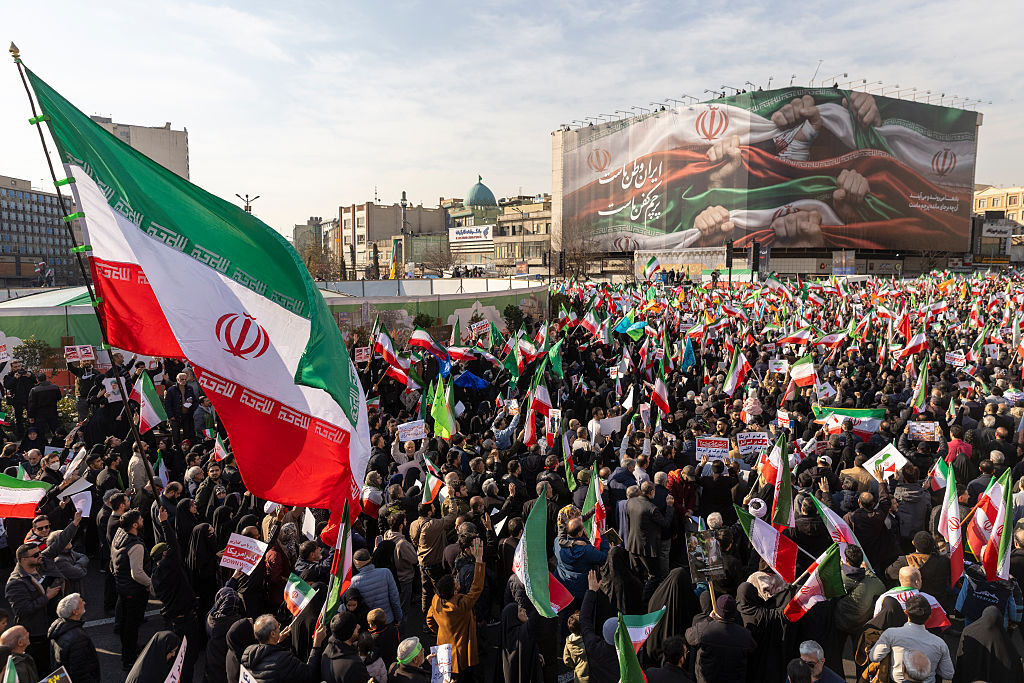
Christians in the country are facing increasing fear, isolation and insecurity as protests intensify across Iran amid economic collapse and growing political instability, according to testimonies shared with Christian Daily International by a ministry that works with Christian refugees in Iran. The officials, speaking on condition of anonymity due to security concerns, cited widespread internet shutdowns, reports of killings and arrests, and growing concerns about the vulnerability of religious minorities.
Several Iranians affiliated with the ministry said they were unable to contact relatives and friends for several days after authorities cut off internet and phone access nationwide. Some people reported hearing of the deaths of people they knew, amid ongoing protests over living conditions and longstanding grievances against the Islamic Republic.
“The recent situation in Iran and the escalation of protests have made the safety and mental situation of us and our families very difficult. During this period, several of our friends and acquaintances have sadly lost their lives,” said an Iranian Christian who identified himself as Brother S.
This account is consistent with international reports describing large demonstrations, severe restrictions on communications, and an increasingly forceful response by Iranian security forces. While the Iranian government has downplayed the scale of the unrest, human rights groups and foreign media have reported mass arrests and significant casualties, and limited access makes it difficult to independently verify the numbers.
Another Iranian Christian, Brother R, described protests sparked by economic despair and widespread demands for political change. He cited soaring prices, a lack of basic services and deep dissatisfaction with what he called systemic injustice.
“People don’t have electricity, gas or water,” he said. “It’s snowing in some cities, there are storms, and it’s very cold. Unfortunately, the internet and phones are down and there is no access to Iran’s interior. Also, the situation for Christians in Iran is not good.”
Some emphasized the psychological burden of isolation. Brother M said communications failures have left the family in “darkness” amid mounting economic and psychological pressures. “Almost every family, including mine, is suffering unprecedented economic, emotional and humanitarian hardship,” he said, adding that many felt powerless to help their relatives in the country.
The loss of contact is particularly painful for Iranian Christians living abroad. Brother A said he was unable to contact his family for four days. “No phones, no internet, nothing,” he said. “We don’t know what’s going on in Iran, we don’t know about our families.”
According to multiple sources, Iran’s deepening economic crisis is exacerbating the instability. The sharp depreciation of the Iranian rial over the past year has reduced purchasing power, leaving many families struggling to afford essentials such as food, medicine and healthcare. Businesses are closing, livelihoods are being destroyed and poverty is worsening.
“The table for the poorer classes of society is left empty,” said Brother A. “Families cannot even afford meat or milk for their young children.”
Officials who spoke to the ministry said the protesters’ demands go beyond economic grievances and reflect broader opposition to Iran’s ruling regime. Some described the current demonstrations as part of a long-term movement calling for fundamental political change, although some were prompted by economic pressures.
“The main problem goes beyond economics,” Brother A said. “The people want this repressive government to change and the oppression of the Islamic Republic to be eliminated.”
As the turmoil continues, there are growing concerns about the government’s response. Several Iranians said the standoff appeared to have escalated following the communications blackout, but details remain difficult to confirm.
“According to the limited news we are hearing, more than a thousand people have been killed and thousands have been arrested,” Brother A said, adding that security forces were reportedly using heavy weapons against protesters. Christian Daily International is unable to independently confirm the number of casualties.
A pastor affiliated with the ministry (Pastor A) said that churches and believers were unable to grasp the situation in the country due to an almost total communication blackout.
“We are very worried and have no idea what is going on inside Iran,” he said. “The only way we communicate is through television and foreign news sites, which also have very little information.”
While it remains unclear how the current unrest will affect Iran’s underground churches in the long term, the pastor said Christians already face severe persecution, with many believers imprisoned under current laws restricting religious activities.
“What is happening now is that Christians are undergoing severe persecution and many Christians are currently in prison,” he said. “In the current situation, the Church is praying, waiting and protesting legally and in solidarity with the Iranian people.”
Christian leaders who work closely with Iranian refugees have warned that the legal mechanisms employed by the Iranian state could further endanger the minority in times of instability. He pointed to the use of moharebeh (a charge often translated as “waging war against God”), which is embedded in Iran’s Islamic penal code and carries penalties ranging from execution to exile.
Though rooted in Islamic jurisprudence, the mohalebe has actually functioned as a legal instrument to criminalize acts seen as threats to public order or regime stability, leaders said. Previous protests have resulted in the execution of individuals for crimes such as blocking roads and clashing with security forces.
He said Christians, who are often seen by hardliners as aligned with the West, risk being scapegoated in times of national crisis. Reports of arrests of Christians in early January have heightened such concerns, he added.
Iran, with a population of about 93 million, has an estimated Christian population ranging from a few hundred thousand to more than a million, including historic Armenian and Assyrian communities, as well as a growing number of converts from Islam who face the greatest risk of prosecution.
Despite the uncertainty, mission officials emphasized prayer and solidarity. “We know God is in control,” Brother A said. “We pray for our people.”
Pastor A agreed with that opinion and appreciated the interest of the international community. “I am grateful that we will not be forgotten,” he said. “Being able to talk about the situation in Iran and about Iranian Christians allows us to stay connected to the world.”
