


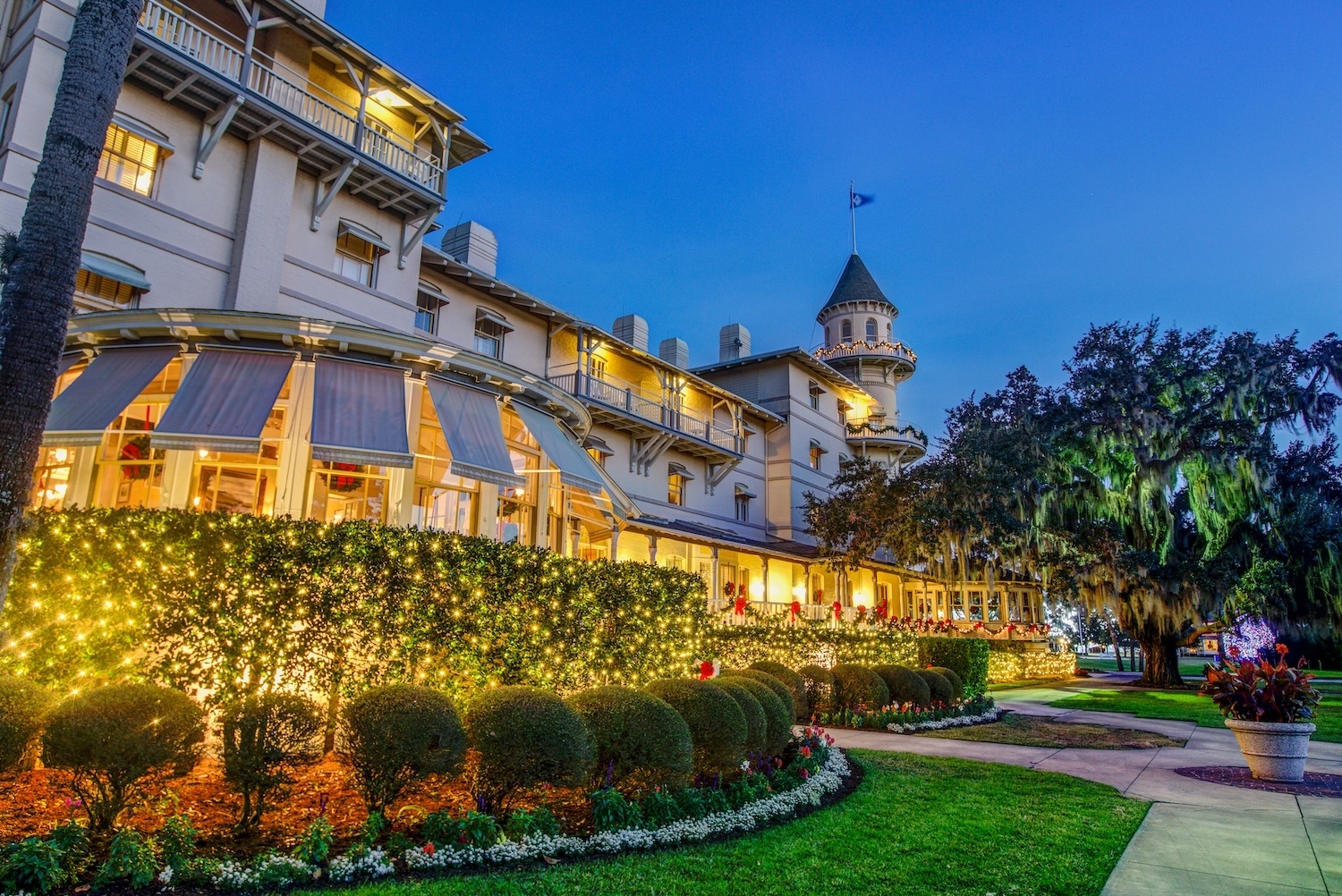
Jekyll Island, a barrier island off Georgia’s southern coast near the Florida border, is a remnant of the Gilded Age.
Founded in 1886 by J.P. Morgan, Joseph Pulitzer, and William K. Vanderbilt, the Jekyll Island Club was established as a private winter retreat for America’s wealthiest families. Each winter, the members took a train to a nearby station on the mainland, then arrived on the 5,700-acre island by yacht or ferry.
At its peak, the club is said to have housed one-sixth of the world’s wealth. Still, the clubhouse, with its turreted façade, conveyed sophistication rather than excess.
Life followed a predictable rhythm. Afternoons were spent golfing, horseback riding, and hunting. Dinner in the dining room was in keeping with the dress code and sensibilities of the era, but conversation was rarely wasted. Here in 1910, several financiers drafted the plan that led to the creation of the Federal Reserve System.
After the war, the Georgia state government purchased the island and created a state park in the early 1700s, named by British settlers after the prominent politician of the time, Sir Joseph Jekyll. State ownership spared Jekyll from the postwar resort development that forever changed the character of many coastal communities.

Today, Jekyll Island Club Resort is both a hotel and a historic landmark. Guests walk along the same oak-shaded paths once used by the Morgan, Rockefeller, and Vanderbilt families. The resort is located in the Jekyll Island Historic District, a 240-acre area containing more than 30 historic buildings.
Among them there are also so-called cottages, that is, fine houses, which serve as seasonal residences. Crane Cottage, built in 1917 by Chicago businessman Richard Teller Crane Jr., exhibits the symmetry of the Italian Renaissance, while Indian Mound, built for the Rockefeller family, reflects shingle-style simplicity.
Completed in 1904, Faith Chapel was established as a nondenominational chapel, although many of its members were Anglicans. Inside the wood-shingled chapel is a bright stained-glass window titled “David Set Singers Before the Lord” by Louis Comfort Tiffany. This piece depicts King David commanding his singers to praise God and is one of the few Tiffany windows known to be signed by the artist.
Two-thirds of the island remains protected from development. The beaches, dunes and forests are much the same as when the club was founded. At the north end, Driftwood Beach is known for its otherworldly appearance of weathered trees. The Georgia Sea Turtle Center is a renovated old building that rehabilitates injured sea turtles.
Back at the resort, the public rooms, including the dining room with its high ceilings and polished wood, retain an early-last-century feel, even if guests no longer wear dresses. In contrast, the rooms are modern and equipped with all the conveniences you would expect from a hotel that has earned a three-diamond rating from AAA.
Although spring and summer bring the warmest days, a winter visit best reflects what the original club members experienced. Christmas is especially impressive, when the resort is illuminated with over 2 million lights.
If you go
Jekyll Island is approximately an hour’s drive north of Jacksonville, Florida, and 90 minutes south of Savannah, Georgia. The nearest commercial airport is Brunswick Golden Isle Airport, located across a 6-mile-long causeway, but most travelers fly in and out of Jacksonville.
Jekyll Island Club Resort, a non-chain hotel operated by Noble House Hotels & Resorts, has 200 guest rooms in a historic club and several cottages popular with large families and groups. Additionally, the resort is home to the Jekyll Ocean Club, a modern, all-suite beachfront hotel. Although they are two different hotels, they operate as one property and guests have access to benefits throughout the resort.
Dennis Lennox writes a travel column for The Christian Post.
