


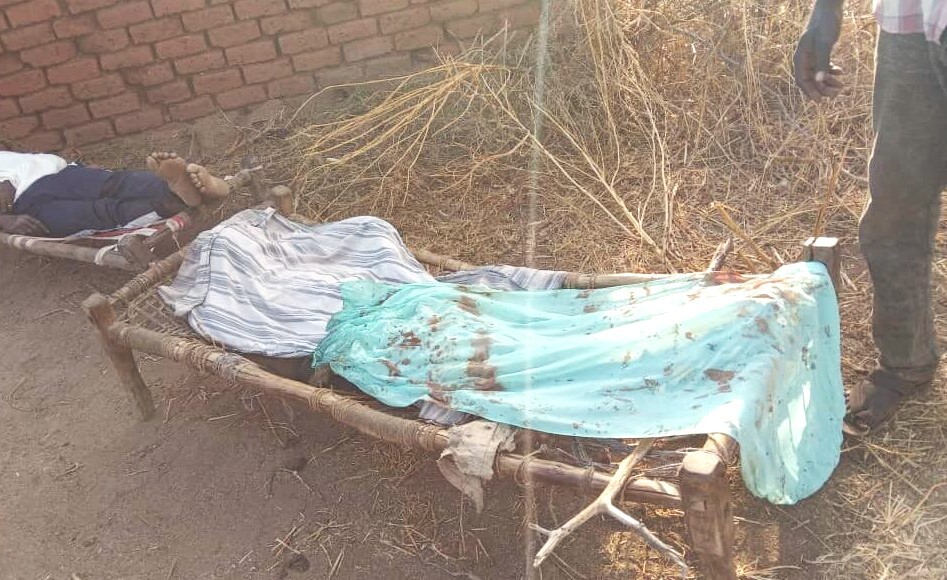
A Sudanese Armed Forces (SAF) drone strike on December 25 killed at least 11 Christians on their way to Christmas celebrations in Sudan’s South Kordofan state, officials said.
Eleven Christians were killed and at least 18 others were seriously injured in an attack on Christians heading to the Sudanese Anglican Church in Jurdo (Biyam Yardo) on Christmas morning, according to a local Christian lawyer.
“The church (building) was not attacked, but the believers who were marching towards the church were targeted,” the lawyer told Morning Star News on condition of anonymity.
The Sudan People’s Liberation Movement North (SPLM North) and Foundation Alliance, which joined the militia Rapid Support Forces (RSF) in the fight against the SAF, reported that 12 civilians were killed and 19 others injured in an attack by the South Kordofan Air Force in the Biyam Jardo area of South Kordofan state, according to the Sudan Tribune. This region is managed by SPLM-North.
“The drones targeted civilians who were celebrating Christmas,” SPLM reported.
The attack follows an SAF drone attack on a medical clinic center in the Kumi district of South Kordofan province on November 29, which reportedly killed 12 people and injured 19 others, including children and women.
Another drone attack on December 5 targeted the Ghadir area of Karogi, South Kordofan province, killing more than 10 children aged 5 to 7 inside a kindergarten, according to the United Nations Children’s Fund (UNICEF).
The situation in Sudan has worsened since a civil war broke out between the RSF and SAF in April 2023. According to Open Doors’ 2025 World Watch List (WWL) report, increasing numbers of Christians have been killed, sexually assaulted and their homes and businesses attacked in Sudan.
“Christians of all backgrounds are trapped in the chaos and unable to escape. Churches are shelled, looted and occupied by the warring parties,” the report said.
RSF and SAF are both Islamist groups that attack displaced Christians for supporting the other country’s fighters.
According to the Joshua Project, Sudan is 93% Muslim, with 4.3% of the population practicing traditional ethnic religions and 2.3% Christians.
The conflict between RSF and SAF, which shared military rule in Sudan after the October 2021 coup, has terrorized civilians in Khartoum and elsewhere, killing tens of thousands of people and displacing more than 12 million people inside and outside Sudan’s borders, according to the United Nations Commissioner for Human Rights (UNCHR).
SAF General Abdel Fattah al-Burhan and then-vice president and RSF leader Mohamed Hamdan Dagalo were in power when civilian parties agreed in March 2023 on a framework to re-establish a democratic transition the following month, but disagreements over the structure of the military stalled final approval.
Mr. Burhan aimed to bring the RSF, a militia with roots in the Janjaweed militia that helped quell former strongman Bashir’s rebels, under regular military control within two years, while Mr. Dagoro intended to accept integration within 10 years.
Although both military leaders have Islamist backgrounds, they seek to present themselves to the international community as champions of religious freedom and democracy.
Open Doors’ 2025 World Watch List (WWL) ranks Sudan fifth among the 50 most difficult countries to become a Christian, down from eighth the previous year. Sudan fell out of the top 10 of the WWL list for the first time in six years when it was ranked 13th for the first time in 2021.
After two years of progress in religious freedom in Sudan since the fall of Bashir’s Islamic dictatorship in 2019, the military coup on October 25, 2021 brought back the specter of state-sponsored persecution. After Bashir was ousted from power after 30 years in April 2019, the Interim Civil-Military Government succeeded in revoking some Sharia (Islamic law) provisions. The law prohibited labeling any religious group as “infidel” and effectively repealed the apostasy law, which made leaving Islam punishable by death.
The October 25, 2021 coup left Christians in Sudan concerned that the most repressive and harsh aspects of Islamic law would be reinstated.
In 2019, the U.S. State Department removed Sudan from its list of countries of particular concern (CPC) that commit or tolerate “systematic, persistent, and egregious violations of religious freedom,” and elevated it to its watch list. Sudan was designated as a CPC from 1999 to 2018.
In December 2020, the State Department removed Sudan from its special watch list.
