


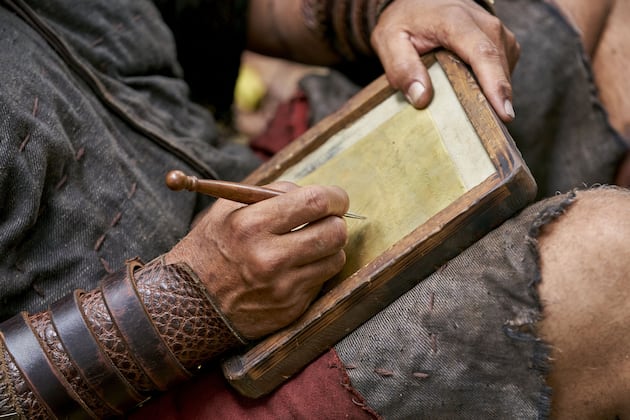
One of the hardest parts of journalism is knowing what to include in a story and what to leave out (and I have dozens of first drafts to prove it). Perhaps we should approach our own life stories with the same challenge.
There’s something poetic about Christmas and New Year’s being only a week apart. As December ends, we “remember” the gifts our Savior has given us in years past. And as January begins, we urge ourselves to “forget” the little things of the past year and re-engage with positivity.
While remembering. lost item. I have come to see these two as more than just cognitive functions. I see these as two balanced spiritual gifts made possible through the gentle impressions of the Holy Spirit and the infinite Atonement of the Savior.
Younger brother Alma discovered both gifts in a conversion experience that changed generations.
What Alma Remembered and What She Forgot
When Alma the Younger and the sons of Mosiah tried to destroy the church in Alma 36, God sent an angel to stop them. As a result, Alma “remembered all his sins and trespasses” (v. 13).
“While I was in this affliction, weighed down with the memory of my many sins, behold, I also remembered that I had heard the Father prophesy to men about the coming of one Jesus Christ, the Son of God, to atone for the sins of the world” (verse 17).
This memory prompted Alma to seek mercy in his heart (see verse 18). “And now, behold, when I thought of this, I remembered my pain no more; yea, I remembered my sin no more, and grieved no more” (verse 19).
Both gifts are at play here. Alma remembered where he needed to repent and God helped him remember what his father had said about Christ, which inspired him to move forward through repentance. And by coming to the Savior, Alma was given the gift of forgetting so that his forgiven sins no longer hurt.
How can we see these gifts at the beginning of the year?
the gift of memory

Elder Ulises Soares of the Quorum of the Twelve Apostles writes in the April 2022 issue of Liahona: “The word ‘remember’ appears hundreds of times in the scriptures. In ancient Israel, the word ‘remember’ was often used to help remember what the Lord had done for them in the past. It was even more common in the context of the covenants the Lord had made with his people.”
Therefore, remembering is a way to hold fast to God’s miracles and promises, and a way to keep the covenants we have made every day. If we did not have the gift of memory, there would be nothing that connects us to baptism, testimony, and the experience of seeing God’s hand in our lives.
the gift of forgetting
In a 2009 address at BYU, the late President Jeffrey R. Holland (then a member of the Quorum of the Twelve Apostles) said, “The past is something to learn from, not to live on. We look back to the past for the embers of our glorious experiences, but not for the ashes. And as we have learned what we need to learn and brought home the best of what we have experienced, we look forward. We remember that faith always looks to the future.”
President Holland went on to say, “It’s not right to dwell like that on past lives, including past mistakes. That’s not the gospel of Jesus Christ.”
That’s why we need the gift of forgetting. So instead of dwelling on the past with regret or anger, we simply recognize that because of the Atonement of Jesus Christ, we can move forward. We remember Christ, but we can sift through all the other details. Because if it doesn’t involve Christ, it doesn’t really matter.
When we have to remember a difficult past, we look back not with bitterness, regret, or sadness, but with gratitude that it is over, and with a reverent feeling that through Christ, all wounds can be healed.

look back and move forward
Through the love of our Heavenly Father, the Savior’s Atonement, and the guidance of the Spirit, we can find the gift of both remembering and forgetting.
Looking back is a blessing, and so is moving forward. Remember Christ. Remember, God will never forget you.
May you look back in peace and move forward with a smile. As we enter this new year, let us, like writers who choose wisely what to include in their stories, recognize what to take with them and what to leave behind.
— Joel Randall is a reporter for Church News.
