


Christian leaders from various church associations in Kenya have expressed concerns about plans to regulate religious activities through the Religious Organizations Bill and Religious Organizations Policy.
The Evangelical Association of Kenya (EAK) and the Church Clergy Association of Kenya (CCAK) opposed some parts of the bill, calling it “unconstitutional.”
EAK said in an Oct. 22 memorandum that the proposed regulation aims to manage religious groups as organizations under government control. “This bill introduces government oversight of religious organizations and treats them as if they were government-funded departments or parastatals,” the memo states. “This violates the constitutional right to religious freedom and the principle that there should be no state religion in Kenya.”
The Religious Organizations Bill requires the establishment of an advisory committee in the Attorney General’s Office. It also calls for the appointment of a registrar for religious organizations.
“The Registrar shall issue, suspend or revoke certificates of registration in accordance with this Act, shall maintain a register of all umbrella religious organizations registered in accordance with this Act, and shall maintain a register of all religious organizations registered in accordance with this Act,” the bill states.
EAK says the bill should also define the term “surveillance” in detail, as it could be inappropriately used to deny the right to worship. According to EAK, Article 7(2) of the Bill does not provide a clear definition of the term “supervision” nor specify the scope and extent of the Commission’s supervisory role.
CCAK called on the President to allow time for religious groups to provide input on the two pending bills. CCAK National Chairman Bishop Hudson Ndeda said the proposed legislation and policies were mischievous. The bill has not yet been submitted to the Senate for debate.
“The references in the bill to the creation of some umbrella body and commission are questionable, discriminatory and contrary to our freedom of association,” Ndeda said.
CCAK strongly rejected these proposals, fearing that if religious groups were placed under government surveillance, arbitrary fines could be introduced that would restrict the activities of these groups. The bill proposes a fine of 5 million Kenyan shillings ($39,000) or a three-year prison sentence for churches and their leaders who fail to register.
“I wonder why the government is so keen to regulate religious institutions, introducing fines and prison sentences,” Ndeda said at a press conference on October 29.
The Federation of Evangelical and Indigenous Christian Churches of Kenya (FEICCK) warned that the bill could restrict religious freedom, contrary to Kenya’s constitution. FEICK chairman Bishop Samuel Njilili argued that if implemented in its current form, the bill would crowd out indigenous churches. The Religious Organizations Bill 2024 and the Religious Organizations Policy 2024 also aim to regulate how religious organizations are established and operated.
Curbing religious extremism
These bills were introduced in response to the Shakahora massacre, in which more than 500 people were killed by a religious extremist group. A special committee was established by President William Ruto in 2023, and among its recommendations was the establishment of an umbrella body to oversee religious institutions.
The proposed law aims to prevent extremism hiding behind the curtain of registered religious groups. Currently, the registration of religious institutions in Kenya is regulated by the Societies Act. To operate legally, religious groups must register with the Registrar of Societies, which gives them legal status as an entity that can enter into contracts and own property.
The task force recommended the creation of a Religious Affairs Commission to oversee religious affairs in Kenya. The commission is responsible for registering religious groups, receiving and reviewing annual reports, and monitoring regulatory compliance.
The Religious Organizations Policy 2024 identifies several gaps in the exercise of religious freedom.
“The main objective of this policy is to institutionalize the exercise of religious freedom in the religious field in accordance with the Constitution,” the policy document states.
Chief among these gaps are the lack of clear policies and clear laws to guide religious activities, uncertainty over crimes committed under the guise of religion, and lack of legal recognition for religious groups. The report also highlights that online broadcasting of religious content is unregulated and that there is no framework regulating how constitutional rights and freedoms under Article 24 may be restricted in religious practice.
The policy further notes the absence of rehabilitation programs for victims of extremist and cult groups, manual record-keeping systems, and discriminatory registration procedures, all of which undermine effective governance and accountability within the religious sector.
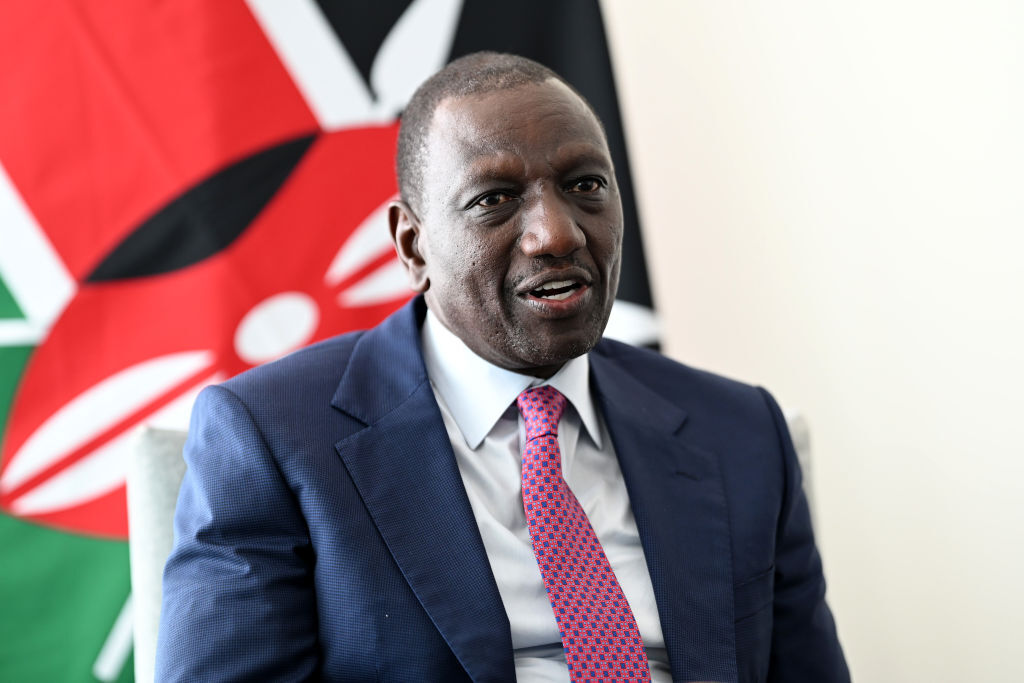
President William Ruto recently said the government will not impose freedom of religion in violation of the constitutional guarantee of freedom of religion.
“I urge those who have the idea of allowing religious leaders to define how they want to regulate themselves and how religious organizations move forward, as recommended by the special committee that I appointed under Pastor Mutava Msimi,” President Ruto said during a service on October 6.
“We will protect freedom of religion without compromise and will not impose any restrictions,” he added.
