


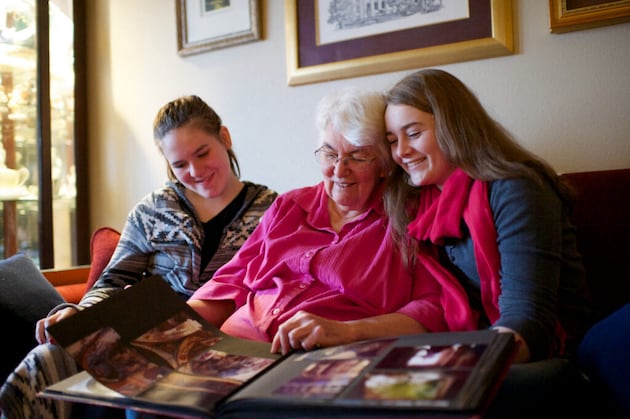
Landon Reynolds, 16, began serving as the ward’s family history consultant when he was 11 years old.
“It may not look like fun at first glance, but it is,” he says. “After you do it, you feel so good knowing you’re helping people on the other side of the veil.”
Landon joined other young people from the Orem and Alpine, Utah area on a RootsTech panel discussion on Saturday, March 7, to discuss getting younger generations involved in family history. All of our youth help out at the Alpine Family History Center, our summer family history camp, and our wards.
Bonnie Diamond of the Alpine Utah West Stake, who works at the Alpine Family History Center, said youth are the perfect age to start family history because they are not afraid of technology and are quick to learn.
“While teaching young people, I realized that they would go home and teach their families,” she said.
And their enthusiasm grows.
“If you find someone who knows something, you can find out more,” said 10-year-old Lily Adams.
In addition to collecting Israel, which is a top priority, 12-year-old Quincy Adams said she enjoys discovering the stories of her ancestors and learning about what life was like. “It’s like a puzzle: finding one person unlocks the others who haven’t been found yet.”
Landon’s advice is to jump right into apps like the FamilySearch Family Tree app (available on iOS and Android), the FamilySearch Together app (available on iOS and Android), and the FamilySearch Memories app (available on iOS and Android).
“Once you do that, the Spirit takes over and you let the Spirit lead you from there,” he said.
Quincy agreed. “Try it out, play around with the app and see where this button goes or complete the tree.”
Viewing memories on the Family Tree app is 16-year-old Beau Dixon’s favorite feature. “I feel like without these apps, those memories might have been lost. If people go there and put them in, future generations can go and see them.”
Jane Sutherland, 17, said it was important to start simple. “There are so many different levels when it comes to family history. Just because you might be doing something incredibly complex doesn’t mean you should do it. If you go in and it’s too bad, stop. It’s you who chooses which level to work on, so don’t worry too much.”
Baby steps, Beau said. “Start slow. Once you understand it, you can do more difficult things.”
Jane said parents and leaders as well as other young people could continue to raise the issue to get more young people involved. As youth become accustomed to family history work, they will find that they are learning more about real people.
Being a youth consultant has made her more productive and efficient with her time. “I help others find their families. I enjoy helping people find the person they were looking for.”
Young people bring the names of their families to the temple
Rachel Trotter from Ogden, Utah, also presented Saturday about teaching the youth in her ward how to get involved in family history and go to the temple with purpose.
When she was the Young Women president of her ward, she worked with the bishop and the youth to set goals for going to the temple and carrying their family names with them.
While leaders may think young people always need “fun” activities with rewards, Trotter said young people don’t need everything to be fun. “They’re looking for something deeply spiritual.”

Regular temple visits help young people develop lasting habits of worship and service, promoting spiritual growth and connection, she said. Communicating your family’s name creates a connection between the temple and your family.
Ward leaders listened to youth and encouraged them to take initiative. The key was for young people to invite other young people.
Ward also developed early engagement with family history by introducing children to their ancestors in Primary. Next, I helped the youth set up their FamilySearch accounts and taught them how to use ordinance preparation and other features.
Use your family history center to host family history fairs and bring in local experts to teach youth confidence and knowledge. The district has also integrated family history into what it already does.
“Including ancestors in lessons helps youth connect family history to their spiritual lives,” Trotter said.
Above all, she said, these efforts begin and end with the Savior.
“What we’re doing is getting them on the path to a covenant. What we really want is to get them into a covenant. Those are all things they can do,” Trotter said. “When you take your youth to the temple with a purpose, they will be ready for the next step when they get older.”

