


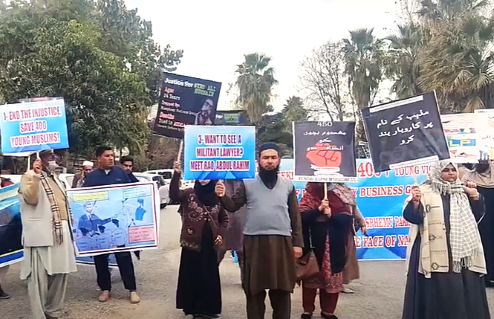
The Human Rights Commission of Pakistan (HRCP) on Sunday (23 November) called for the establishment of a commission to investigate abuses of the country’s strict blasphemy laws and legislate to ban forced conversions.
The commission sounded an urgent alarm over what it said were rapidly escalating threats to constitutional democracy, civil liberties, and minority communities, and drew attention to the deteriorating situation for religious minorities, particularly Ahmadis, who continue to face mob attacks, violence in places of worship, and grave desecration.
“The state must ensure protection, prosecute sedition, and implement overdue commissions to investigate abuses of blasphemy laws as well as legislation to prohibit forced conversion,” HRCP Chairman Asad Iqbal Butt said at the conclusion of the 39th Annual General Meeting.
Christians in Pakistan are constantly victimized by blasphemy laws and forced marriage of minors.
Raising concerns about children’s rights, the Committee asserted in a press statement that child marriage remains widespread and harmful, endangering girls’ health, education and future. They called for a uniform law that would define minors and declare all marriages under the age of 18 illegal.
He also pointed out that persistent sexual harassment continues in educational institutions and workplaces, and called for stronger reporting systems, transparent accountability, and preventive training.
HRCP said the cumulative impact of recent political and security decisions has eroded fundamental rights and undermined public trust in state institutions. The committee expressed serious concerns about the passage of the 27th Amendment, arguing that it threatens judicial independence by expanding executive control over matters that should be free from interference.
The amendments seriously undermine the system of checks and balances, especially at a time when democratic institutions were already under strain, the committee said.
The party criticized the provision of lifetime immunity for public officials, arguing that it concentrated unlimited power in a small group and undermined the supremacy of parliament. The Commission reiterated that empowered and elected local governments are essential to deepening democracy and ensuring meaningful citizen participation in governance.
HRCP noted the deteriorating security situation in Pakistan and stressed that anti-militancy activities in Khyber Pakhtunkhwa and Balochistan must not come at the expense of fundamental freedoms and the right to dissent. The party condemned the continuing total internet shutdown in Balochistan and other regions, saying such blackouts are hampering education, economic activity and engagement in democracy and must be lifted without delay.
HRCP called on federal and state governments to adopt rights-respecting security policies, conduct impartial investigations into human rights violations by state actors, and engage constructively with local communities. It called for an immediate end to forced disappearances and the use of concentration camps without due process, and called for an end to the use of Schedule 4 as a means of suppressing dissent.
The HRCP statement also emphasized increased vigilance against harassment, detention, and forced return of Afghan refugees. The report noted that many deported or detained refugees face real risks of persecution, family separation and severe humanitarian suffering. It called on governments to halt forced deportations, ensure due process and comply with international protection standards.
The Committee reiterated its long-standing call for Pakistan to ratify the 1951 United Nations Refugee Convention and its 1967 Protocol, and to protect citizenship rights by birth and naturalization.
The HRCP called for urgent, independent investigations and strict accountability, citing increasing cases of custodial torture and extrajudicial killings, particularly involving personnel from the Counter-Terrorism Department (CTD) and Crime Control Department (CCD). Such violations perpetuate impunity and pose serious threats to the life and dignity of citizens, the committee said.
In his closing remarks, the Chairman emphasized that Pakistan was at a critical juncture and warned that unless these issues were addressed urgently and comprehensively, the country risked deepening the erosion of democracy and exacerbating humanitarian distress.
Pakistan, where 96 percent of the population is Muslim, was ranked eighth on Open Doors’ 2025 World Watch List as the most difficult place to be a Christian.
