


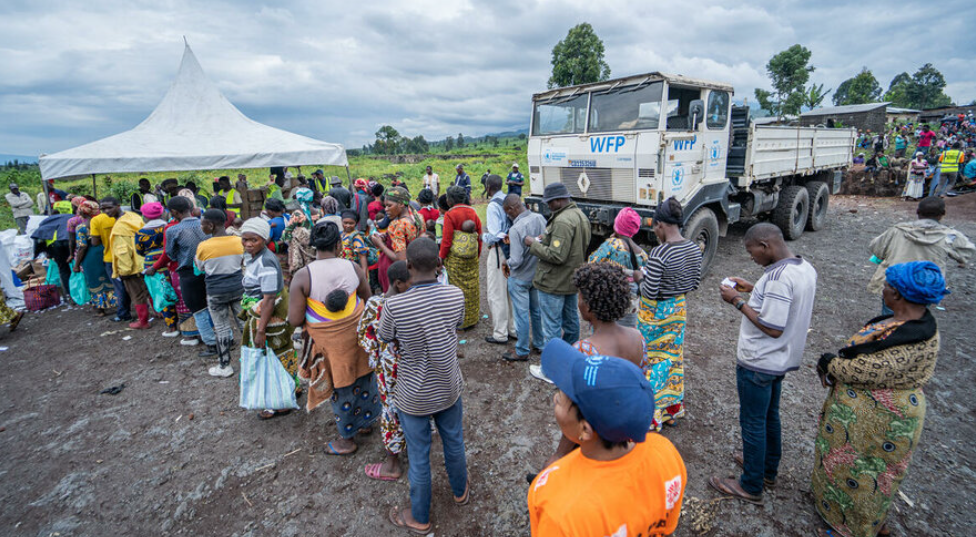
Despite the signing of a peace framework between the Democratic Republic of Congo’s government and the M23 rebel group, the humanitarian crisis in the Democratic Republic of Congo remains volatile, with lives at risk and thousands of people still displaced.
All parties hope that the framework agreement signed in Doha, Qatar on November 15, 2025, will bring meaningful and lasting peace to the eastern Democratic Republic of the Congo, but the effects of decades of conflict are still being felt among the population.
Professor Mapendi Lumet, project officer for the Congolese Baptist Church Union, told Christian Daily International that the war between the Democratic Republic of Congo’s military and the Rwandan-backed rebel group M23 has displaced thousands of people in conflict areas in North and South Kivu. Many have already taken refuge in overcrowded and under-resourced camps and evacuation centers.
“Moreover, it has caused severe food insecurity. The conflict has prevented people from accessing essential goods and disrupted agricultural activities. Human rights violations are widespread, including massacres, kidnappings, sexual violence, and targeted attacks against civilians and aid workers,” Lumento said.
Although the Doha Framework includes eight protocols, including humanitarian access, return and resettlement of displaced persons, reintegration of combatants, restoration of state power in rebel-held areas, national dialogue, political reform, reconciliation, and compensation mechanisms, the situation remains dire.
“The framework reaffirms the parties’ shared commitment to addressing the root causes of conflict through structured dialogue, confidence-building measures, and a phased approach to de-escalation and stabilization,” the statement said.
“This further emphasizes that the protection of civilians, respect for human rights, the safe and dignified return of displaced persons, and the promotion of national reconciliation and solidarity are priorities.”
The World Food Program (WFP) reports that approximately 25 million people in the DRC experience high levels of food insecurity. “This includes an astonishing 3 million people facing ‘emergency’ levels of hunger, and that number is rapidly increasing, almost doubling since last year,” explained Cynthia Jones, WFP country director for the Democratic Republic of the Congo.
“For families, this means skipping meals and using up all their household assets. Families are selling their animals,” Jones added.
He noted that conflict in the eastern Democratic Republic of the Congo has displaced approximately 5.2 million people, including 1.6 million this year alone. This leaves the country with one of the world’s largest displacement crises.
Without a significant funding boost, WFP has warned that there will be a “complete pipeline disruption” of aid by March 2026. Emergency food aid in the eastern states will cease completely.
Jones emphasized that WFP needs approximately $350 million in emergency food and nutrition assistance for the next six months.
WFP statistics suggest that even greater risks lie ahead if peace and humanitarian access are not achieved soon.
“The overall food security situation is likely to worsen over the forecast period (January to June 2026), with 26.6 million people (22 per cent of the population) facing Phase 3 or above, representing an increase of 1.8 million people compared to the current period. Six additional regions are likely to see the situation worsen to Phase 4,” warns the Integrated Food Security Staging Report.
The report highlighted that protracted conflict and population movements, particularly in the east of the country, as well as the effects of flooding and low seasons, are contributing to this deterioration. Coupled with expected further cuts in humanitarian food aid, vulnerable populations are at risk of higher levels of acute food insecurity.
Long road after framework agreement
Despite peace efforts that began earlier this year and the recent signing of a framework, the situation on the ground is not moving towards de-escalation. According to the report, the conflict continued during the ceasefire period.
Benjamin Mbonyinpa, head of the M23 delegation in Doha, insisted the agreement contained no “binding clauses” and did not change “the situation on the ground.”
The African Union stressed the need for stakeholders to implement signed agreements to alleviate the current humanitarian disaster facing parts of the country.
“The African Union calls on all stakeholders to uphold the letter and spirit of the Framework and ensure its timely and faithful implementation, including the timely conclusion of the six subsequent protocols,” the African Union said in response to the signing of the Doha Framework.
