


July 23, 2025, 2pm MDT
Throughout Asia, members of the Latter-day Saint Church of Jesus Christ find ways to remember the past, connect generations, and strengthen their faith.
In Mongolia, Japan and Cambodia, service, sacrifice and spiritual dedication come together through family history, temple preparation and peacemaking.
In Mongolia and Japan, people served by cleaning and digitalizing war memorial records. In Cambodia, young people prepare to go to the temple when the temple is opened to their country.
Remember what was forgotten in Mongolia
A group of Latter-day Saint volunteers on the outskirts of Ulaanbaatar, Mongolia, recently gathered to clean up and restore the memorial housing complex for the Japanese people.
The site honors the approximately 1,700 Japanese soldiers who died prisoners of war during World War II.

Volunteers led by FamilySearch cleaned the grounds, planted new tree seedlings, paying tribute to the lost lives.
One volunteer, Mandy Mensaikan, said: “This monument is not a well-known site, but it has great meaning. The soldiers buried here lost their lives on foreign lands far from their homes. By cleaning the site and planting new trees, we can respect their memories and help our souls find peace.”
FamilySearch reports that two Shinto priests also participated in the event, bringing a sense of unity across the religion.
The service also served as a preparation for a visit to the Japanese emperor to the honourable monument on July 8th.

The service goes beyond landscaping, and FamilySearch volunteers are working to preserve the names of people buried at monuments digitally, allowing their descendants to reunite with their ancestors who have been lost in war and history for a long time.
Digitalization of the cornerstones of Okinawa’s peace in Japan

Similar respect is being given to Okinawa, Japan, where the names of 242,225 individuals who died in the Battle of Okinawa are etched on granite monuments known as the cornerstone of peace.

With FamilySearch and more than 400 volunteers (the teenager to Octaditan project), these names are now digitalized and available for search online, according to the church’s Japanese newsroom.

Until this year, families could only access their names through the physical terminal at Okinawa Peace Memorial Park. Now, thanks to the collaboration between the Church and the Find a Grave project, anyone in the world can search by name, hometown or date of birth on their smartphone or computer.

The work was not easy. Under the swelling Okinawan sun, volunteers spent two days photographing all their names and entering and verifying the data.

In some cases, the effort has become personal. The 15-year-old girl from Okinawa found her great uncle’s name among the fallen people and continued to support the registration of 14,000 other names. Most of them are American soldiers.

Okinawa Governor Denny Tamaki praised the project’s impact. “We now have access to the cornerstone of peace from anywhere in the world. We want to further spread the spirit of Okinawa’s peace seeking.”
This project was completed at the end of June in preparation for Okinawa Memorial, the 80th anniversary of the Battle of Okinawa.
Increased faith in Cambodia youth

While Japanese and Mongolian volunteers support healing in the past, young Cambodians prepare for their country’s future temples.
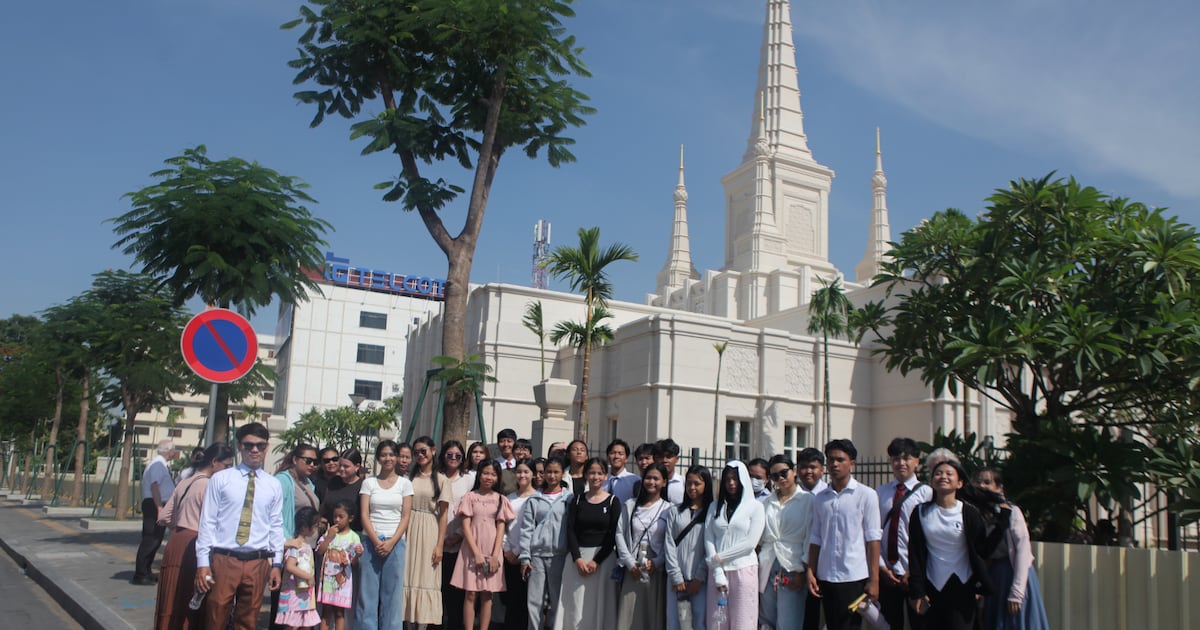
On June 18, more than 500 young Latter-day Saints from Cambodia gathered for what is considered the biggest youth activity in the church’s history, the church’s Cambodian newsroom reported.

In two cities, Phnom Penh and Siem Reap, teenagers learned about the temple and family history, made testimonies and celebrated the construction of the Phnom Penh Cambodia temple.

Many of these young people are first-generation members, often one of the only Latter-day Saints in their families, schools, or communities, but the gatherings gave them a sense of belonging.
“It’s fun to be around someone who believes like me,” said 16-year-old Rith Eysawachna.

She is baptized less than a year later, but she is recommended to her hand and is ready to do her deputy temple work for her recently deceased aunt.
“I think that’s what she wants,” she said.

Despite the challenge of finding family records, many of them were destroyed during decades of war and colonization, but Cambodian youth share their resolve to do temple work.
“I believe (my ancestors) will be very happy,” said 15-year-old Im Sochansa. “The temple is so beautiful. When I’m there, I feel peace. I feel the Holy Spirit. I want to be an eternal family.”

