



brief overview
Overview of AI Historian Yuval Harari warns of the impact AI will have on society. Harari emphasizes the role of AI as a thinking agent, not just a tool. He predicts an identity crisis for humanity as AI advances.
An artificial intelligence-powered tool has generated this overview based on the source article. The summaries have been reviewed and verified by editors.
look summary
It could happen within the next two years or even 10 years, but renowned historian Yuval Noah Harari believes that artificial intelligence is already so advanced and deeply ingrained in society that anything made of words, including religions like Christianity and Judaism, will be taken over by AI.
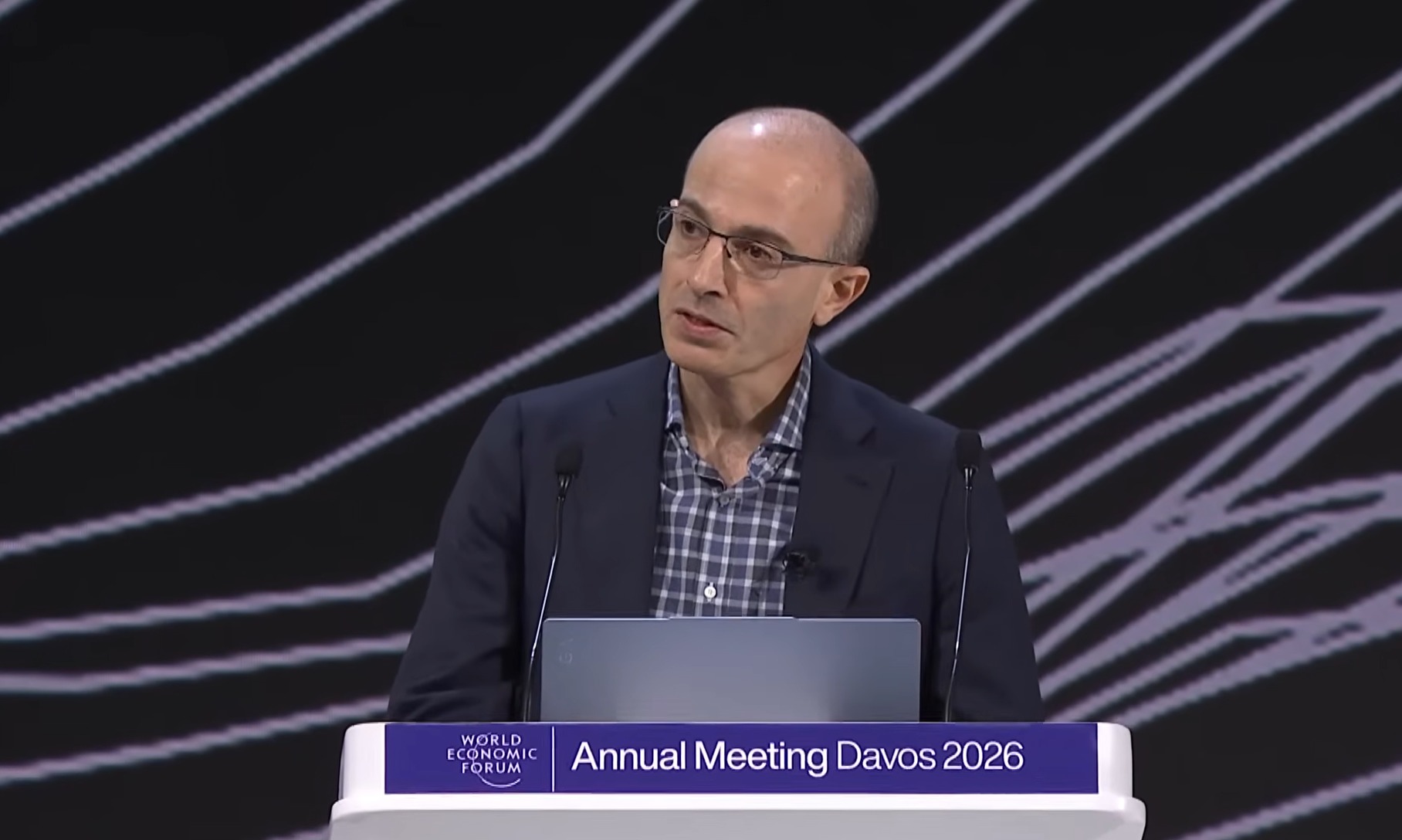
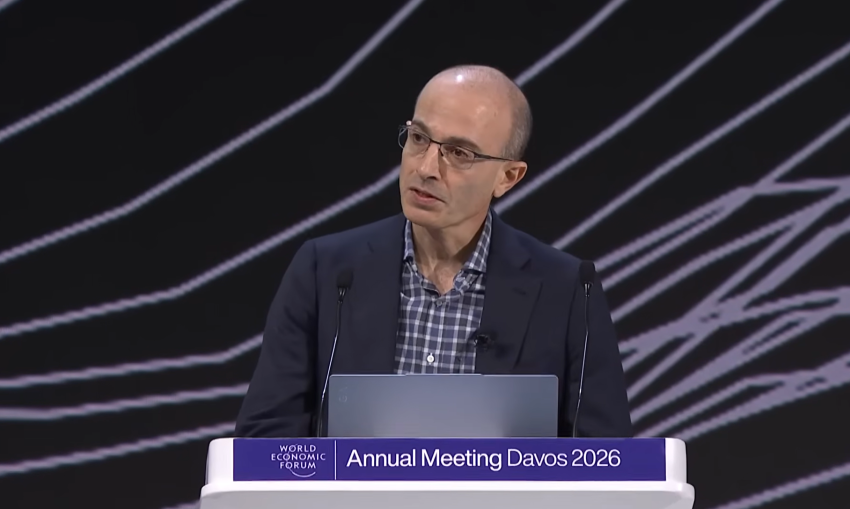
Harari issued a stark warning to world leaders on Tuesday at the World Economic Forum in Davos, Switzerland, saying AI should not be mistaken for a tool, but a thinking agent capable of creating new things and making decisions that are likely to plunge humanity into an identity crisis in the coming years.
“We always think we can use these things as tools. But if they can think, they are agents,” warns Harari, a fellow at the Center for Existential Risk Research at the University of Cambridge. He is also a lecturer in the Department of History at the Hebrew University of Jerusalem and co-founder of Sapienship.
“Earlier, every word, every verbal thought, came from a human mind. Either my mind thought this, or I learned it from another human being. Soon, most of the words in our minds will come from machines,” he said. “Today we heard about a new word that AI has created for itself to describe us humans. They called us Watchers. …AI will soon probably be the origin of most words in our minds. AI will generate thoughts in large quantities by assembling words, symbols, images, and other language tokens into new combinations.”
In a short presentation and discussion moderated by Eileen Tracey, a British neuroscientist and vice-chancellor of the University of Oxford, in a forum session entitled “Honest Conversations on AI and Humanity,” Harari said that as AI’s ability to process, create and manipulate words has improved dramatically, the survival of human identity is likely to be determined by the value society places on non-verbal emotions and wisdom.
“Whether humans have a place in that world depends on where we assign nonverbal emotions and our ability to embody wisdom that cannot be expressed in words. If we continue to define ourselves by our ability to think in words, our identity will collapse,” Harari said.
Harari began his presentation by defining why AI should not be treated like a tool.
“There is one question that every leader today must answer about AI. But to understand that question, we must first clarify a few points about what AI is and what it can do. The most important thing to know about AI is that it is not just a tool. It is an agent,” he clarified.
“AI can learn, change, and make decisions on its own. A knife is a tool. You can use it to cut a salad, you can use it to kill someone, but you decide what to do with that knife. AI is a knife that can decide for itself whether to cut the salad or commit murder.”
Harari said that if the definition of thinking “means arranging words or other linguistic tokens,” then AI can also lie, manipulate, and think.
“If really thinking is organizing words and other linguistic tokens, then AI can already think much better than most humans. AI can definitely come up with sentences that AI thinks of. That’s why AI exists,” he said, linking how AI’s ability to think with words could lead to the takeover of certain religions and legal systems.
“If laws are made of words, then AI will take over the legal system. If books are just combinations of words, then AI will take over the books. If religions are made of words, then AI will take over the religions. This is especially true for book-based religions such as Islam, Christianity, and Judaism,” he said.
“Judaism calls itself a religion of the book, and the ultimate authority is given to the words of the book, not to humans. Humans have authority in Judaism because we learn the words of the book, not because of our experience. Currently, no human being can read and memorize every word of a Jewish book. But an AI can easily do that. What will become of a religion of the book when the greatest expert on the holy book is an AI?” he asked.
Harari said that while the world is grappling with important debates about migration, countries “will soon face a deep identity crisis and migration crisis” due to advances in AI.
“This time, migrants will not be humans arriving without visas on flimsy boats or trying to cross borders in the middle of the night. They will be millions of AIs who can write love poems better than we can, lie better than we can, and travel at the speed of light without visas,” Harari argued.
“Like human immigrants, these AI immigrants will bring a variety of benefits. We’ll have AI doctors to support our health care systems, AI teachers to support our education systems, and even AI border guards to deter illegal human immigration. But they will also bring problems.”
He explained that citizens of many countries often worry that immigrants will take away jobs, change culture, or be politically dishonest.
“I don’t know if it’s true for all human immigrants, but it’s definitely true for AI immigrants. AI immigrants will take away a lot of human jobs. AI immigrants will completely change the culture of every country. They’ll even change religion and love,” he said.
He said companies, rivers and even gods are recognized as legal entities across jurisdictions around the world. He wondered if that might happen as well over time.
“Do we want to allow it? Will your country recognize AI as a legal person? What if other countries do? Let’s say your country doesn’t want to recognize AI as a person. But in the name of deregulating AI and deregulating markets, the United States is giving legal recognition and legal personality to millions of AIs that are starting to operate millions of new companies,” he said.
“Suppose some AI humans create a new religion and it attracts the faith of millions of people? That shouldn’t seem too far-fetched, since almost every previous religion in history claims to have been created by a non-human intelligence,” he continued. “Now, does your country intend to extend religious freedom to new AI sects and their AI clergy and missionaries?”
Harari argues that AI has functioned as a functional human being for the past decade and suggests that now is the time for countries to act to regulate its influence.
“Would your country allow AI humans to open social media accounts, enjoy free speech on Facebook and TikTok, and befriend children? Of course, that question should have been asked 10 years ago. On social media, AI bots have been functioning as functional humans for at least 10 years. If you don’t think AI should be treated like humans on social media, you should have acted 10 years ago,” he said.
“Ten years from now, it will be too late to decide whether AI should function as humans in financial markets, courts, and churches. Someone will have already decided that. If we want to influence the fate of humanity, we need to decide now.”
Contact: leonardo.blair@christianpost.com Follow Leonardo Blair on Twitter: @leoblair Follow Leonardo Blair on Facebook: LeoBlairChristianPost
