



The Komba people of Ghana have received a complete Bible after 16 years of dedicated translation work. Speaking at the launch event last month, Rev. Dr. John Kwesi Addo Jr., Executive Director of the Bible Society of Ghana (BSG), stressed that the Bible serves as a major repository for deepening the faith and protecting the Komba language and culture from extinction.
“This was more than just a consecration; it was a cultural event in which the entire community – Christians, Supreme Secretaries, elders and Muslims – came together to celebrate 16 years of tireless translation work,” BSG said in a statement.
BSG partnered with Lutheran Bible Translators to distribute the Komba Bible in hopes that the Bible will “shape lives, strengthen families, and combat moral decadence.”
The Komba people live in northeastern Ghana. Unlike many neighboring groups with centralized chieftaincy structures, the Konkomba traditionally organized themselves without a central governing authority. Social life is centered around lineages, clans, village elders, and local religious and spiritual leaders.
Historically, their worldview encompassed traditional spiritual beliefs: respect for ancestral spirits, belief in the nature spirits that inhabit rivers, trees, and the land, as well as rituals led by traditional healers and priests.
Since then, many Konkombas have come to practice Christianity, while others practice Islam. Traditional beliefs and customs still influence some communities.
According to Lutheran Bible translators, Baptist missionaries founded the first congregation among the Komba people in Namon in the 1950s. In the early 1980s, Lutheran missionaries Tim and Beth Haney immigrated to Ghana to serve in the Konkomba area.
In 1968, church authorities tasked Pastor Walter DeMoss and his wife Helena with establishing a church in northern Ghana and training local leaders. Although Pastor Demos was called specifically to serve the Moba people, he also mentored a young Comba man, the Reverend Samuel Conran.
Pastor Konran later expressed concern that the only existing Bible translation remains difficult for the people to understand, as the Komba language has many dialects.
After years of preparation, organizers began their New Testament translation efforts in earnest in 2005 and assembled a team to translate the New Testament. Members included Elijah Matibin, a project coordinator with expertise in Biblical engagement and literacy; David Federowitz, Literacy and Bible Engagement Advisor. Pastor Samson Bilafanim, translator. Pastor Emmanuel Mananina, translator. Mr. James Adongo Wajaku, translator. Pastor Nathan Esala, linguist and translation consultant. and translation consultant Dr. Fabian Dapira.
Lutheran Bible Translators reports that the community played an important role in translation, ensuring that their work not only communicated the Word of God but also met the needs of the community.
“The translation team sends a printed copy. Depending on the translation project, reviewers may choose to meet in groups, but Komba’s reviewers decided to make their recommendations independently,” LBT explained.
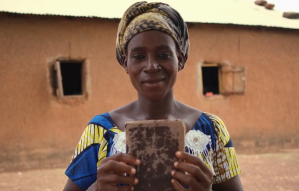
On November 1, 2014, the Komba community finally received their New Testament and gathered together to celebrate. Pastor Mananina expressed his joy: “Reading the Bible has become a part of my people. They read the Bible every day and are committed to doing so themselves. They have learned to read and now that they can read the Bible, they can go out and evangelize, something they were not able to do before.”
Immediately after its dedication, work on translating the Old Testament began in 2015. Elijah Matibin took over the leadership of the project as KOLIBITRAP coordinator. Lutheran Bible Translators, Evangelical Lutheran Church of Ghana, KOLIBITRAP, and the Ghana Bible Society have signed a Memorandum of Understanding (MOU) to begin an Old Testament translation effort.
During this period, the team recorded the New Testament in audio format and integrated it with the text to create a smartphone app. One Way Africa has produced the entire Bible in audio format to increase interest in the Bible.
Prior to this, on November 2nd, the Ghana Bible Society launched the Dagare Bible after 18 years of activity. Today, most Dagare people in northwestern Ghana practice Catholicism or other Christian denominations, although some practice Islam.
“The vast grounds of St Andrew’s Cathedral were packed with people from all corners of the Upper West region – men, women, children, clergymen and local ministers – all eager to witness this historic moment,” the association said.
In its 2023 report, BSG revealed that a lack of financial support is hampering efforts to translate the Bible into numerous languages. The organization estimates that it costs $20 to translate one poem, and the total cost to complete a language is $622,040 (GH¢7.2 million) over 10 to 15 years.
