


November 1, 2025, 6:00 AM MDT
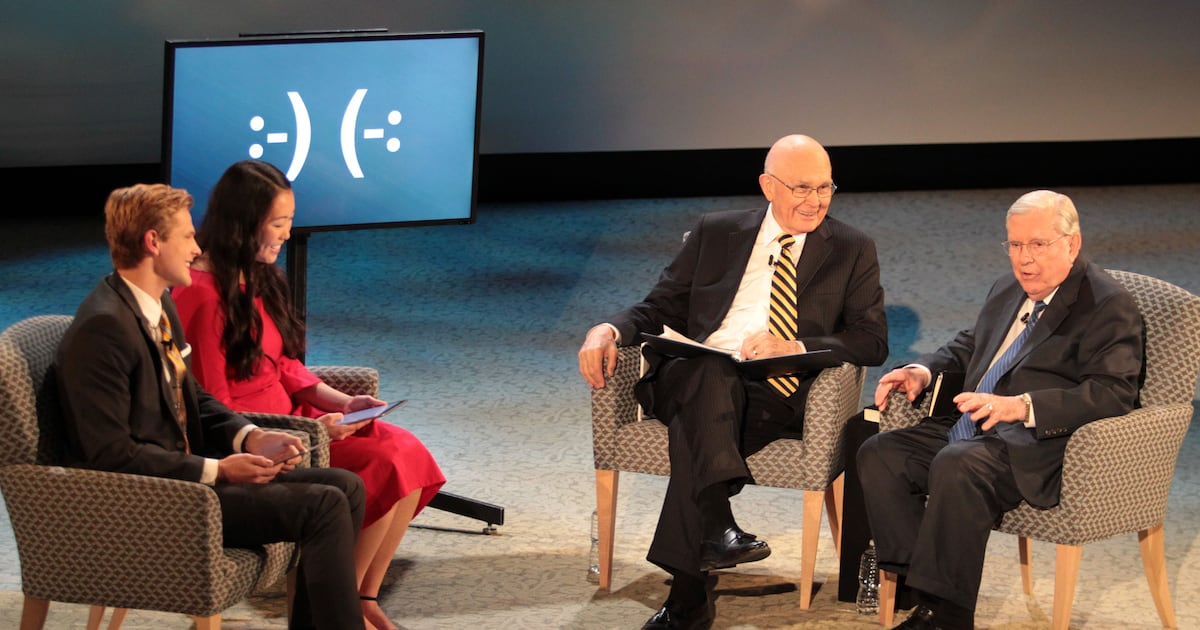
Eight years ago, as part of my job responsibilities at the time, I was fortunate to help produce a series of Face to Face events, live broadcasts featuring leaders and members of The Church of Jesus Christ of Latter-day Saints.
Elder Dallin H. Oaks and Elder M. Russell Ballard, then members of the Quorum of the Twelve Apostles, also participated in one of those events. They were answering questions from young people from around the world at an event held at Utah State University in Logan, Utah.
One of the questions came from a sister in Peru. She asked the two apostles how they could distinguish between their own thoughts and the inspiration of the Holy Spirit.
Part of my role at this event was to consider all questions submitted. During the series, tens of thousands of questions were asked by church members and friends. This question was the most asked question of all time. Many people were looking for direction on this issue.
After eight years of leading the Church, President Oaks said this is one of the most frequently asked questions he has heard during his ministry. At this event, he responded in a way that still impresses me.
“This is an issue that we have been working on all our lives,” said Chairman Oakes. “It is good to remember that the scriptures teach that inspiration comes from a still, small voice. It does not come from an immediate urge to do what we want or to reach out with prejudice to support a personal opinion.”
And he said he still works to recognize any biases he may have on the subject before seeking the Lord’s direction in prayer.
That moment stood out to me then and still matters to me now. Because I realized that I had to change the way I looked for answers to my questions and prayers. As I learned to feel the influence of the Holy Spirit as a boy in Primary, and as a young Aaronic Priesthood holder, and again as a missionary, etc., I continued to feel that the Holy Spirit was a frequency that I had to fixate on, one that ultimately did not require much effort to recognize and follow.
But as I listened to President Oaks speak that night, I learned that following the leading of the Spirit is a lifelong endeavor. Heavenly Father knows my biases better than I do. I had to ask myself, “Do I know what my biases are?” Once we recognize them, the next question is, “Can I put them aside in order to truly receive God’s answers?”
When Joseph Smith entered the Sacred Grove to seek guidance from his Heavenly Father, he realized that he was biased. He wrote that he felt that if his questions were not answered, he might be sent into a life of “darkness and confusion.” He saw good things in many churches around him. He studied the scriptures and tried to follow what he learned. And in desperation, he prayed, defying the efforts of his enemies to keep him from getting the answers he was seeking.
Joseph Smith persisted.
When he almost gave up, his answer came in the form of what we now know as the First Vision. He saw God the Father and Jesus Christ. They answered his prayers.
Joseph was not trying to start a church. He did not seek attention from his family or other people in the community. He just wanted to find peace by being where God wanted him to be.
Joseph then modeled President Oaks’ teachings at that in-person event. When Joseph translated the Book of Mormon, he did not expect to know what all of its teachings meant. In His humility, the Lord was able to reveal many parts of His plan and organization of the Church. And because of Joseph’s humble and courageous prayers, millions of God’s children have been blessed.
Thank you for the example of Joseph Smith. And I am grateful for the guidance of President Oaks, who now follows in Joseph’s footsteps as the 18th President of The Church of Jesus Christ of Latter-day Saints.
— John Ryan Jensen is the editor of Church News.
