


The Office of Transition Services, located in the Welfare and Self-Reliance Division of The Church of Jesus Christ of Latter-day Saints, provides support and resources to individuals, including veterans, who are experiencing mental illness, homelessness, or facing reentry after incarceration.
One of the primary efforts of the Military Affairs, Chaplain Services and Prison Services division of the Church’s Priesthood and Family Division is to provide support and resources to Latter-day Saint veterans around the world.
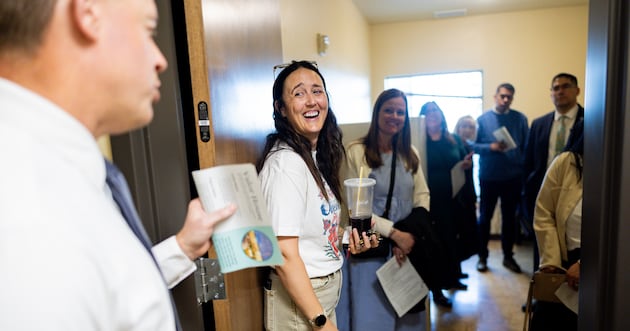
On Tuesday, March 17, a group of professionals from the Office of Transitional Services, along with a Church-Military missionary couple and retired U.S. Army Lt. Col. Dan Patterson, Church-Military Manager, visited Valor House, a transitional housing facility for veterans on the Salt Lake City VA campus, and First Step House Central City Treatment/Housing, 434 S. 500 East, Salt Lake, a nonprofit organization that provides residential and outpatient addiction recovery treatment, housing services, and housing services. Participated in the City tour. Support for individuals with low income and behavioral health issues.
For transitional services professionals, one of the goals of Tuesday’s gathering was to learn how to work more effectively with First Step House to serve homeless people and improve access to programs. Additionally, the Church’s military community wants to increase support for Latter-day Saint veterans and their families.
Mary T. Calhoun, director of development for First Step House, led a tour of both facilities. In addition to each tour, participants were allowed to meet with Gabby Parsons, Valor House’s Program Director, and Dan Mulcahy, Director of Substance Use Disorder Treatment Services, and ask many questions.

“We evaluate anyone and any situation. We try to work with them as best we can to make sure they get the help they need,” Mulcahy told the group. “We are focused on people. … We are always committed to working with our community partners to achieve that goal.”
Mr. Calhoun added, “First Step House is committed to healthcare housing, providing comprehensive support to people facing life’s greatest challenges.”

During the tour, Calhoun said First Step House is grateful for the church’s support over the years, especially through the Episcopal Storehouse, Deseret Industries and local humanitarian programs.
“The church makes it possible for us to feed all the people we need to feed, not only at First Step House, but also in our treatment programs. We serve 700 meals a day, many of which are made possible by donations from the Episcopal Depository,” she said, adding that the church also helps “prepare people for success” as they return to the community from First Step House’s programs.

During a tour of the Valor House and First Step House residential treatment facilities, participants gained insight into the facilities and their operations.
Greg Young, who manages the church’s Ogden Interim Ministry Office, said it is a “great blessing” for the church to be able to work with such “invaluable resources” at Valor House and First Step House.

“We are grateful to everyone who takes the time to care for those who really need it: the homeless, the downtrodden, the poor and the needy,” he said. “I truly believe this is a place where the Savior comes and ministers to those in the facility who need Him the most.”
Matt Kimmel, an expert who manages transitional ministries for churches in Las Vegas, Nevada, and St. George, Utah, was impressed by what he saw.

“What struck me most about Valor House was the level of compassion they have in trying to help veterans and remove barriers so they can move forward and move forward,” he said. “What I loved about First Step House is that people who are experiencing homelessness for any reason need multiple resources and organizations to fill all the gaps in their lives.[First Step House]is very comprehensive, very thoughtful, and very compassionate in the way they approach it.”
Julie Erkerens, another transition services specialist who manages offices in Utah (Logan, Ogden, Brigham City) and Mesa, Arizona, appreciates how quickly most patients can be admitted, depending on their circumstances.

“What I like is that they tell me we’re helping the people who are most in need. We meet people like that a lot, so that’s really helpful,” she said. “Honestly, for some people, waiting another day is very difficult.”
David Young, who manages Salt Lake City Transitional Services, said the tour “gave us a good perspective on how community resources can help accomplish the mission of the church.”

Patterson also expressed gratitude for having “another” resource to help Latter-day Saint veterans in their time of need.
“That’s our role: to connect resources to help and support our veterans,” Patterson said. “This is another big, powerful one. We’re very excited to be part of this partnership.”

Patterson said Church Military Relations’ next steps are to systemize the referral process and begin training stake military relations professionals to refer veterans in need.
“In the military, sometimes we want to suffer in silence. But military affairs professionals in the stake can grab a veteran’s hand and say, ‘Let me help you,'” he said.


