


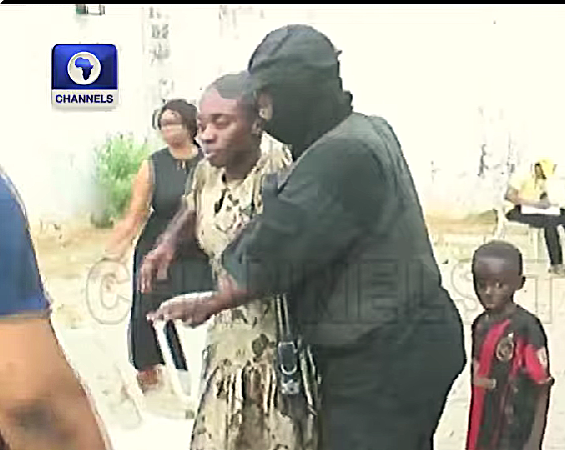
A Nigerian Anglican priest who was kidnapped along with his wife and daughter during a spate of mass kidnappings in Nigeria has died in captivity, leaders of the Anglican Church of Nigeria announced on Wednesday (November 26).
Pastor Edwin Achi was abducted on October 28th from Nissi village in Chikun District, Kaduna State, along with his wife Sarah Achi and their daughter. Church leaders have not said how he died, but his attackers had demanded a ransom of 600 million naira ($415,216).
“The Venerable Edwin, who was abducted with his wife on October 28th, has been confirmed dead,” Church of England leaders said in a press statement. “His transfer is a painful loss for the entire diocese, the clergy, the church family, and all who were blessed by his faithful ministry, humble spirit, and unwavering dedication to the service of God. We continue to pray for the release of his wife and daughter from the hands of their kidnappers.”
Days before his death, his captors released a photo of him, his wife, and other captive Christians.
Harrison Gwamnishu of the Safe City Foundation said in a previous press statement that the ransom amount was exorbitant.
“The photos released by the kidnappers also show other innocent victims, indicating that this is not an isolated attack but part of a growing wave of insecurity,” Gwamnish said. “I call on the Federal Government, the Kaduna State Government and all relevant security agencies to take swift and decisive action. This situation is unacceptable. Every day these victims remain in captivity is another day of trauma and anxiety for their families and communities. Government must intervene immediately to ensure their safe release.”
In an official statement, Nellie Achi, a relative of the Anglican priest, said: “Jehovah, we cry and pray for mercy. Six hundred million naira is being demanded as their ransom. This is quite a huge sum for the family. We beg and beg for your acts of kindness.”
wave of kidnappings
The announcement came as Nigeria’s President Bola Tinubu ordered on Wednesday (26 November), under pressure from the US government, to increase the number of security personnel by 20,000 to the existing 30,000 security personnel following a wave of mass kidnappings.
“The police will recruit 20,000 more officers, bringing the total to 50,000,” Tinubu said in a press statement. “My fellow Nigerians, this is a national emergency and we are responding by deploying more boots on the ground, especially in areas of security concern.”
According to the Christian Association of Nigeria (CAN), gunmen abducted 303 students from a Catholic boarding school in Papiri village, Niger state on November 21, in the latest mass kidnapping incident. About 50 of them fled shortly after, according to CAN’s local branch.
Niger’s governor, Oumar Bago, reportedly said the number of abducted students was “far below” 303 and said schools in the area were closed four years ago due to intimidation. According to the BBC, he criticized St. Mary’s Catholic school officials for reopening the school despite threats from armed groups that led to its closure two months ago and four years ago.
On November 21, assailants killed two Christians and abducted 38 others during a church service at Christ Apostolic Church (CAC) in Elku Village, Kwara State. Tinubu and state officials announced on Sunday (November 23) that 38 abducted worshipers in Kwara State have been released without conditions of freedom.
In Maga town, Kebbi state, 25 female students were reportedly kidnapped from a public girls comprehensive secondary school on November 17, with one of them reportedly escaping on the same day. Tinubu announced on Tuesday (25 November) that the remaining 24 female students had been released, although he also did not provide further details.
The suspected perpetrators of the kidnapping are Islamic extremist groups, primarily Fulani Muslim militias and criminal organizations.
A report by Britain’s All Party Parliamentary Group for Freedom or Faith (APPG) said that in the north-central region of the country, where there are more Christians than in the northeast and northwest, Fulani Islamist militias have attacked rural villages, killing hundreds of people, especially Christians. Jihadist groups such as Boko Haram and the Islamic State of West Africa Province (ISWAP), among others, are also active in the country’s northern provinces, which are poorly controlled by the federal government, and Christians and their communities continue to be targeted for attacks, sexual violence, and barricaded killings, the report said. Kidnappings for ransom have increased significantly in recent years.
According to Open Doors’ 2025 Global Watch List report, violence has spread to southern states, and a new jihadist terrorist group, Laklawa, has emerged in the northwest with advanced weaponry and a radical Islamist agenda. Raqlawa is affiliated with Jamaah Nusrat ul-Islam wa al-Muslim (JNIM), an expansionist al-Qaeda rebel group originating from Mali.
The APPG report said the Fulani people number in the millions across Nigeria and the Sahel and are comprised of hundreds of predominantly Muslim clans of various lineages who do not hold extremist views, although some Fulani espouse radical Islamist ideology.
“They have adopted strategies comparable to Boko Haram and ISWAP, and have demonstrated a clear intent to target Christians and powerful symbols of Christian identity,” the APPG report said.
Christian leaders in Nigeria say they believe herdsmen’s attacks on Christian communities in Nigeria’s Middle Belt are inspired by a desire to forcibly occupy Christian lands and impose Islam, as desertification makes it difficult to maintain herds.
According to WWL, Nigeria remains one of the most dangerous places on earth for Christians. According to WWL, of the 4,476 Christians killed for their faith around the world during the reporting period, 3,100 (69 percent) were in Nigeria.
“Countermeasures against anti-Christian violence in this country have already reached maximum levels based on the Global Watch List methodology,” the report said.
Nigeria ranked 7th on WWL’s list of the 50 worst countries for Christians in 2025.
