


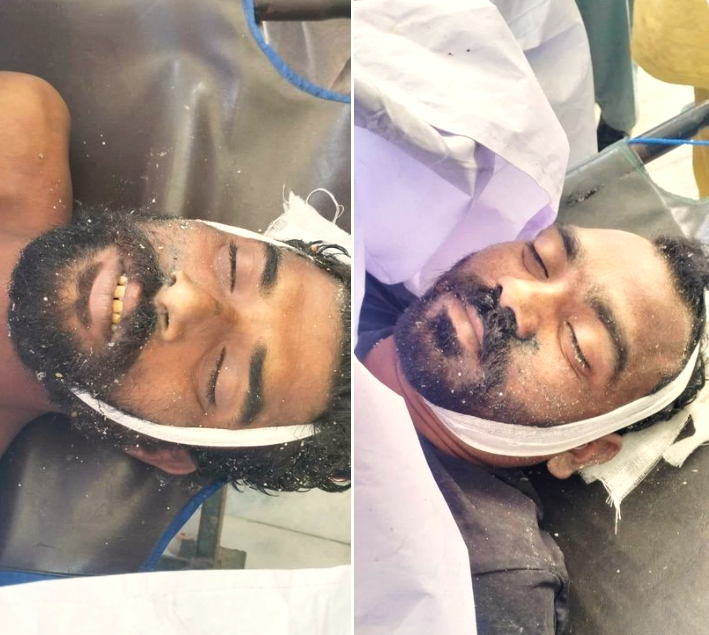
In two landmark judgments, the Islamabad High Court (IHC) on Tuesday (December 9) prohibited employers from requiring only Christians for sanitation-related jobs and called for safety measures for sewage cleaners, most of whom are Christian.
The IHC, Pakistan’s federal high court, has strictly prohibited the use of the phrase “Christians only” in advertisements for waste collectors and cleaners, calling for comprehensive and urgent safety measures to curb the rising number of deaths among sewer cleaners.
Addressing widespread concerns in two petitions filed jointly by the Center for the Rule of Law Islamabad (CROLI) and the Pakistan United Christian Movement (PUCM), Justice Raja Inam Amin Minhas of the Islamabad High Court ruled that the phrase “Christians only” is discriminatory and should be replaced with “civilian” in all future job postings.
The judge noted with concern that more than 70 Christian workers have died from exposure to toxic gases in sewers since 1988, while civil society reports have reported at least 10 deaths since 2019. In a separate judgment, the judge said sewer workers continue to be exposed to dangerous environments and toxic gases without adequate protection.
Leaving sewage workers in toxic and deadly conditions without safety measures amounts to gross negligence, Minhas said. He wrote that “sewer workers are not parts of a machine” and must be provided with full safety equipment and basic facilities to protect their lives, and declared that the continued deaths of Christian workers engaged in manual scavenging were a gross violation of fundamental rights and that the state continued to fail in fulfilling its constitutional obligations.
Instead of acknowledging their own responsibility, ministries are trying to avoid responsibility by shifting blame to each other, he said.
“Has the exercise of public office become a mere evasion of duty?” he wrote. “Doesn’t Pakistan’s constitution guarantee equal protection for all citizens? Is the life of a sewer worker less valuable than that of any other citizen?”
The court held that the state has a “solemn constitutional obligation” under Articles 9, 25, and 27 to protect the life, dignity, and equality of all citizens, including those working in dangerous jobs. It further pointed out that Pakistan’s commitments under the Universal Declaration of Human Rights and national labor laws require the provision of safe working conditions.
Sewer workers are routinely exposed to toxic underground gases, putting them at risk of collapse, death, organ damage and serious infections, risks that are “entirely avoidable” with proper equipment, monitoring equipment and safety procedures, Minhas said in the ruling. The court held that continued inaction by state authorities amounted to a “systemic failure” requiring judicial intervention.
The High Court directed the federal government to issue a circular to all federal and state ministries, autonomous bodies and regulated private entities to ensure that workers engaged in sewerage maintenance are provided with functional protective equipment, gas detectors, ventilation equipment and first aid facilities. It also ordered that a detailed implementation report outlining progress on safety reforms and compliance with new employment guidelines be submitted to the Judicial Deputy Registrar within two months.
Additionally, the court ordered the Ministry of Justice to initiate legislation or reform of existing laws to protect the rights, safety, compensation, and insurance coverage of sewerage workers.
PUCM President Albert David praised the judgment and said that the two judgments mark an important legal step towards protecting one of Pakistan’s most marginalized groups of workers.
“Over a long period of time, something has emerged from our constitutional institutions regarding minorities,” David told Christian Daily International Morningstar News. “We first tried to deal with the issue through the administration (government) and also tried to raise it in the media, but to no avail. Finally, we decided to approach the High Court to seek relief for the sanitation workers.”
He said both rulings were good because the judge not only gave an opinion on the issue, but also imposed a duty on the executive branch to report on the progress of execution.
Judgments regarding the rights and protection of sanitation workers were not limited to Christians.
“It will impact the lives of all sanitation workers, regardless of their religious beliefs,” David said.
He pointed out that government departments and officials could also be held liable if the High Court’s order is not implemented.
Pakistan’s National Commission for Human Rights (NCHR) has filed a similar constitutional petition with the newly established Federal Constitutional Court (FCC), seeking an end to manual sewer cleaning. The petition, heard by a three-judge bench headed by FCC Chief Justice Aminuddin Khan on November 21, highlighted the serious and often fatal risks faced by sanitation workers due to unsafe working conditions, lack of protective equipment, and lack of training.
The NCHR argued that forcing workers into sewers without safety measures violates fundamental constitutional rights, including the right to life, dignity, equality, and a safe working environment.
The petition is based on an NCHR report titled ‘Risks of Sanitation Work in Pakistan’, which documents a wide range of complaints, deaths, injuries and unsafe conditions faced by sanitation workers across the country from 2022 to 2024. The commission received several complaints from sanitation workers who lost their lives in the line of duty.
The NCHR further submitted that Pakistan lacks a uniform national health and safety framework for sanitation operations. Without regulatory enforcement and emergency response mechanisms, workers are routinely exposed to toxic gases, exposing them to life-threatening injuries and preventable deaths, the report added.
Following discussions, the FCC issued notices to respondents, including water and wastewater agencies, waste management companies, and state governments.
Sanitation work in Pakistan remains deeply stigmatized and is widely seen as a caste-based occupation tied to religious minorities such as Christians and Hindus.
The July 2025 Amnesty International report, “Cut us open and watch us bleed like them,” found that sanitation workers in Pakistan face systemic discrimination, unsafe conditions, and caste-based exclusion in public sector employment.
Amnesty International noted that the vast majority of sanitation jobs are assigned to so-called “lower caste” non-Muslims, often without offering them genuine alternative employment options. The situation is even more precarious for female sanitation workers, who face “triple discrimination” at the intersection of caste, religion and gender, the report said.
The report also noted that stigma leaves sanitation workers vulnerable to violence, including incidents involving blasphemy charges. The paper cited several cases in which Christian sanitation workers have been accused of blasphemy, including the country’s most high-profile blasphemy victim, Asiya Noreen, known as Asia Bibi.
Data collected from around 300 government job advertisements from 2010 to March found that many applicants explicitly required them to be non-Muslims or from “lower castes,” reinforcing historic caste-based hiring patterns and effectively pushing non-Muslim workers into sanitation-related roles.
Pakistan, where more than 96 percent of the population is Muslim, was ranked eighth out of the 50 most difficult countries to be a Christian on Open Doors’ 2025 World Watch List.
