


The Church of Jesus Christ of Latter-day Saints’ new worldwide hymnbook, Hymns for Home and Church, has so far released six new Christmas-specific hymns.
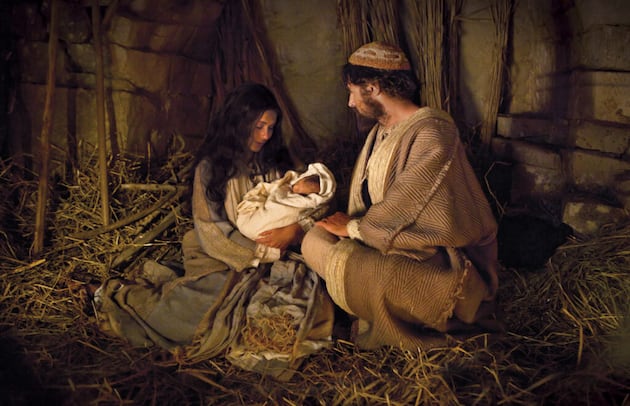
These songs speak of the circumstances surrounding the birth of Jesus Christ, the surprise and joy of the event, the fulfillment of prophecies, and the desire to share the news with others.
“We rejoice as we remember our Savior Jesus Christ,” the First Presidency said in its 2025 Christmas message.
The songs are:
One is a new composition and the other is derived from other Christian traditions. Since new hymns began being released in batches in May 2024, they have been added to the worldwide hymnbook.
“The Holy Christ Child is Born”
“He Is Born, the Divine Christ Child” was included in the first batch of new hymns.
Both the lyrics and music of carols originated in France and date back to the 19th century. The French title is “Il est né le divin Enfant” and it is one of France’s most popular Christmas carols. This song is included in the Church’s French and Tahitian hymnbooks and is explained in the chapter about this hymn in the Gospel Library.
After the angel announced to the shepherds that the Savior was born, the shepherds went to see the Christ Child with their own eyes. Then, “They made known the words that were proclaimed concerning this child. And all who heard it were amazed at what the shepherds had told them” (Luke 2:17-18).
“What kind of child is this?”
“What kind of child is this?” is a famous Christmas carol written by William Chatterton Dix in England in 1867. The song is included in many hymnals of other religions and will be included in a new global hymnbook to be published by the Church in May 2024.
Dix is best known for his Christmas hymns. Although he was neither a minister nor a scholar, he had a well-honed talent for writing religious texts, as this chapter on hymns explains.
Dix’s text is set to the 16th century English melody “Greensleeves.” John Stayner, an accomplished composer, harmonized the tune for publication of this hymn in 1867.
“Star Bright”
“Star Bright,” included in the first group of new hymns, is written from the perspective of Book of Mormon people who were looking for the prophesied signs of the Savior’s birth (see Helaman 14:1–7).
Lorin F. Wheelwright was an author and composer, as well as a noted musician and educator who wrote many hymns and nursery rhymes. He also serves on the general board of his church’s Sunday School, is associate editor of the Sunday School magazine, The Instructor, and explains the chapter on this hymn in the Gospel Library.
“Star Bright” was published in the October 1959 issue of “The Instructor” magazine in both English and Spanish, and “Estrella de Luz” has been included in the Spanish children’s songbook since 1995.
“Not yet, not yet, not yet.”
“Still, Still, Still” is an Austrian hymn that originated in the Salzburg region, known for its beautiful mountains and music, the chapter on this hymn explains. This song was included in the fourth installment of a new hymnbook published in June.
The author is anonymous, and the song was passed down through oral tradition and first published in 1865 in the Salzburg Folk Song Collection, a collection of 1,000 folk songs selected by Maria Winzenz-Süss, founder of the Salzburg Museum.
The lyrics say, “Jesus is asleep and all is still. His mother Mary holds Him tenderly and gently wraps Him in her arms.”

“Please go to the mountain and tell me.”
“Go Tell It on the Mountain” is an African-American spiritual that depicts the joy and excitement of proclaiming the birth of Christ, and is widely known across Christian faiths. The song was included in the latest edition of New Hymns, released in September.
Although the exact date of creation is unknown, the chapter on this hymn explains that it originated among African Americans during the era of slavery in the United States. Many variations of this hymn exist, as it was passed down orally for many years before it was written down.
Educator and musicologist John W. Wark II wrote original poems to accompany existing songs and refrains. After his death in 1925, the poem was published by his son John W. Wark III in 1940.
“The little baby in the manger”

The story behind “Little Baby in the Manger,” released in September as part of the new hymn series, began 18 years ago in South Korea.
American composer Tracy Roe and her husband Ryan lived there with their two-year-old daughter Eliza.
Law had been creating new arrangements of hymns for a long time, but now he wanted to write his own songs. She decided to write something that combined two of her favorite things: motherhood and Christmas.
“I wanted to do something that would allow Mary to sing to her baby,” Roe told Church News in a November article. “But it kind of evolves and ends with painting a picture of the whole Nativity and inviting everyone to worship together.”
