


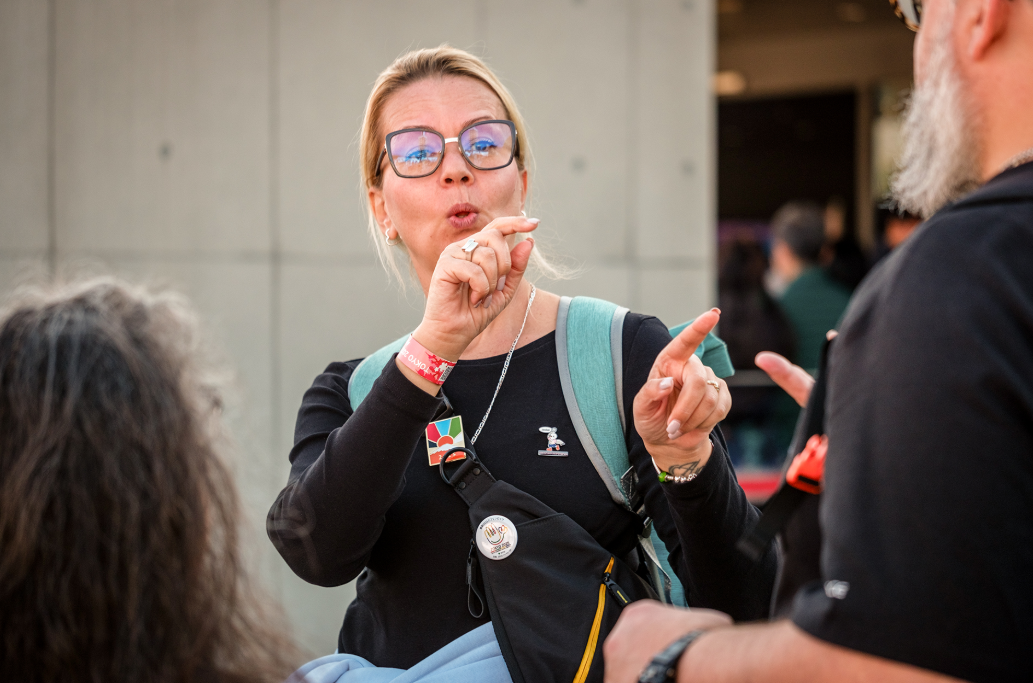
The Deaflympics, to be held in Tokyo in 2025, has become an unprecedented platform for global evangelism, giving missionaries valuable access to one of the world’s largest and most unreached communities. As thousands of athletes and spectators from around the world gather for this international sporting event, missionaries say this moment is a historic opportunity to share the gospel with the deaf and hard of hearing, who are rarely concentrated in one place.
The International Mission Board, working with more than 50 volunteers from eight countries, has already recorded at least 200 gospel conversations and engaged with approximately 500 participants representing 30 countries. IMB leaders say the range of interactions possible at the Deaflympics is unlike anything encountered elsewhere and could help foster long-term efforts to reach the estimated 80 million people with hearing loss worldwide.
The games will be held from November 15th to 26th and will feature athletes from nearly 80 countries.
“Deaf people are naturally scattered all over the world, and it’s a rare event for them to come together all at once,” said Hank Green, IMB’s global D/Deaf activist.
In the terminology of the D/Deaf community, Deaf people (with a capital D) use sign language as their first language, while “Deaf people” (with a lowercase d) lose their hearing and acquire spoken language later in life. Hearing loss refers to people who need hearing aids to amplify sounds.
The IMB Mission Team views Deaflympics as a unique opportunity to build relationships within the global D/Deaf community. IMB, the international mission agency of the Southern Baptist Convention, the largest Protestant denomination in the United States, focuses on making disciples and planting churches in the world’s unreached people groups.
Volunteers, including deaf and hearing people from eight countries, gathered at venues across Tokyo. They used custom tools, including a trading pin designed by IMB employee Kaori James, whose five colors each symbolized an element of the gospel message.
The team also distributed cards with QR codes that linked to gospel presentations in multiple sign languages, allowing recipients to access the message in their own heart language.
Testimonies demonstrate the power of this professional advocacy. Deafblind volunteer Liberty Gratz used tactile signatures to share the gospel with a deafblind man who had never heard the message before.
In another example, Im Yong-sook, a hearing volunteer, used a translation app to share the gospel with a Japanese woman, even though she did not know sign language. After this conversation, the woman decided to give her life to Christ. IMB staff are currently following up to connect her with local Japanese D/Deaf Christians.
Mr. Green emphasized that this success highlights the critical need for longer-term missionaries to reach the estimated 80 million deaf/hard-of-hearing people around the world, one of the world’s largest unreached people groups.
IMB hopes that the short-term volunteer experience at the Deaflympics will encourage more participants to consider long-term service.
