


November 22, 2025, 7:48 PM MST
Church News’ new television documentary series profiles welfare farms and welfare food processing and distribution facilities owned and operated by The Church of Jesus Christ of Latter-day Saints around the world. The series also features AgReserves, the commercial arm of Farmland Reserve, the church’s investment affiliate.
This three-part series, titled “The Harvest of Faith,” is part of the “Living Record: Church News Documentary Series.” The first episode will air Sunday, Nov. 23 at 9 a.m. Mountain Time on BYUtv, with episodes two and three expected to air in the coming weeks.
In addition to the television episodes, Church News will feature a three-part article series.
This series features interviews with Presiding Bishop W. Christopher Waddell and Bishop L. Todd Budge of the Presiding Diocese. Camille N. Johnson, Relief Society general president. Blaine Maxfield, Managing Director, Welfare and Independence Services. and Doug Rose, president and CEO of AgReserves and Farmland Reserve.
Viewers and readers will meet and get to know the employees, volunteers, missionaries, and others who work at these farms and facilities. Parts 1 and 2 look at how this initiative fulfills the Church’s welfare commitment to care for those in need and build self-reliance. In Part 3, learn more about commercial investment farms around the world using AgReserve.
“We hope our viewers will shine a light on the faces and lives of those who have benefited and been blessed by our work,” Rose said.
Part 1 Welfare farm

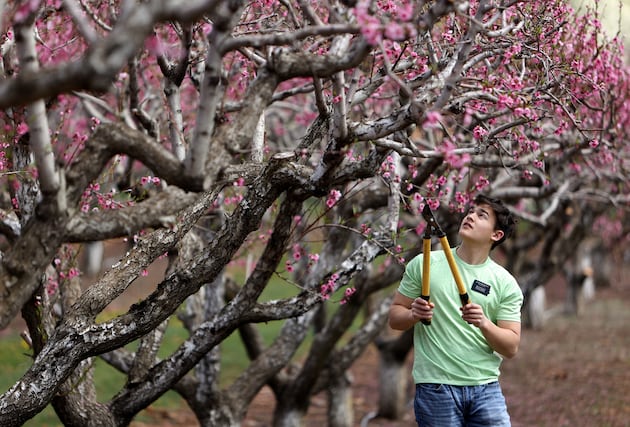
Throughout Part 1, viewers and readers will see a year’s worth of experiences from planting to harvest on part of the church’s welfare farm.
Bishop Waddell said the scope of welfare farms was “quite remarkable”. Acres of orchards, vineyards, and fields grow crops that feed people of all faiths and no faith around the world.
All this is done out of a desire to keep the two great commandments: love of God and love of neighbor.
Lives were changed on these farms, from senior missionaries called to serve on the property, to volunteers who gave of their time, to employees who saw miracles in their work and in their own lives.
President Johnson said miracles are sometimes big and sometimes quiet and very personal. “But I know that it happens, all in connection with this very important work.”
Maxfield said everything the program does is to bless others and help them know that their Heavenly Father knows them.
Part 2: Welfare processing and distribution facilities

Part 2 explains how all the produce and products grown on the church’s welfare farms are processed, canned, bottled, milled, cooked, and baked in processing plants before being distributed around the world.
The food will be sent to more than 100 bishop’s warehouses to help parishioners in need. The food will also be shipped free to food banks to help people of all faiths and non-faiths.
“We always have a surplus, and those surpluses go to food pantries across the United States to provide for all of God’s children,” Bishop Budge said.
President Johnson said food would also be sent to areas and communities affected by natural disasters and other disruptions to help “our brothers, sisters and neighbors around the world”.
Viewers will see the joy that comes to those who take the time to volunteer at these facilities and serve others. “Joy comes from reaching out and helping others – going beyond ourselves,” Bishop Waddell said.
Part 3: Agricultural reserves

Part 3 is different from the first two parts as it focuses on commercial farms based on AgReserves. AgReserves is the commercial arm of Farmland Reserve, a world-class agricultural investment company affiliated with churches that own farms and ranches in nine countries and more than 30 U.S. states.
These farms not only grow food that is sold commercially around the world, but they also grow people. Viewers meet AgReserves employees in places like Brazil and Chile who have grown into company leaders and are now mentoring others.
Proceeds from the company are used to support the sacred mission of the church, Rose explained.
“This is a great company and we want our parishioners to be proud of it,” he said.
Rose said it’s great to be a part of the agriculture industry.
“We have worked hard to ensure that in the end we will reap a fruitful harvest,” he said. “And in the same way, the church invests in a way that will ultimately reap a bountiful harvest. We participate in those industries every year, but it is a small-scale version of what the church does more broadly.
“It’s the law of harvest at work.”


