


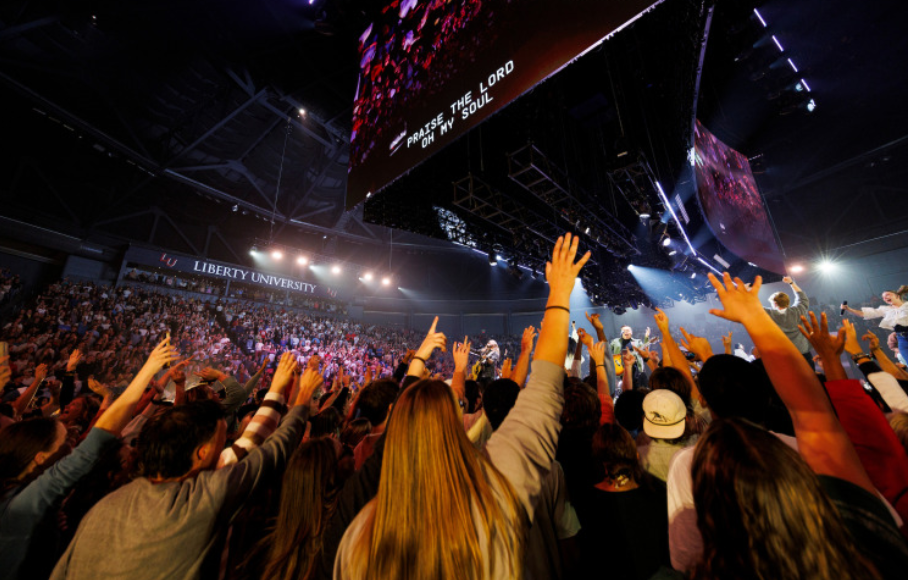
Liberty University, a large private nonprofit evangelical Christian university located in Lynchburg, Virginia, currently offers 600 online degrees to European students and is actively exploring the possibility of establishing a physical campus in the future.
The university collaborated with marketing expert Lucien Mustata as the European representative for the project.
Commenting to Christian Daily International on why American higher education institutions are expanding their reach across the Atlantic, Mustata said Liberty seeks to meet the critical needs of students who want to pursue a normal career while grounding their learning in the Christian faith.
Liberty’s move is aimed at countering the rise of secularism, particularly in Europe, he said.
“Europe is experiencing very serious secularism, and technology is having a very strong impact on the next generation. We are faced with a challenge: there is a lack of faith-based education based on Christian content,” Mustata explained.
Mustata said students go to university to get secular jobs, such as being a doctor. However, theology-based universities only prepare for a career as a church minister or similar role, and cannot train for a profession within the broader realm of secularism.
He gave the example of his native Romania, where about 20 high schools are at the top of the academic rankings, and said the most academically successful students come from Christian schools. In fact, students in non-faith schools perform less well, he said, and social problems are compounded if students fail to achieve the grades needed to advance to careers that benefit broader society.
Mustata also believed that parents prioritize ensuring their children receive an education in a “safe environment” free from problems related to drugs and violence.
“They want safety above all else, not whether they are the best. And parents, even secular (non-faith) parents, want to send all their children to Christian schools because they feel safe.”
However, Mustata opined that the problem with this “European movement” is that there is currently no room in Europe for Christian universities that offer courses such as law and medicine that include Christian beliefs.
Mr. Mustata consulted Mr. Liberty on this issue and informed him that Mr. Liberty was interested in investing in European higher education to provide such a wide range of career platforms at university level.
“We want to create opportunities for Christians in Europe,” Mustata said, outlining how Liberty operates a large campus in the United States with vast facilities and resources that can be leveraged for Europe. But he cautioned that the project would be rolled out at a slow pace.
Still, “we need to invest in the next generation. In the long run, secularism will grow in Europe because we are not investing in teenagers and the next generation with Christian values. Christian education in Europe is very important,” Mustata explained.
“Liberty is here to see if we can cover these needs. But this is a step, a process, and we want to test this area with people in Europe. From homeschooling to doctoral programs, Liberty operates the largest Christian university campus in the world.”
Despite running a marketing company, Mustata said he is not motivated by financial gain, but by a passionate belief in the value of Christian education in Europe.
“I’m not doing this for the money. I’m doing it because I believe in promoting Christian education in Europe. We need to do something for the continent. We face a big problem that not everyone wants to be a pastor or do social work, but if they want to study in the Christian field and be what they want to be in the world (career-wise), they have the opportunity to learn in a faith-based context.”
Mustata became involved in the project through his friendship with Liberty President Dr. Dondi Costin. The conversation about Heartbeat, a large-scale Christian music festival and ministry founded by Mustata, led to a broader conversation about the state of Christian education in Europe.
“To be honest, I didn’t know anything about education,” Mustata said, perhaps downplaying his own valiant fight to navigate Romania’s orphanage system as an orphan who was thrown in a trash can as a baby and become a successful businessman.
Liberty University’s president informed Mr. Mustata about the university’s methods, which made him interested in pursuing something similar in Europe.
From that moment on, he became the official representative of the ongoing project on the continent.
“Liberty now has a big door open to Europe and they now have a heart for Europe,” Mustata said. “And they are willing to invest in this space, just like America did 50 years ago.
“But this is not about Liberty. It’s about wanting to do something for Christian education, and Liberty is an institution that can cover this need.”
In reality, Liberty currently offers European students an organic structure online that can be shaped into a physical presence, or campus, in the future as the project grows, Mustata said.
Some people prefer online learning, while others prefer physical educational experiences, Mustata elaborated, recalling that many paradigms have changed since COVID-19.
“The pandemic has changed the world. This is something people now take for granted.”
Mustata said Liberty intentionally intended to offer online programs in the online realm with appropriate European accreditation.
“They will be more intentional about whether or not they need to open a school in Europe.”
Since many people in Europe were unaware of American Christian colleges, Mustata saw his role as promoting the education they offered.
The Romanian national considered his country, which has the continent’s largest evangelical community, a top priority in terms of raising awareness.
“We have a lot of Christians, but they don’t know about Liberty’s programs. So it makes sense to start marketing in Romania, because we are their biggest community.”
Mustata has been promoting Liberty’s move on social media channels and other media through his marketing firm, Lucien & Partners. This includes special financial offers for prospective students and hosting web webinars to educate people.
“We want to see if there is a big demand to open colleges and universities in Europe,” he added.
