


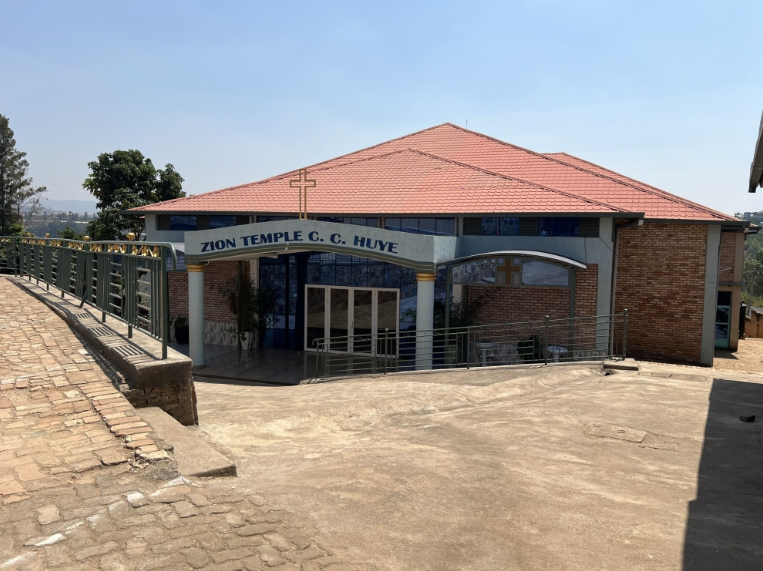
The World Evangelical Alliance (WEA) has determined that current religious regulations and restrictions in Rwanda do not meet international human rights standards. In its submission to a universal regular review on July 16, WEA urged the Rwandan government to reconsider the 2018 Faith-Based Organization (FBO) and its 2025 amendments and related guidelines laws, suggesting that the law violates the Rwandan constitution, which guarantees freedom of religion or belief and related freedom.
The report also points out that the law violates several continental and international laws that Rwanda is a signatorial figure, including the Universal Declaration of Human Rights (UDHR), the international contract of civil and political rights, and the African Charter on the Rights of Humans and People.
The law, entitled “Determining the organization and function of faith-based organizations,” required churches to register with the state in 2018, and to register a compulsory theological degree with pastors, rebuilding the buildings and enacting parking lots. Religious organizations existed for five years to comply with the law. When the grace period ended, the Rwanda Governance Commission in cooperation with local authorities enacted the regulations.
In July and August 2024, the board inspected more than 13,000 places of worship and then closed around 7,700 churches to violate various regulations. Figures from other sources further increased the number of closures, with nearly 10,000 churches closed between late July and early August, and more than 8,000 people closed by the end of August.
The government estimates that around 70% of the churches have been closed due to violations. Many of the affected churches had minor violations that could have been corrected, and the majority of the affected people were Pentecostal churches, the report said.
The WEA report believes that while some regulations are incompatible with international human rights standards, others are unrealistic and state-overlapping. It argues that establishing clergy qualifications is not the responsibility of the state but the responsibility of religion.
The elders of the Pentecostal Church Association in Rwanda reiterated this sentiment, citing religious news, saying, “The God that people were called to serve him, not the level of education or intelligence that anyone has.”
The report notes that FBOS faces significantly higher standards under separate laws than non-governmental organizations (NGOs). For example, NGOs do not need a legal representative to obtain a university degree, own a building or own only a legal address.
Additionally, concerns have been raised about the frequent changes in government building requirements, and previously non-compliant with compliant structures. Also, existing buildings that cannot change their property size or parking to meet new regulations lack flexibility.
“The enforcement mechanism to close churches and prayer homes to violate health and safety standards is a prayer prayer unless the building is completely safe,” the WEA report adds that the RGB could “issued a notice of violation instead and give the church a period of compliance.”
The law prohibits unregistered religious activities, including gathering at home for worship, leading to fear of arrest among congregations. A woman whose Pentecostal churches have been closed said that “the fear of arrest” “we are forced to hold our services in secret and in silence.” Another elder said, “The closure has no choice but to gather at home and secretly worship.”
New regulations introduced in March 2025 further strengthened government FBO control. The RBA now requires that congregations can only meet at places of worship used solely for this purpose.
The WEA report links the new regulations to President Kagame’s view that fraudulent pastors will “enrich poor Rwandans and enrich themselves.” But as WEA points out, the law does not only target “unjust pastors,” but applies to all churches.
“As President Kagame said, it certainly doesn’t meet the standards for the least restrictive measures to protect Rwandan’s population from such “uncrusted and discreet people.” Please note that fraud is a criminal offence under the Rwandan criminal law. Therefore, if a “fraudulent pastor” commits fraud, there is an enforcement mechanism. ”
Additionally, the new regulations required pastors to train at least 1,200 hours of religious practices and mandate legal personality applications with non-refundable service fees of RWF 2,000,000 (approximately USD 1,500 USD). These regulations require the new organization to have 1,000 founding members.
In June 2025, the RGB issued new guidelines on “religious sermons consistent with Rwandan values.” While promoting praiseworthy values such as peace and national identity, these guidelines prohibit “misleading teaching, false or ending prophecies or miracles.” This raises concerns that criticism of the government could be considered illegal.
Opendoor, an organization serving persecuted Christians around the world, points out that “dictatorial paranoia” is the dominant persecution engine in Rwanda, with the government taking a significant control over religious systems and practices. This control extends to monitoring church activities, infiltrating gatherings, tracking communications, and interfering with religious leader choices.
The crackdown has steadily increased the persecution score of Rwandan Christians, moving from 42 points in 2021 to 58 points on the Open Doors World Watchlist in 2025, ranking 64th in the world for Christian persecution. The “church realm” has experienced “dramatic effects”, with pressure increasing significantly due to the closure of the church and difficulty in obtaining or renewing licenses. This has established the new church as “virtually impossible.”
The strict requirements and punitive measures led many Christians to gather at home, putting their arrests at risk, and pastors moved to neighbouring countries like Uganda and Tanzania.
The WEA urges Rwanda to consider laws and guidelines to ensure compliance with international human rights standards, maintain neutrality, establish a more flexible compliance process, and to keep places of worship open while addressing flaws. Human rights groups continue to monitor the situation and emphasize the importance of religious freedom as a cornerstone of healthy civil society.
