


I have spent most of my life fundraising. I started fundraising at the age of 19 and never looked back.
In this career path, I have been exposed to the greatest generosity. But we have also seen that generosity is not limited to the wealthy. Some of the most generous people I know give from their own little bit.
Throughout my career, I’ve often been asked, “Tim, where do you get your motivation for this career path?”
Some are more blunt. This is one of my favorites. “Why a career in fundraising?”
The answers to these questions are very simple.
I turn to the very book that I am working to provide a platform for in this nation’s capital: the Bible.
I work as the Chief Development Officer at the Museum of the Bible. I am tasked with leading a campaign to raise $1 billion to create a museum that celebrates this great book, its history, story, and influence, and engages people of all faiths and backgrounds.
Among the central themes of the Bible are money and management. And as we see again and again, the Bible is not just a history book. It is lively, vibrant and relevant to people’s lives. Therefore, Biblical stewardship principles actually encourage generous giving in today’s world.
Let’s explain how:
1. Generous people often give more than what is asked.
In Exodus 36:1-7 we see that God’s people brought more than enough to meet their needs. So much so that Moses had to tell them to stop.
Nowadays, we don’t see many campaigns asking donors to stop giving. But when it happens, it’s a special moment.
Contributing to a cause to get the best gift can bring you the greatest sense of fulfillment ever.
In many cases, putting too much money into a project can have broader implications. Your project may accomplish more than you originally planned.
A few years ago, I worked on a project to respond to the tsunami in Indonesia. The response was huge and we were able to establish long-term community development in that part of the world. Long after disaster relief, we have remained on the ground helping those most affected.
2. Generous people donate in response to a cause.
2 Corinthians 8 and 9 depict the church at Corinth faithfully giving to help a community of people they had never met.
For many years I have sponsored children with an amazing organization called Food for the Hungry. I have never met this child. I’ve seen his pictures and heard about his education and health care, but I’ve never met him.
One of the most fulfilling things I do each month is read reports about his progress and spiritual growth. I’ll probably never see him again. But I believe so much in the cause this organization champions that I can trust them to help this child through my donation.
3. A generous person gives his or her true self in big or small ways.
In Luke 21:1-4, Jesus compares the widow’s mites to the rich man’s gifts, showing that everyone’s gifts are needed and used in God’s economy.
This is a well-known story, you’ve probably heard or read it many times, but it never gets old for me. In my world of generous giving, and the big projects I’m currently working on, some of the most powerful moments are when I hear stories of sacrifices, big and small, in people’s giving.
I have seen young children give pocket money. I have seen people of means reach for the greatest gift ever given to stand up for the Bible.
In all cases, it is the sacrifice that counts.
Among many major donors these days, their giving doesn’t really involve much sacrifice. Despite the amount of their contributions, their donations are small compared to their total capacity. When you meet someone who puts something else aside to accomplish an important task or vision, it’s a special gift.
4. Generous people give more than money.
In Luke 10:25-37, Jesus tells the classic story of the Good Samaritan. A Good Samaritan is someone who gives his time, resources, and skills to meet the needs of someone who was left for dead on the side of the road. The Samaritan makes himself vulnerable and available at any time. This is the very definition of hospitality.
Generosity and hospitality often go hand in hand.
In today’s culture, generous donors increasingly want to give more than their own financial resources. This is especially true for young donors. They want to be grounded in the causes they support.
Volunteering with an organization you’re passionate about is a great way to find a deeper connection to its cause. And sometimes, like the story of the Good Samaritan, opportunities are right in front of us without us even looking for them.
Jump in with whatever you have to give – money, time, skills – and see what God will do in and through you.
5. Generous people donate even when they don’t know what it means.
In Genesis 45, we see Joseph being polite and generous to his family, even though logically he shouldn’t be.
Sometimes donating to a project or cause doesn’t make sense to anyone but you. Like Joseph, you may have been mistreated or harmed in some way by a church or cause. You still believe in the organization’s mission, but there are difficult feelings.
This situation is a real test for me – a “deferred test”. That is the core of my determination to be a generous person.
Going beyond humanity is the most difficult thing to overcome. Setting aside differences to do the right thing with generosity is an act of true maturity, of true Christness.
6. Generous people give to help others, even if they disagree with each other.
Luke 7:1-10 depicts the Gentiles building a synagogue for the Jews. Who could have predicted that there would be so many donors for such a cause?
Sometimes we are given the opportunity to help people who are outside of our worldview.
Of course, one’s conscience must guide where and how one invests one’s resources, but it is healthy to keep an open mind, to genuinely consider the possibilities of different projects to achieve something good and worthwhile, and to imagine oneself contributing to such efforts.
It could be an opportunity for character growth for you…and a boon for any worthy project.
7. Generous people give to make the impossible possible.
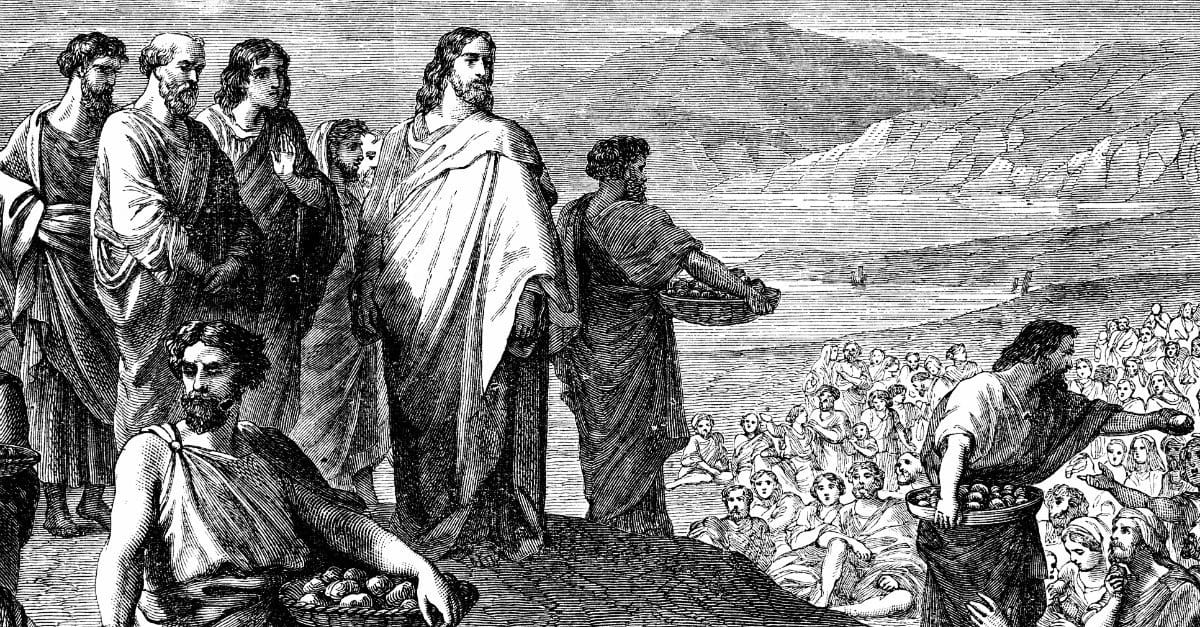
In Matthew 14:14-21, a young boy offered Jesus a meager lunch. Jesus had only a few loaves and fish, but He had 5,000 mouths to feed. However, the gifts in God’s hands can and often are multiplied by God to meet the demands of a greater work.
This is one of the greatest giving stories of all time, and a beautiful depiction of faith in seeing something profound happen because of your gift.
First and foremost, this young man had enough faith to give away his own lunch. He was risking his own sustenance, his own comfort, in hopes of helping others. One boy’s faith led to the amazing miracle of Jesus feeding 5,000 people.
Sometimes you have to be willing to imagine something much bigger than yourself to move a project forward.
I have to deal with this problem every day at the Museum of the Bible. This is such a large project that it may be difficult for prospective donors to understand how it will come together.
But almost every day I encounter the miracle of response from generous donors and people from all economic strata. They are turning the seemingly impossible into possible.
8. Generous people give as a byproduct of their own transformation.
The story of Zacchaeus in Luke 19 is the story of a transformed giver. I love this story. The tax collector was moved by Jesus’ call to abandon his norms and return to God’s ways in order to give.
This is the story of a person who changes from a “money collector” to a “money giver”!
In my own journey, perhaps the most deeply satisfying stories are those of people who have been radically transformed in their giving through spiritual transformation. I’ve seen this over and over again with donors. In one particular moment, they suddenly realize that the reason they are here is not just to take advantage of their ability to accumulate wealth, but to create a story that is much bigger than themselves.
In a sense, this is a picture of salvation. It is when people transcend their limitations and realize the supernatural potential of their lives through generous giving.
9. Generous people give from their poverty.
In Luke 21:1-4, in Jesus’ observation about the widow’s mites, we read:
“He saw rich people putting gifts into the temple treasury, and he saw a poor widow putting in two very small copper coins. ‘Truly, I tell you, this poor widow gave more than all the others. All these people gave gifts from their wealth, but out of her poverty she gave everything she needed to live.’
A few years ago, I had the opportunity to travel through some of the poorest regions of East Africa. I was taken to many villages to speak and visit the leaders of those communities. I will never forget the moment I witnessed the generosity of people who donate from poverty.
After spending a whole day in a village, people came to see me off on my journey. They brought chickens, vegetables, fruits and even goats. This was a very poor village, and the people had very little to spare. But they offered their poverty to thank me. Someone from far away just gave them a day of their life.
It took me years to fully understand the moment of generous, sacrificial giving.
10. Generous people give even when others won’t.
In Philippians 4:15-16, the apostle Paul laments the lack of response from the churches he has encountered.
“Not one church resonated with me,” he says. “You alone”—the Philippian Christians. Even when he was ministering to others far away in Thessalonica, the people of Philippi were donating to his ministry.
Most donors I know prefer to be part of a larger giving community. Knowing that you are one of many people contributing to a project can be satisfying, and perhaps even comforting and reassuring. But sometimes, as givers, we are called upon to step up on our own and see a project through to completion, even when others don’t.
Paul was in just such a situation. While other churches ignored the need, one church in Philippi was willing to give and provide the necessary support, even if it meant isolation.
One day you may find yourself here too. I look around and no one will give it to me. But something inside you is telling you to do your best.
Your personal influence can be huge. And your personal journey can be beautifully enriched by that experience.
I love reading stories about people and their generosity.
Generosity is not something that comes after you accumulate wealth. It’s something you live with wherever you are in life today. It’s not something that “appears”, it’s a lifestyle that you cultivate.
The generous people in our culture today are no different from the generous people in the Bible. Generosity becomes part of one’s DNA. It permeates every area of their lives.
How generous are you? And an equally important question: How generous are you?
These are questions worth considering. The more generous you are, and the more ways you can be generous, the richer you will be.
Timothy L. Smith has more than 35 years of nonprofit experience and currently serves as Chief Development Officer for the Museum of the Bible. His book, Donors are People Too, is required reading for many nonprofits as they develop major funding programs.
To learn more about the Museum of the Bible or to make a donation, visit MuseumoftheBible.org.
Photo credit: ©GettyImages/Tony Baggett
